town and/or country

In “The Poet Laureate Has Gone To His Shed” on R4 (now “The Shed” podcast), Simon Armitage has a quick-fire, either/or set of questions which he puts to his guest. One of them is “town or country?” and every time, I shout “town!” before he’s even finished his sentence.
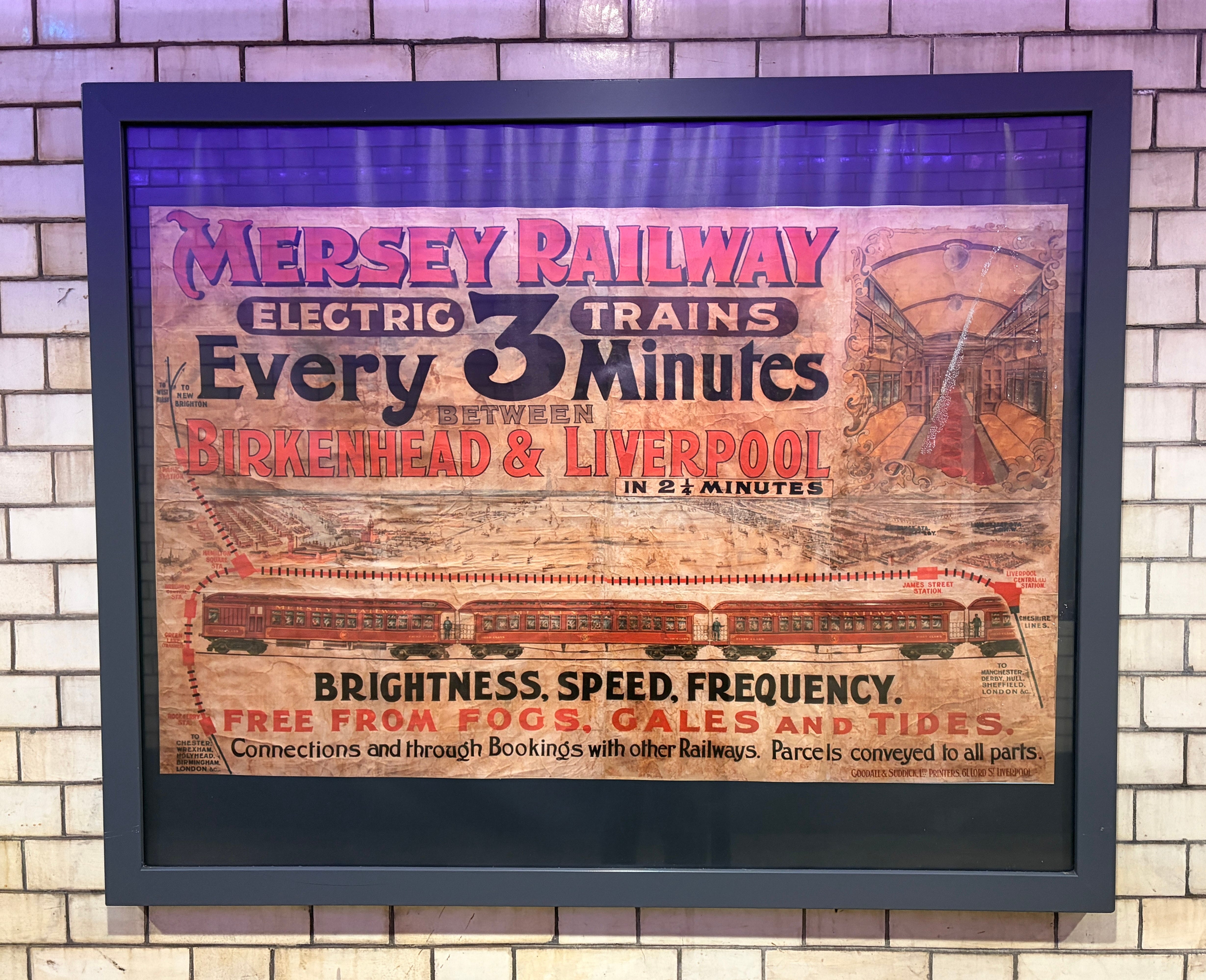
[urban travel “free from fogs, gales and tide”, seen in James Street Station via the Water Street entrance, an 1886 time capsule with a 150m ramp to the platform and a much-needed handrail]
Because despite a settee- and train-seat-based enjoyment of “country”, I’m a urbanite at heart. This much was confirmed when we spent thirty hours in Liverpool last weekend, and I got so much excitement and energy out of seeing the built environment, walking through the streets, looking up and around, and thinking about the man-made that I realised once again that I’m a city girl.
That’s not to say that I haven’t done my best to enjoy the rural, the rustic, and the Romantic. I love poetry and novels about the countryside by Hardy, Eliot, Keats, Manley Hopkins, and I love paintings of the non-urban subjects by Constable, Ivon Hitchens, Ravilious. I’ve placed myself in the countryside and many magnificent landscapes and done my absolute best to commune with nature and to convince myself that I could live on fresh air, greenery, and a novelist's/poet’s sensibilities. But take me to Liverpool - or any of our great towns and cities - and I’m immediately in my element and know that I could thrive there.
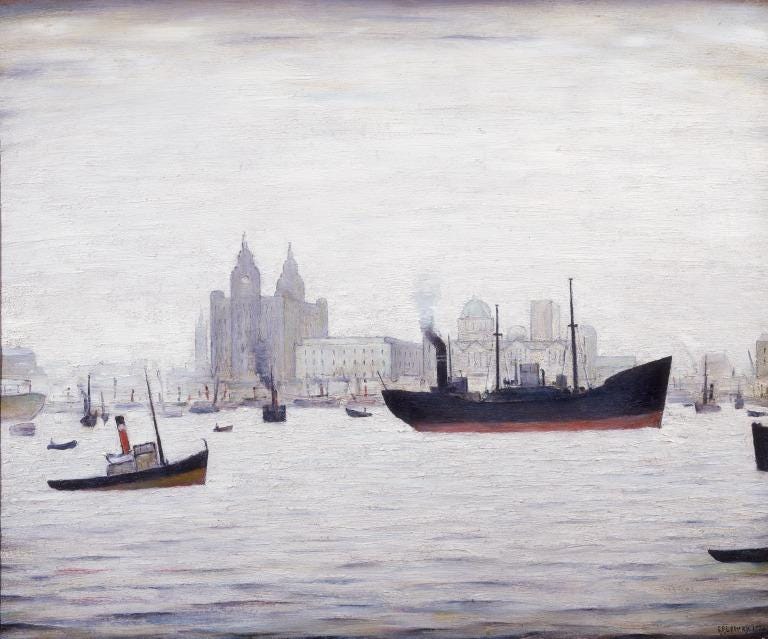
[‘The Liver Building’ (1959) - and the River Mersey - by Manchester/Lancashire artist LS Lowry]
Although I grew up relatively close to Liverpool - only 40 miles away - and the River Mersey connects it directly to Stockport, Manchester was always the epicentre of my urban life. So I never visited Liverpool until my twenties, and that was after dark and for a meal in the country’s oldest Chinatown. I’ve been a couple of times in recent years, but this visit was different because I was in a car and had a driver (thank you, Simon) and a very clear list of what I wanted to see beyond the city centre.
I’m fascinated by housing, houses, homes, the domestic. So an itinerary which took us round the Beatles’ childhood homes and significant locations was also a look at Liverpool’s urban and suburban development during the twentieth century and up to now. And the city is incredibly rich in all sorts of housing: Victorian, terraced, inter-war, council, estate, inner city, suburban, grand, small, brick, rendered, sandstone. I’m no planner, architect or sociologist, so I simply look at all this and wonder what it’s like to live there.
[Burnage, 1960s]
And I was amazed by how familiar it is. Parts of it look just like the areas of Manchester such as Burnage, Levenshulme, Longsight, and Ardwick that I know so well from childhood. The houses, the churches, the building materials, the roads, the estates, the trees, the bus routes, the whole thing. No wonder I had and have such an affinity with The Beatles and their music, I grew up in practically the same urban environments as them.
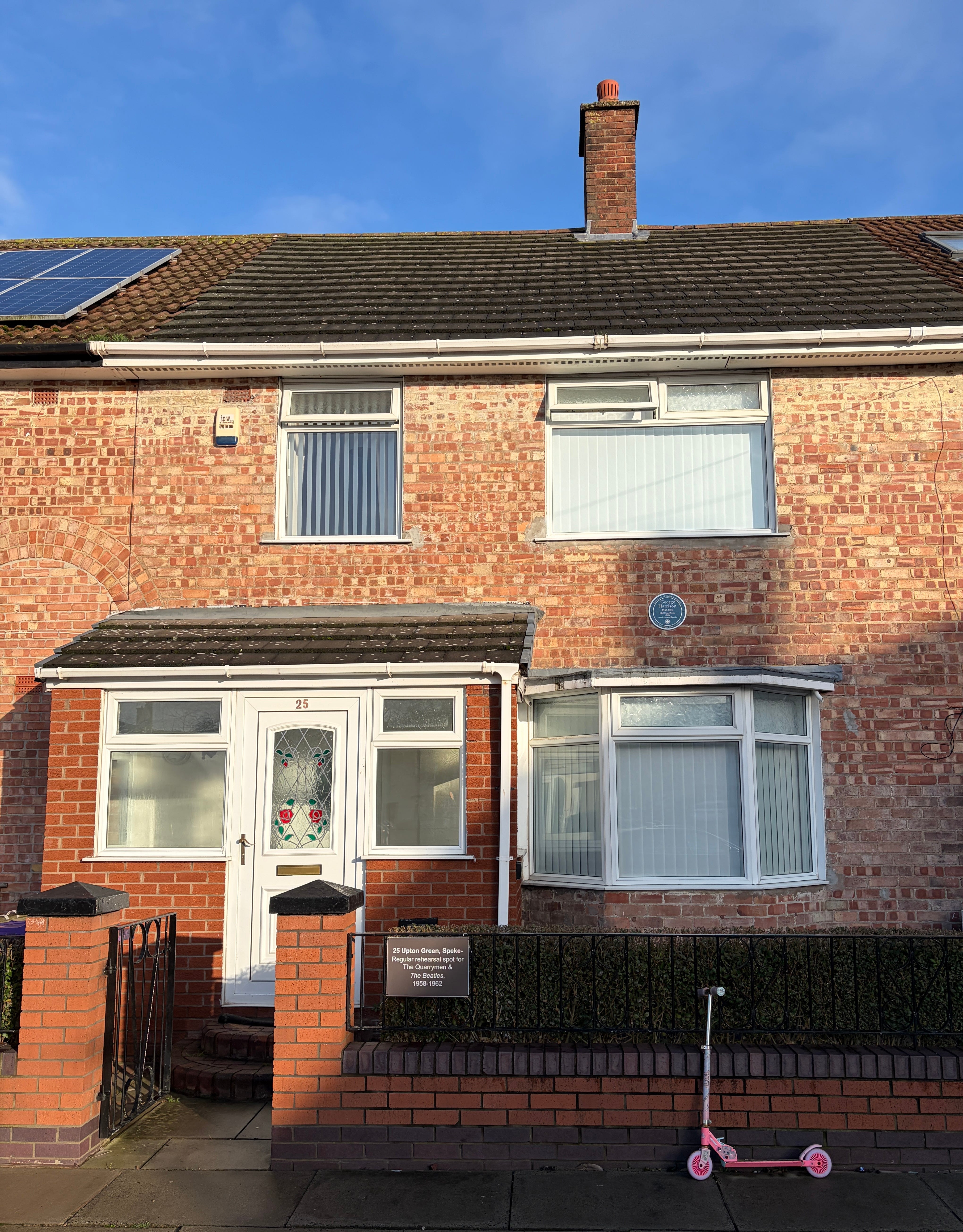
[25 Upton Green, Speke, L24, early post-war. George Harrison’s childhood home from 1950]
First we went to Speke, a vast housing estate on the SW edge of Liverpool. It was and is huge, the work of Sir Lancelot Keay (1883-1974) who did so much to shape post-war, post-Blitz Liverpool.
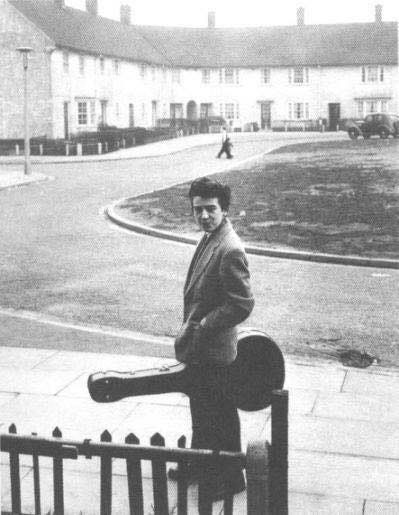
This is how Upton Green looked when it was newly built,
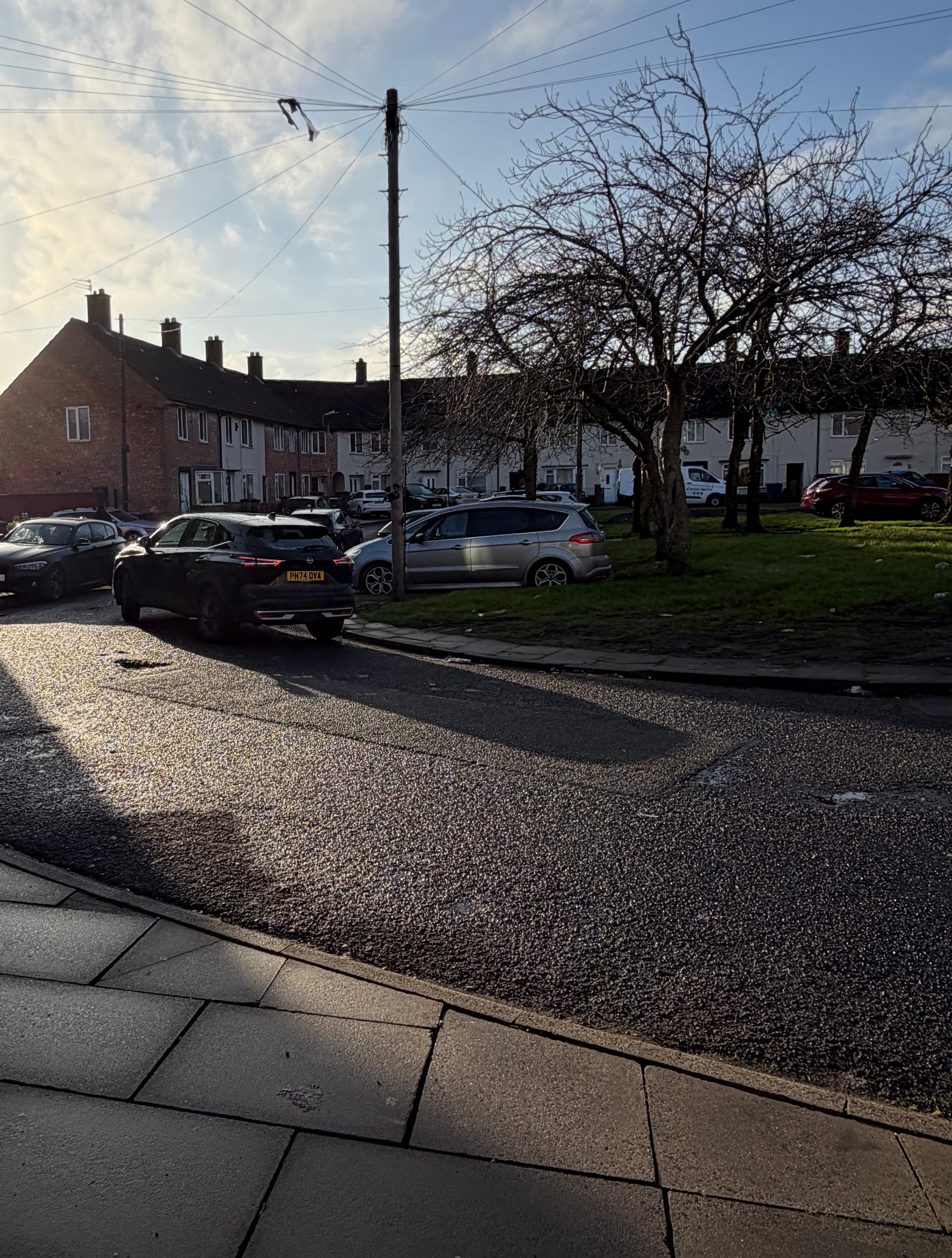
and this is it now. Virtually unchanged, apart from the cars where the children used to play.
Paul McCartney also lived in two houses in Speke, very close to George and mostly before they knew each other,
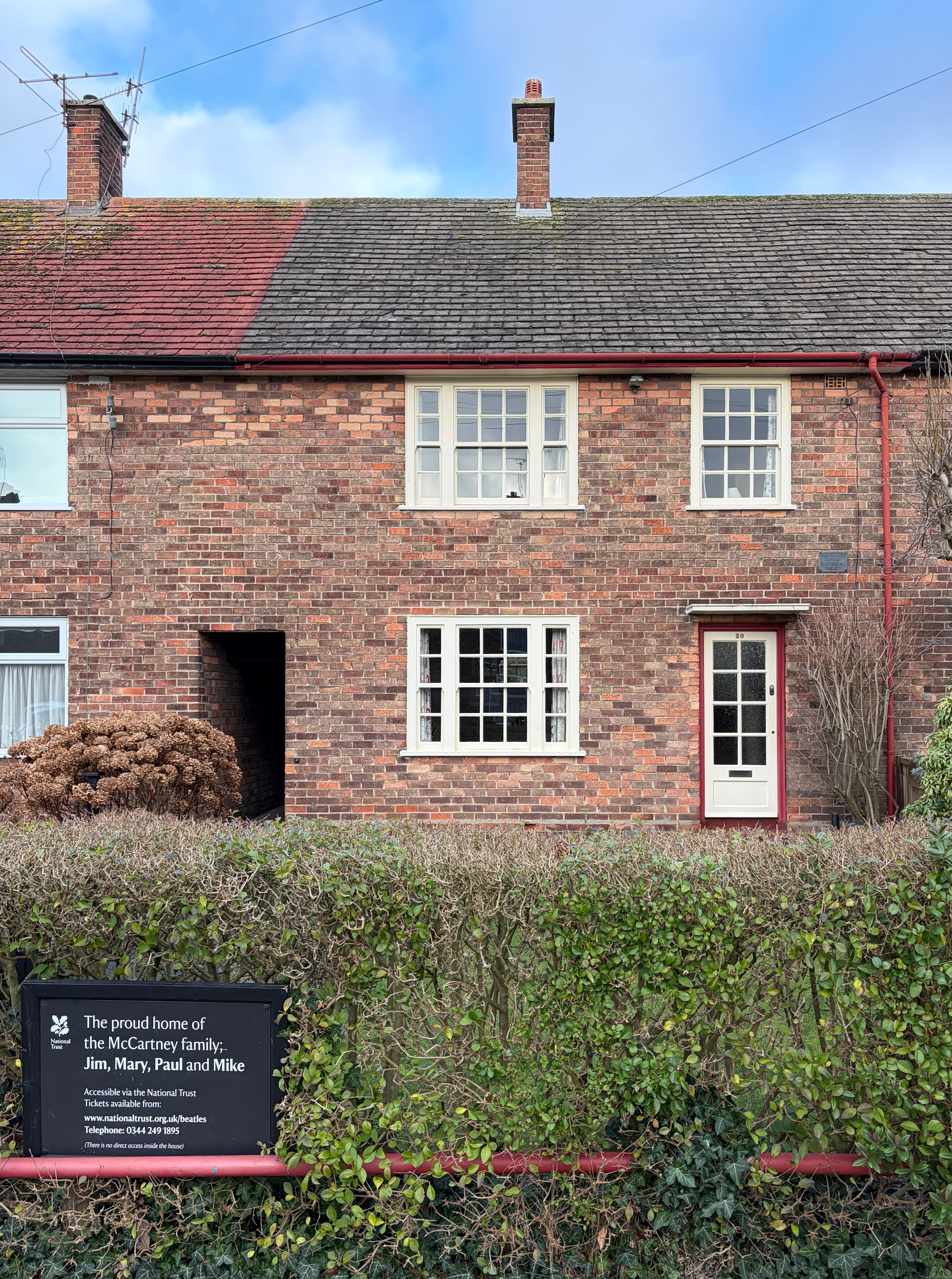
[ Paul McCartney’s home from 1955. 20 Forthlin Road, L18 (built 1949). I’m still wondering if a home can be described as proud]
but this is often glossed over in the rush to locate him in Forthlin Road (on a council estate also oversee by Lancelot Keay) which is owned by the National Trust, can be visited, and is therefore potentially more interesting and open to being interpreted to fit a sociological/class theory, just like John’s house (also NT).
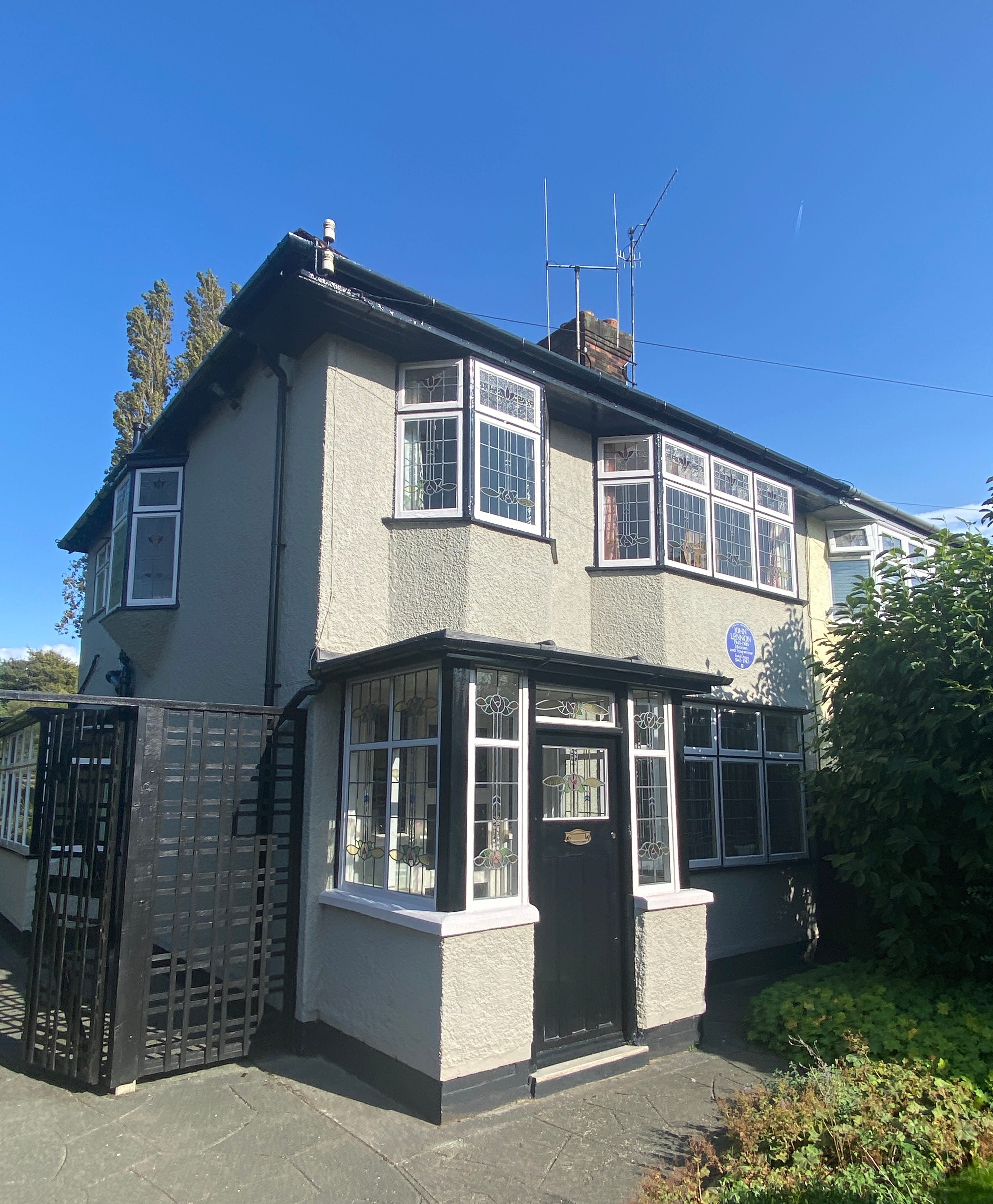
[“Mendips”, 251 Menlove Avenue, L25]
Then it was over to Menlove Avenue which, in a bid to make John posh and anything but a “working class hero”, biographers and too many pop historians do their best to present as some kind of enormous baronial manor or villa because it has a name and a teeny bit of stained glass, as did so many thousands of inter war suburban semis. Because that’s what it is, as you can see. It’s slightly bigger than his bandmates’ homes, with more garden, on a road with four lanes of traffic and a lot of cachet at one end - the other end. But feel free to read all sort of class distinctions into this.
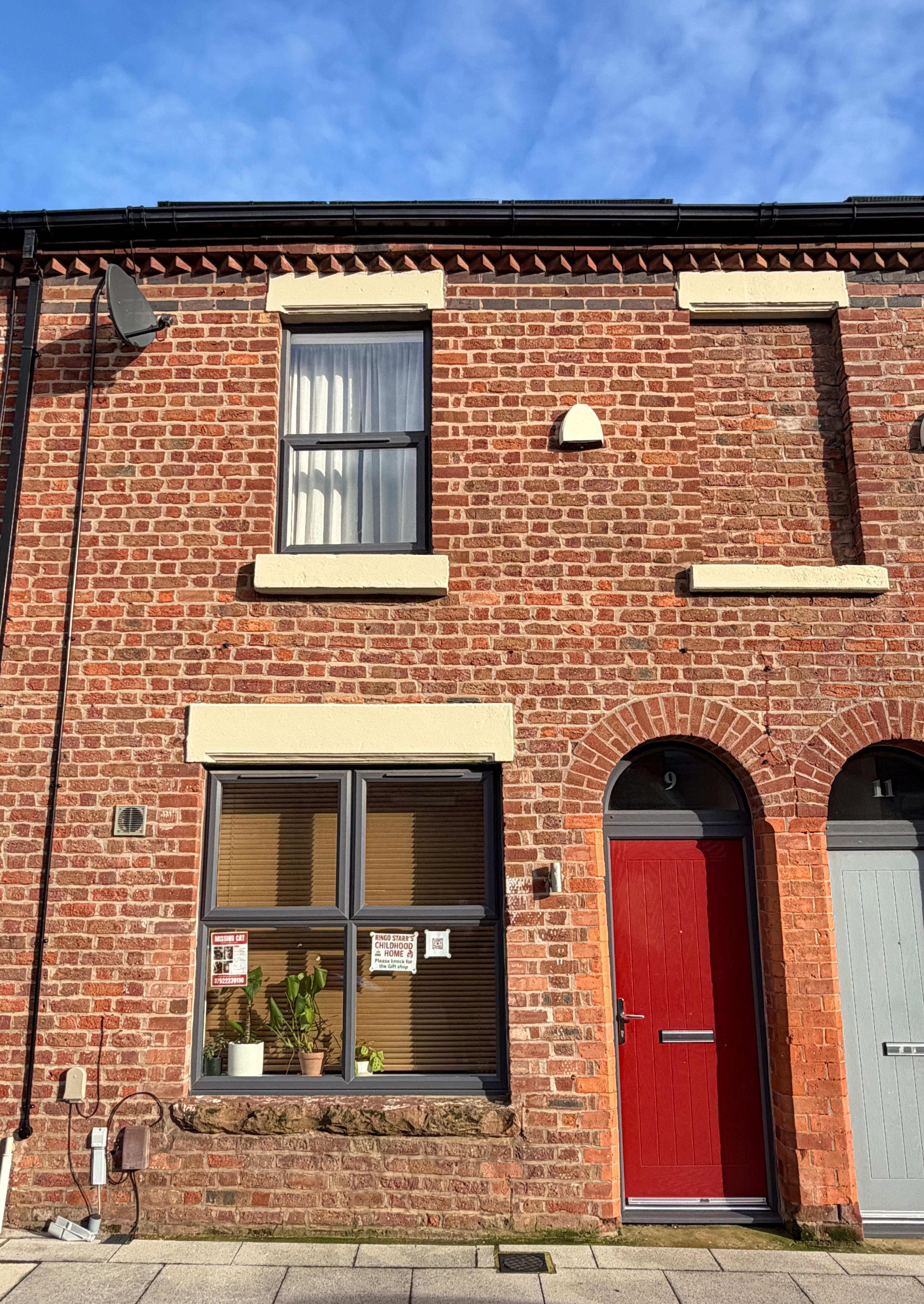
[9 Madryn Street, L8, Ringo Starr’s birthplace]
Moving closer to the centre we went to Toxteth and the inner-city area of Dingle (often ‘the Dingle’) where Ringo grew up. This is a fascinating bit of housing history. Madryn Street is one of the Welsh Streets, a grid of seven streets of terraced houses designed in the 1870s by the Welsh architect, Richard Owen, and all with Welsh names.
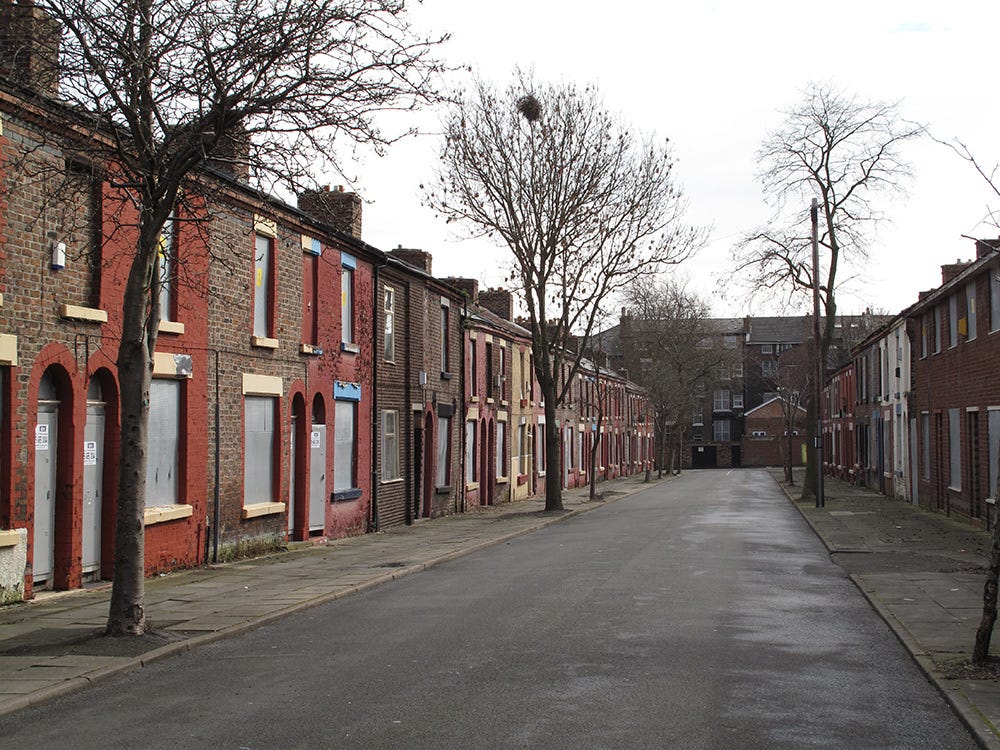
[Madryn Street, 2017, before refurbishment]
As late as 2017, they were condemned, boarded up, and slated for demolition. And then, after a huge outcry and energetic campaigning, four hundred houses were saved and many have been sympathetically renovated (the project is ongoing) and the streets transformed.
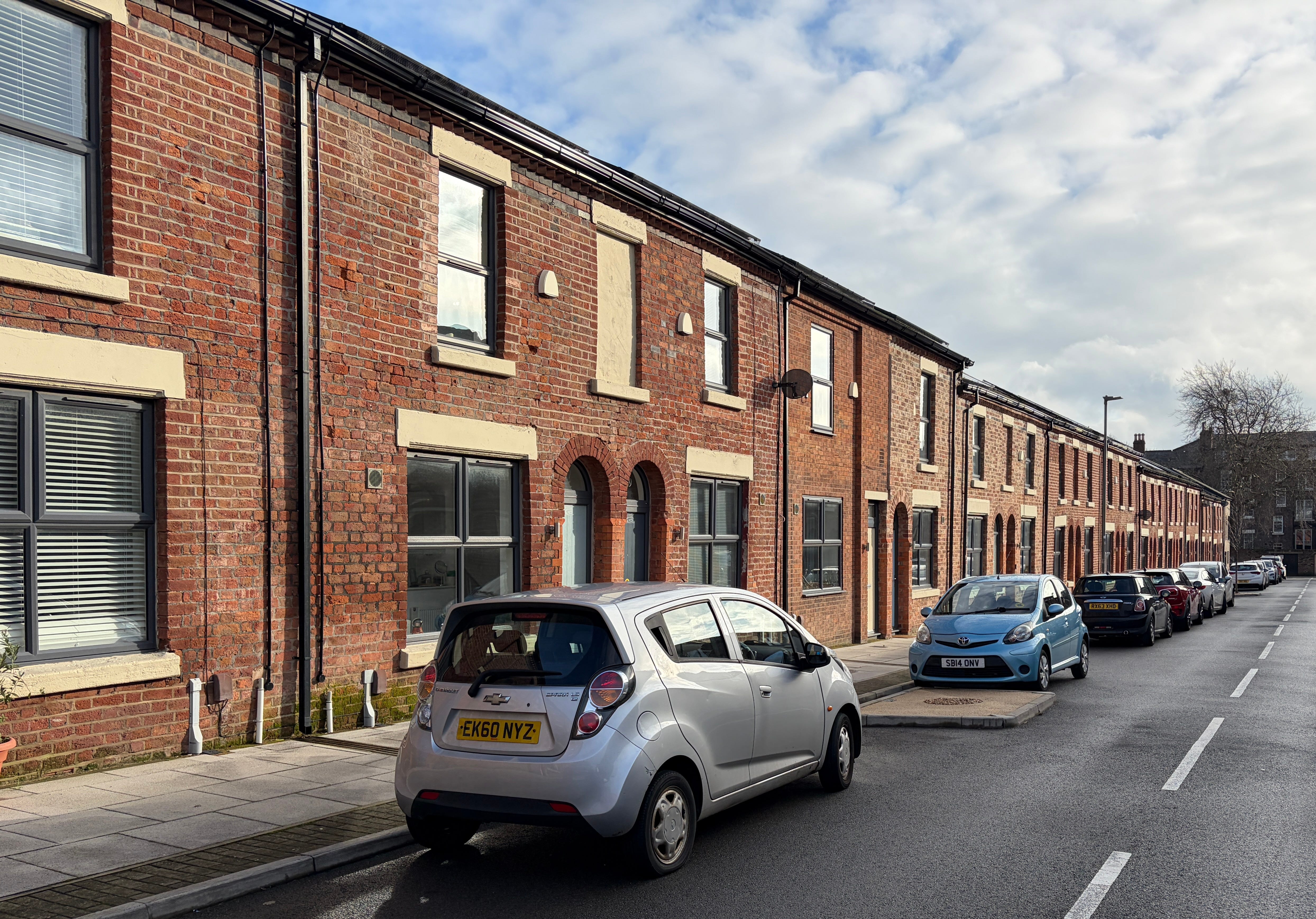
[Madryn Street now]
It makes me wonder again about the wholesale removal of so much Victorian housing in what can only be described as purges in the 1960s. I remember getting the bus into Manchester and seeing the absolute wreckage of the homes and communities which, with some imagination and a lot less arrogance from often corrupt developers, could have been regenerated. In a film made for the BBC in 1972, the architectural critic Ian Nairn discusses this (from 29:30) while driving from Stockport to Manchester along the route I used to take and showing the urban wastelands (“the Germans couldn’t have done it, the town planners have”). Liverpool has shown there are alternatives.
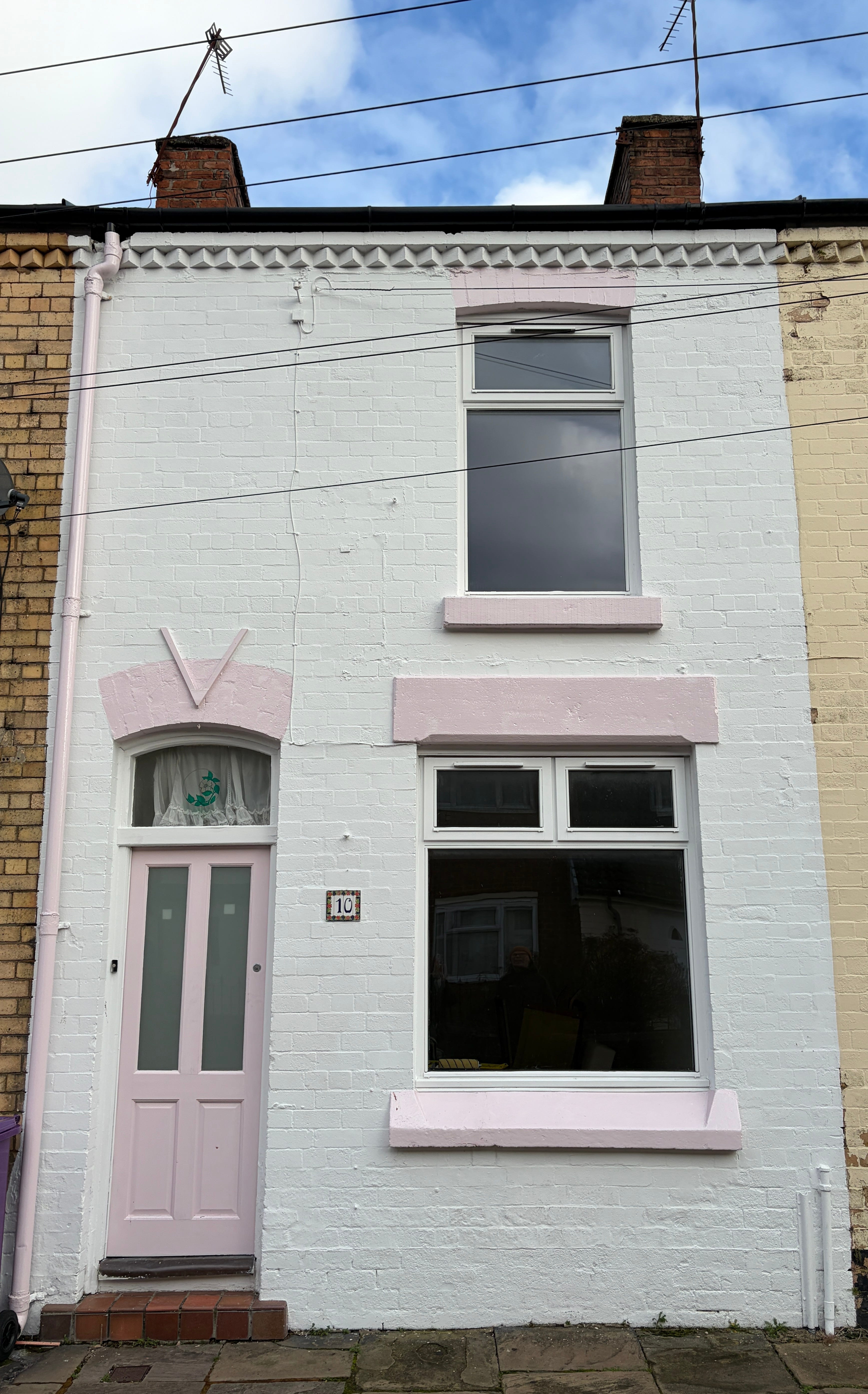
[now: 10 Admiral Grove, L8, Ringo Starr’s childhood home, with V for Victory above the front door]
When he was three, Ringo moved 150 yards from Madryn Street to Admiral Grove,
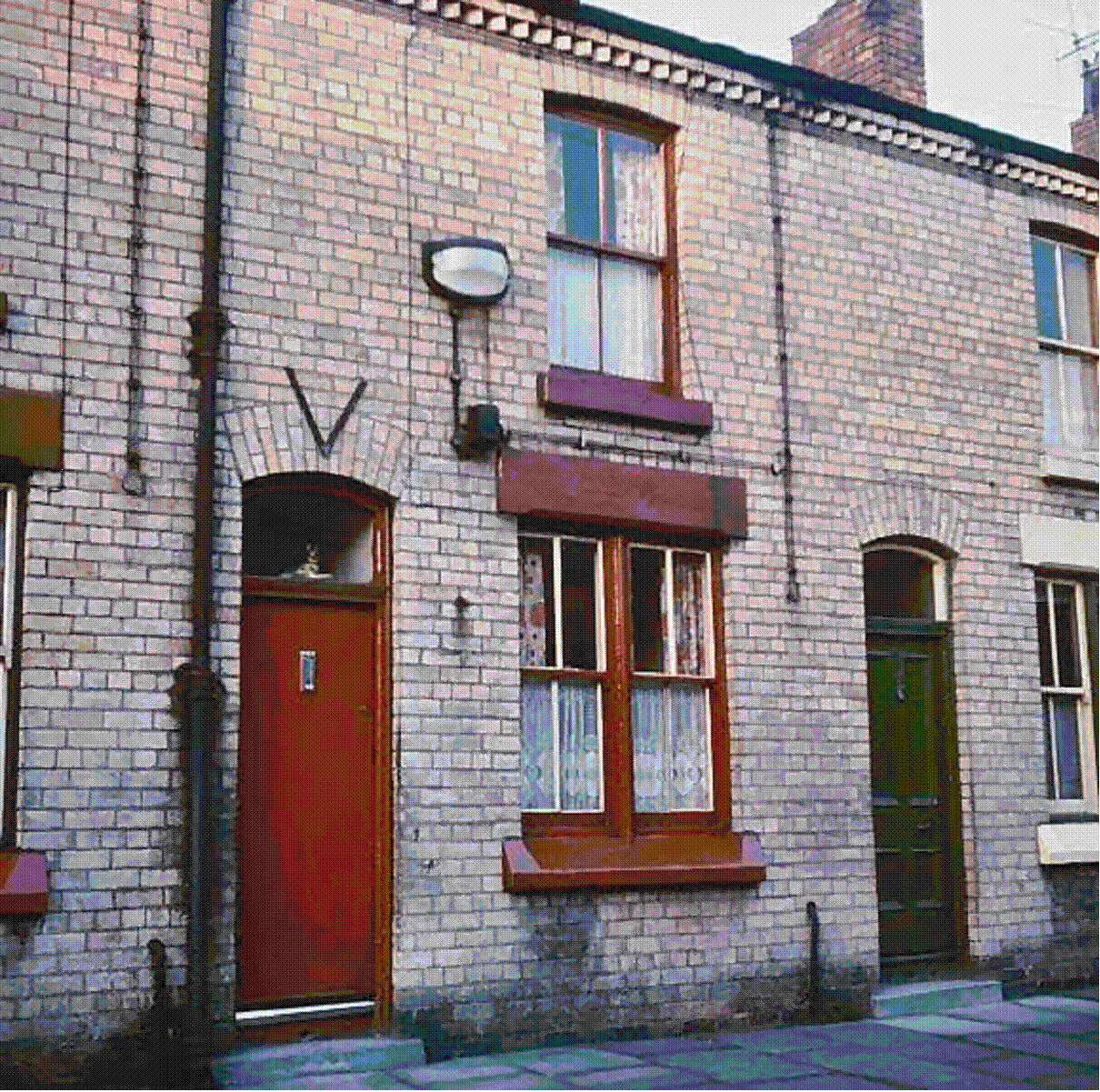
[then]
and this is wher he lived until fame, fortune, and besieging fans arrived.
John Lennon and Paul McCartney once considered writing a whole Liverpool album, but didn’t get much further than the brilliant Penny Lane
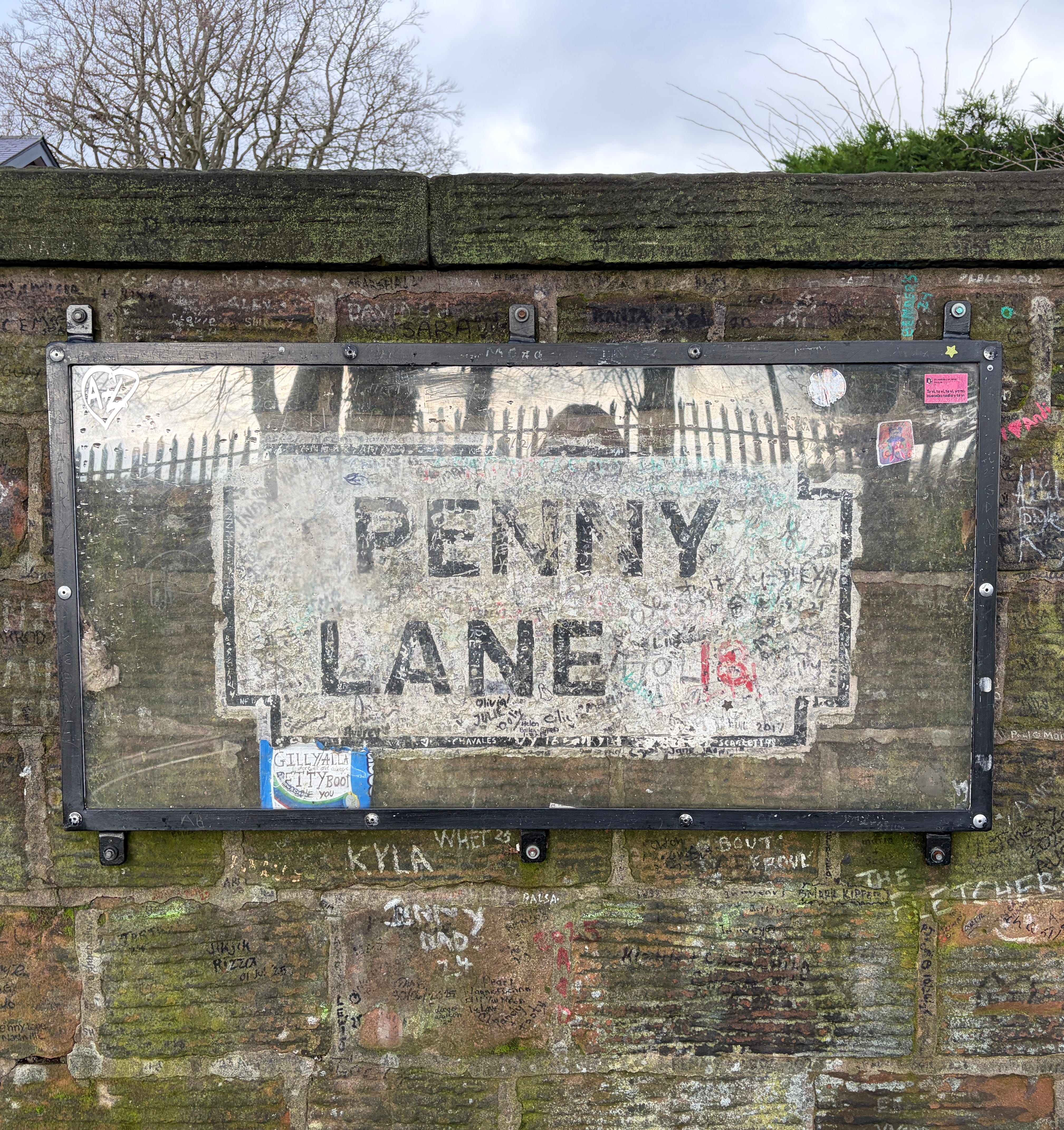
and Strawberry Fields (actually Strawberry Field irl).
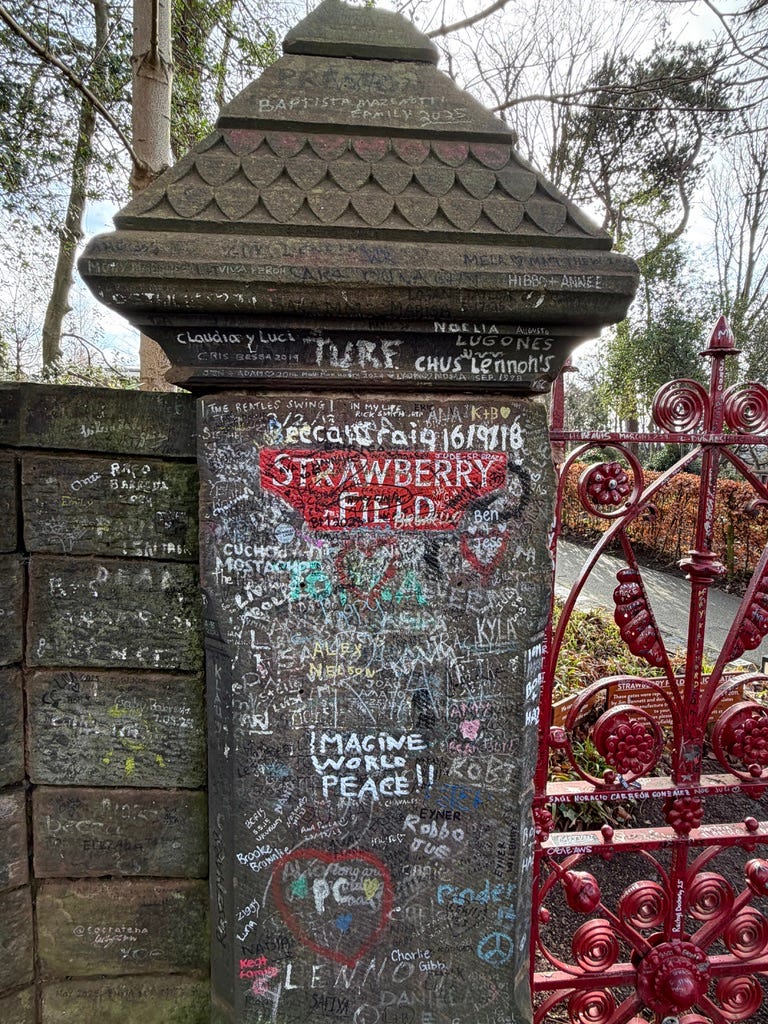
But these two songs encapsulate so much of their early lives that much more would have been superfluous. They were suburban boys, hopping on and off buses all the time, changing at the terminus with the shelter on the roundabout, criss-crossing Liverpool to get to the Liverpool Institute, Lime Street Station, the Cavern, the Mersey Beat offices, Ye Cracke, the Philharmonic Dining Rooms, the School of Art, Gambier Terrace, the Anglican Cathedral, the Casbah in West Derby, and taking the ferry across the Mersey. Every single one of which we saw, apart from the last which now a morning and evening commuter service only. We drove down Penny Lane, past the Strawberry Field gates, and I jumped out to look at what was Quarry Bank School (now Calderstones School) where John went and rebelled. It was also important to see Dovedale Primary School (John and George plus contemporaries Jimmy Tarbuck and Peter Sissons), Woolton village (John and friends) and St Peter’s Church,
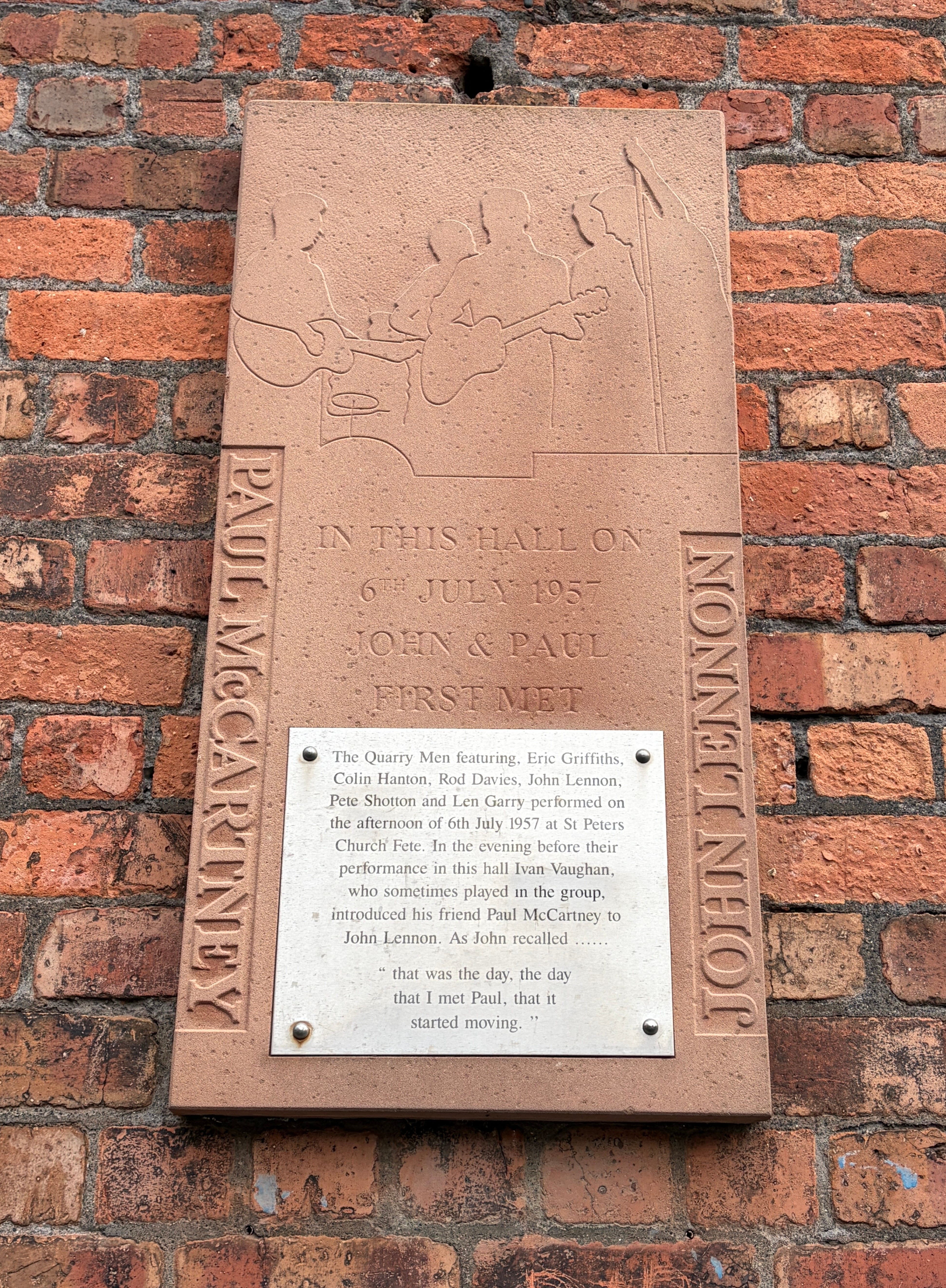
and the hall where John and Paul first met.
It was like a best-ever geography/history field trip. It meant I could create a whole Beatles map in my mind - and actually it would be good to get a huge real one of south and central Liverpool plus a little bit to the north east, and draw on all the connecting lines. It would be a visualisation of all the routes, networks, and coincidences which give rise not only to a phenomenon such as The Beatles but also the texture of many millions of sub/urban lives. This may very well be type of psychogeography, but as I do not wish to be known as a “psycho geographer “(the full word is too easily split in my mind), I’m not claiming it that way.
Instead, I’m just really, really interested in sub/urban houses and lives. And The Beatles.
Happy Sunday!
PS Municipal Dreams has several excellent blog posts on Speke and the Beatles’ childhood homes
I’ve done the Magical Mystery Tour of Liverpool and it was a wonderful experience. Powerfully moving.
Oh my goodness ! What a roller coaster of emotions and memories this post has stirred up! I spent my childhood in Levenshulme, Manchester, right on the border between central Manchester and Stockport, and was definitely a city girl. I had Saturday jobs both in Lewis’s in Manchester and British Home Stores in Stockport (not at the same time, obviously!) Eating my packed lunch in Piccadilly Gardens, browsing at Kendal Milne, or picking up bargains at Stockport Market, so many memories! The video of the journey from Stocky to Manchester was so powerfully familiar !
But city or countryside? The latter in my case! I couldn’t wait to leave the North. My childhood holidays had been with relatives in Somerset, and I yearned to be a country girl. My schoolteachers were amazed when I told them of my teacher training college applications ( Bristol, Southampton and somewhere else I can’t remember) I was actually told that Southern colleges are far more difficult to get into, why don’t I look at Leeds or Sheffield?
I did get into Bristol, and then taught in Monmouth in the Wye Valley, where I still live, surrounded by river, valleys, fields and forests !
Thank you for a wonderful post! Best wishes!