small discoveries

Just back from ten busy days in Stockholm, with not a lot of time to write. Although there have been some nice little discoveries.
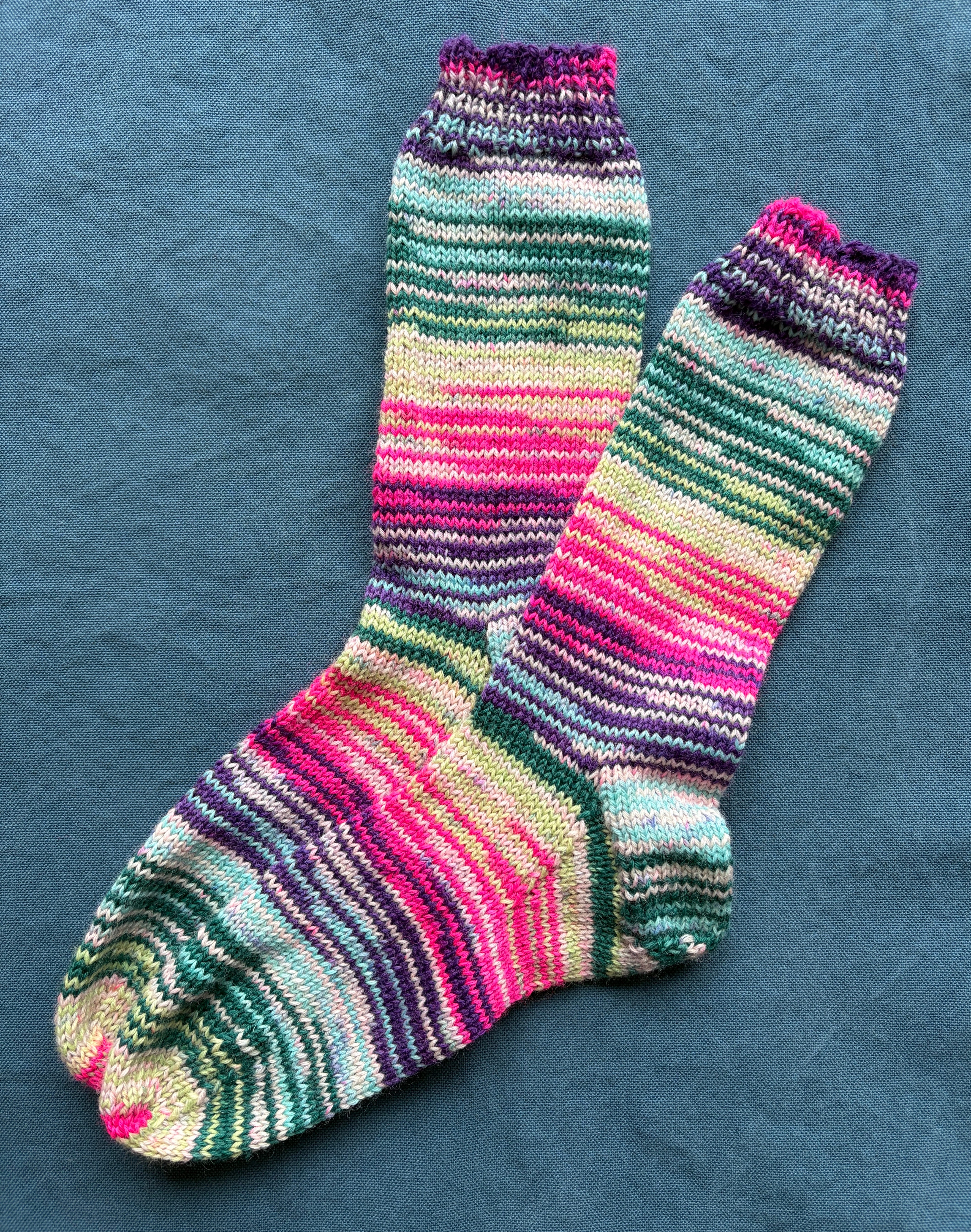
[Lana Grossa Meilenweit 6-ply Asia, chosen mainly for the inclusion of neon pink]
I have discovered that knitting socks with 6-ply wool on 3mm needles is exponentially faster than knitting with 4-ply on 2.5mm needles. Very satisfying, maybe a little too thick for everyday, but perfect for indoor socks (everyone takes their shoes off when going into a flat or house there).
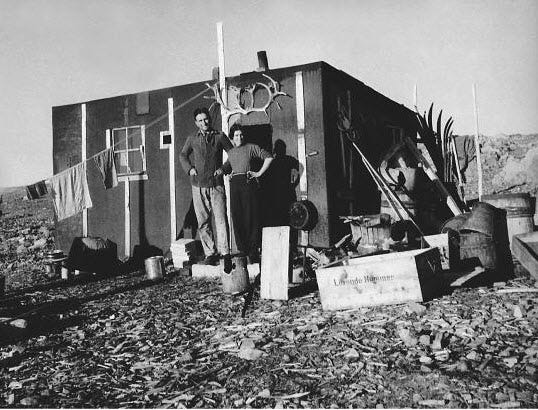
[Christiane and Hermann Ritter in front of their hut - in good weather]
After so many readers recommended it (thank you), I read A Woman in the Polar Night (1938) by Austrian artist Christiane Ritter (“housewife turned polar explorer” arrghhh) who spent a year with her husband and a second trapper in a tiny hut in the far north of Spitsbergen (now Svalbard).
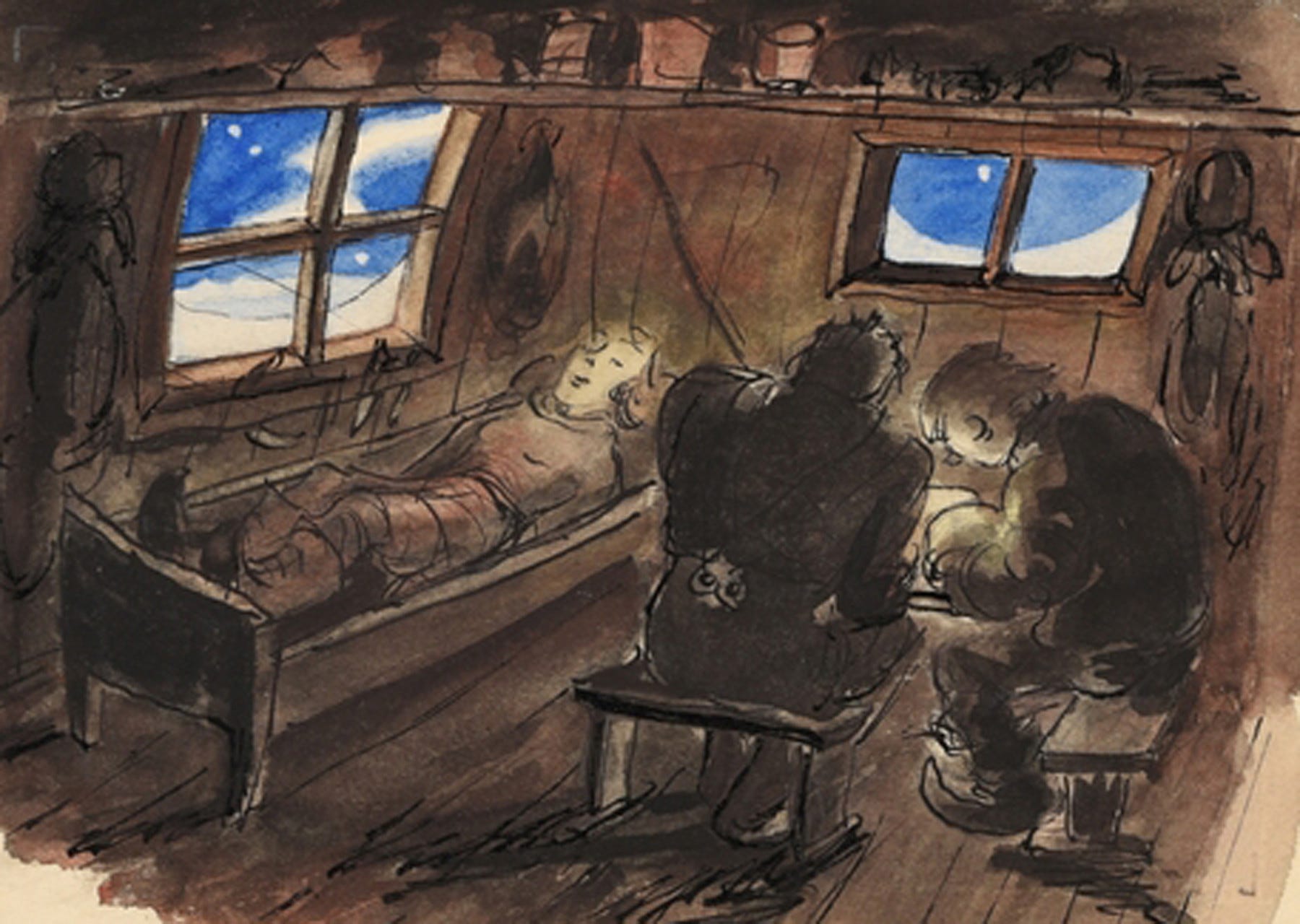
[one of Christiane Ritter’s paintings - a cheerier scene than some in the book]
It’s a classic, and probably the most honest and forthright account of the dark and the cold. (She also finds great beauty in the snow and mountains and light.) I discovered while reading that I would undoubtedly go mad during the months of the constant darkness of the polar night in a tiny hut further blackened by the constantly smoking stove. I’d be feeling for the non-existent light switch and losing my mind.
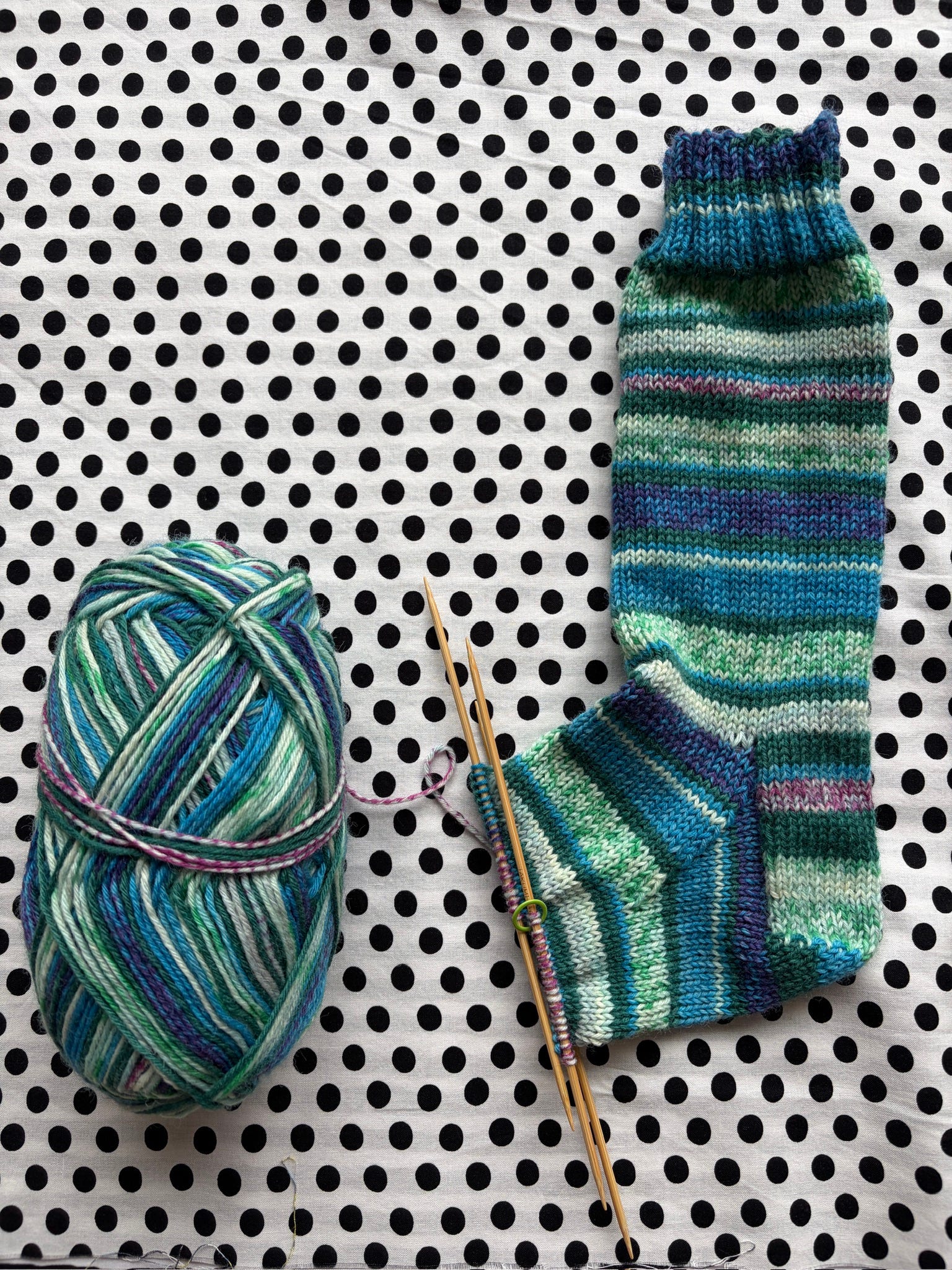
[Lana Gross Meilenweit 100 Piccatta]
Christiane takes her knitting, and keeps busy with sewing, darning, mending, washing, cooking, baking, and cleaning - as well as doing many of the jobs the men do. At one point she completely forgets how to turn a heel on a sock - again, this would drive me insane - and they unravel sock after sock in order to rediscover how it's done. There are two solutions: her husband Hermann’s “complicated system constructed on a geometrical formula” while Karl “simply and happily knits long tibes pulled together at one end". She doesn’t actually say whether she eventually remembers - just one of the unanswered questions I had as I was reading (eg their daughter? why bring the second man without warning her?).
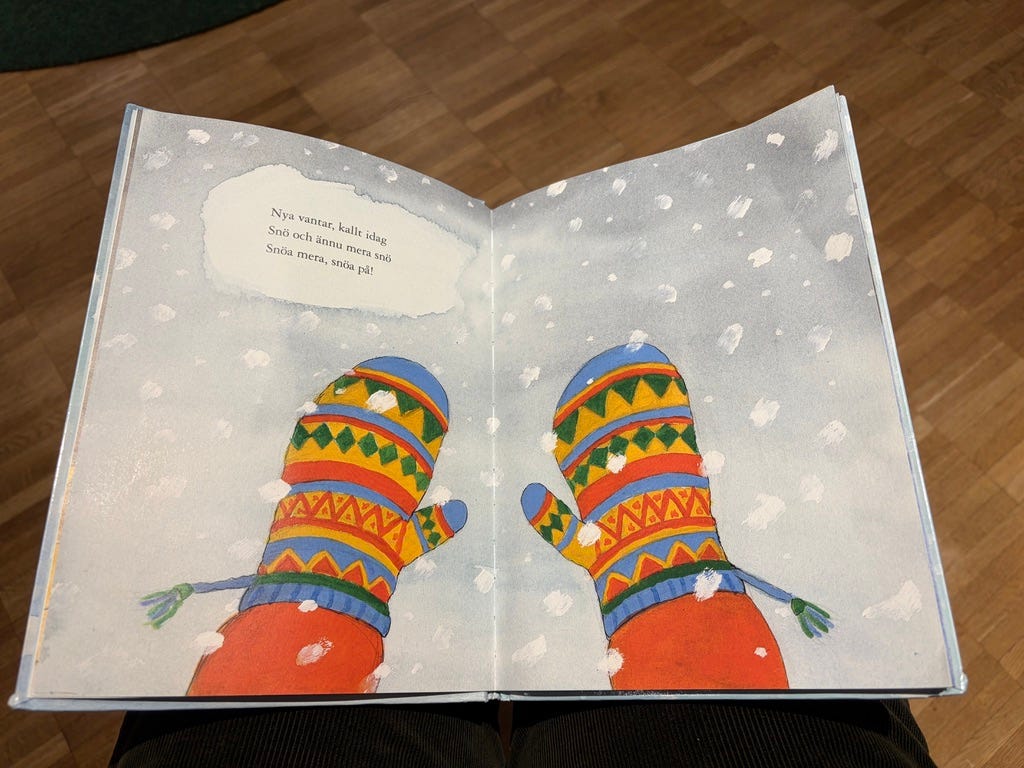
[‘Snöa på’ by Anna-Clara Tidholm, my level of Swedish and my favourite book in the children’s section of the library. Great mittens.]
Svalbard is an Arctic step too far for me, but I was happy to be in Stockholm in cold weather and reading about even colder weather because I can confirm that the (tree) pollen season in the UK definitely started in February and the sneezing etc was wearing me out. Yet I have discovered that the Met Office is gaslighting thousands of hay fever sufferers by saying pollen season doesn’t start until March so there are no pollen forecasts before then.. (Even now they aren’t giving them.)

On the subject of snow, or snö (pron. the Hull way - snur - another interesting similarity Swedish has with northern English words and pronunciation), I saw these signs on many walls at eye-level. Se upp! To rhyme with ‘'‘ey upp!’ (I think all northern versions of this phrase should also be spelt with two ps). It means ‘look out!’, beware falling snow and icicles.
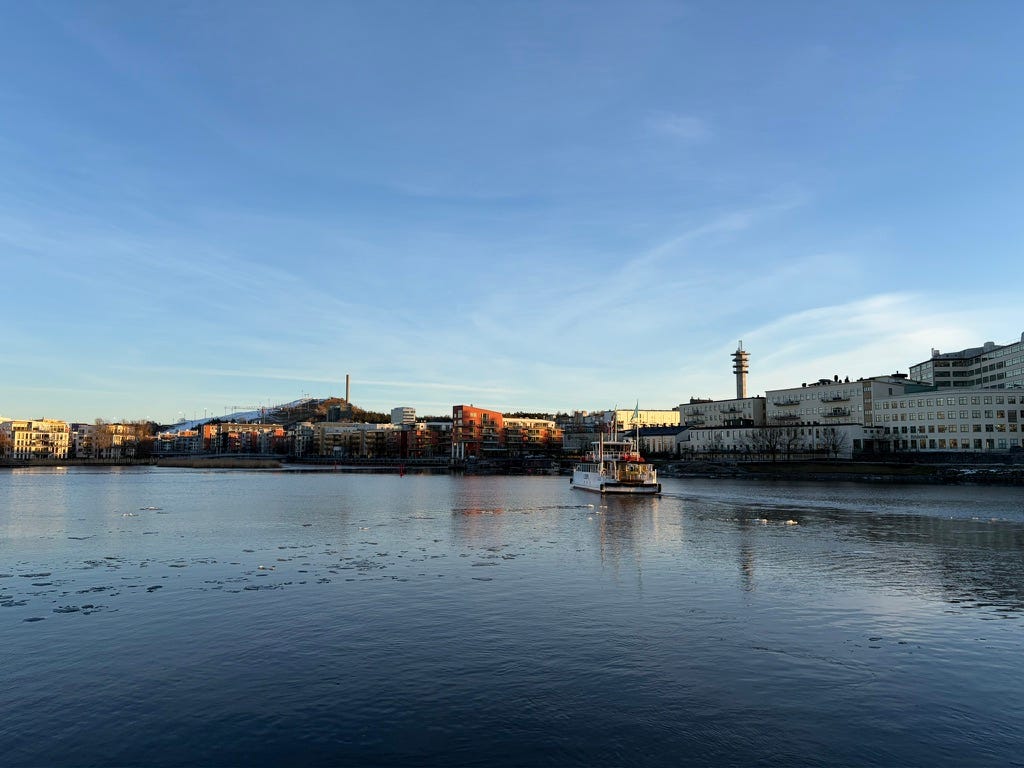
[local free ferry crackling through the last of the ice]
Mid-way through our stay, though, the snow and ice from the coldest winter for decades melted and disappeared almost overnight leaving the start of a new season with lovely spring light (but no flowers or leaves so no pollen just yet).
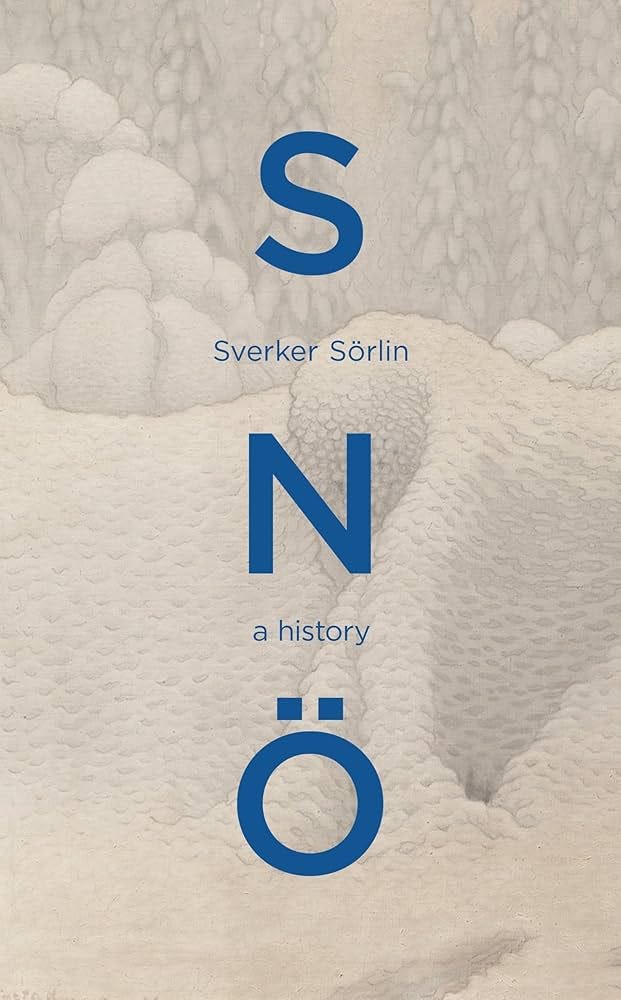
Tom sent me this book by Swedish writer Sverker Sörlin in January before we went to Tromsø and I love the cover - and the fact that it’s also called Snö in the English edition.
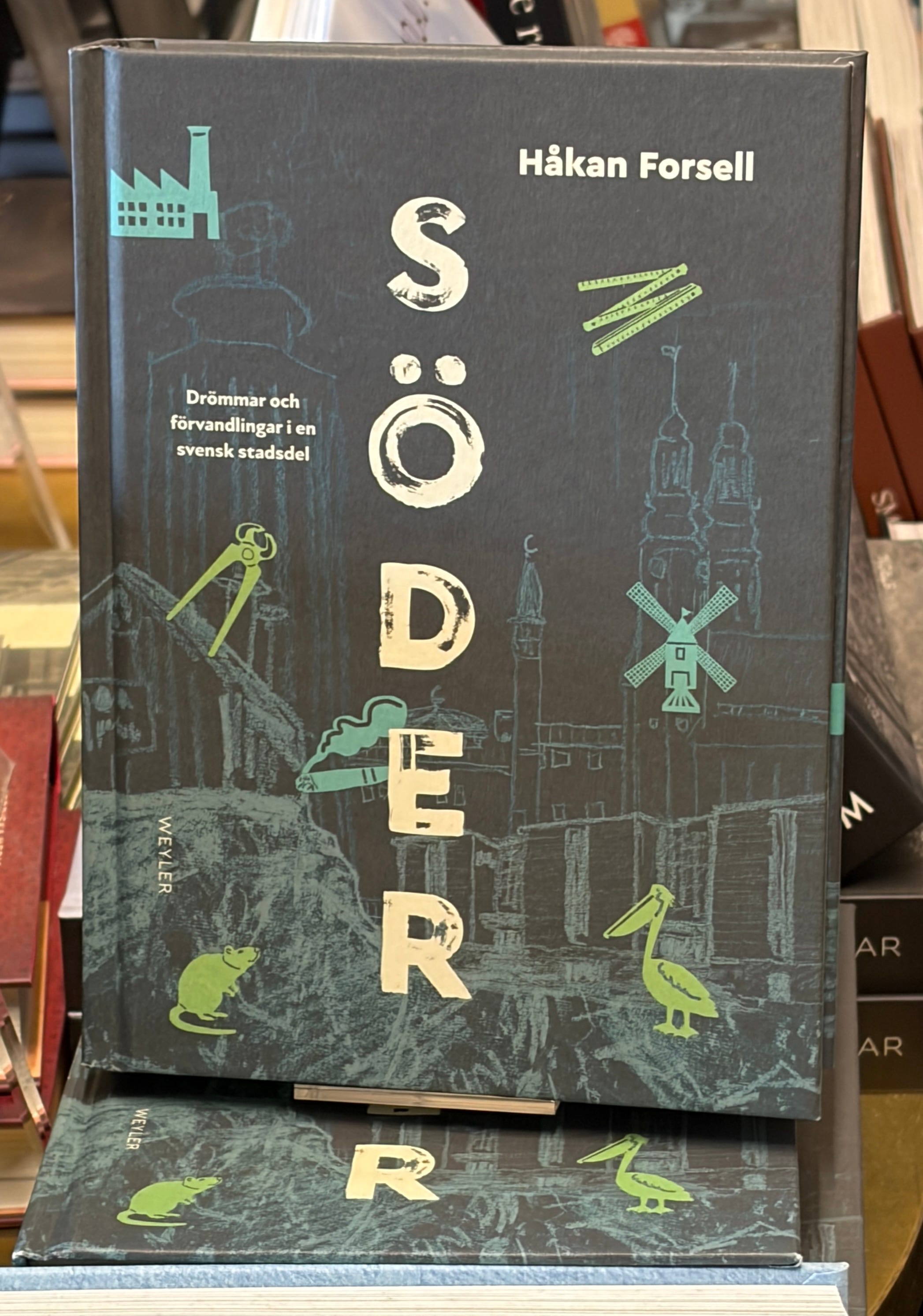
Then I discovered that there is a nice mini design trend of using vertical titles on Swedish books.
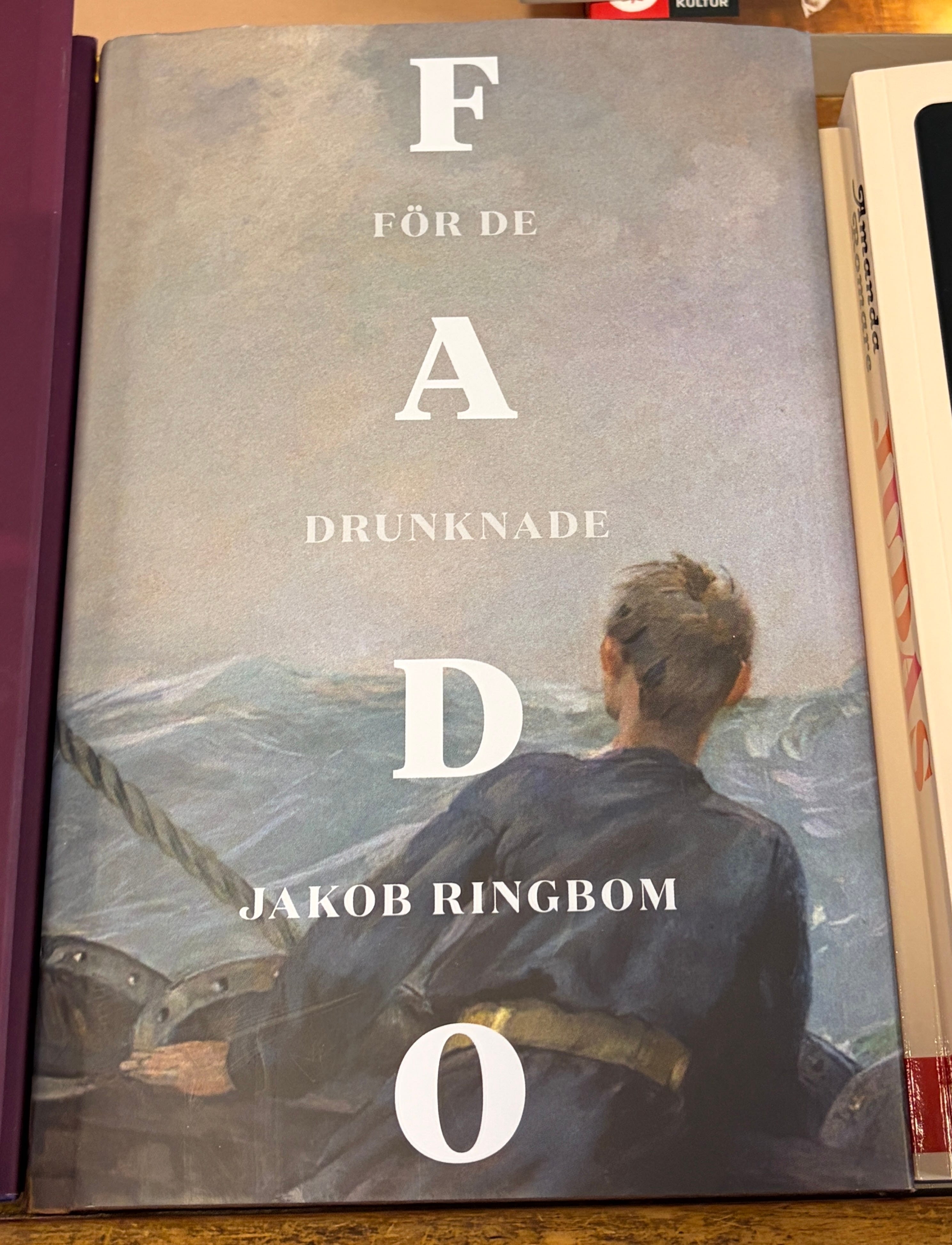
[photos taken in the wonderful Söderbokhandeln est 1927, same year as To the Lighthouse, hence V Woolf heading on website]
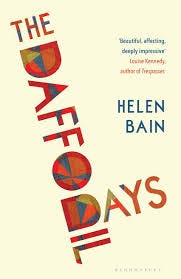
But I’ve just discovered a new book about Sylvia Plath published here which is also catching the trend. (Might read. Not sure.)
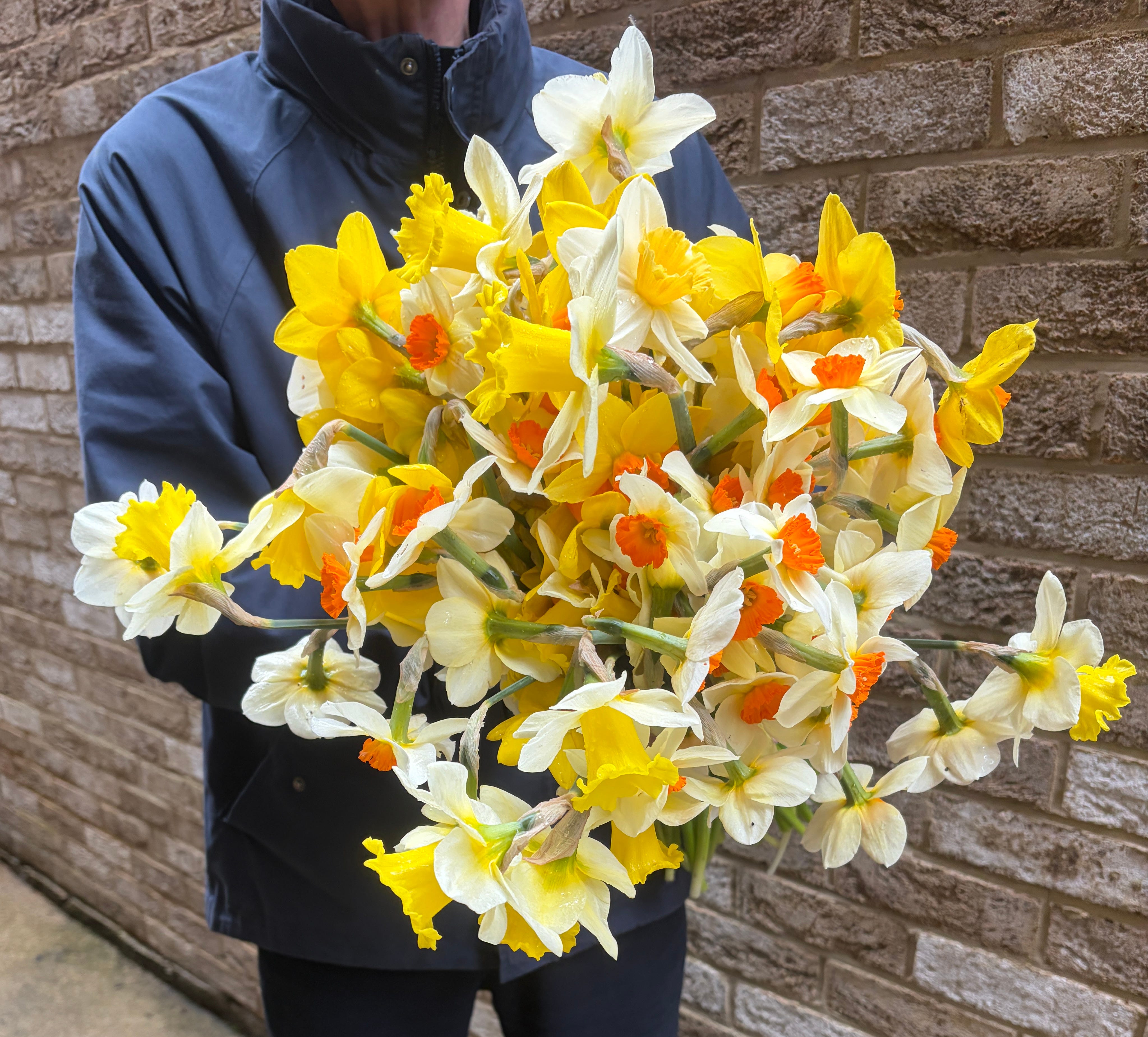
We’ve come back to an explosion of allotment daffodils.
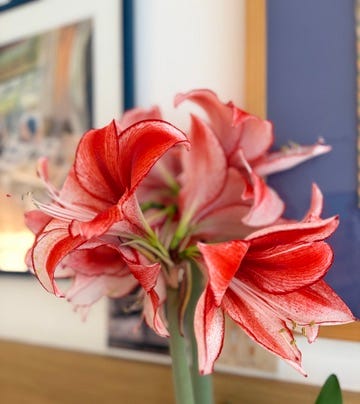
And amaryllis in the kitchen which didn’t bother waiting for our return before putting on a show.
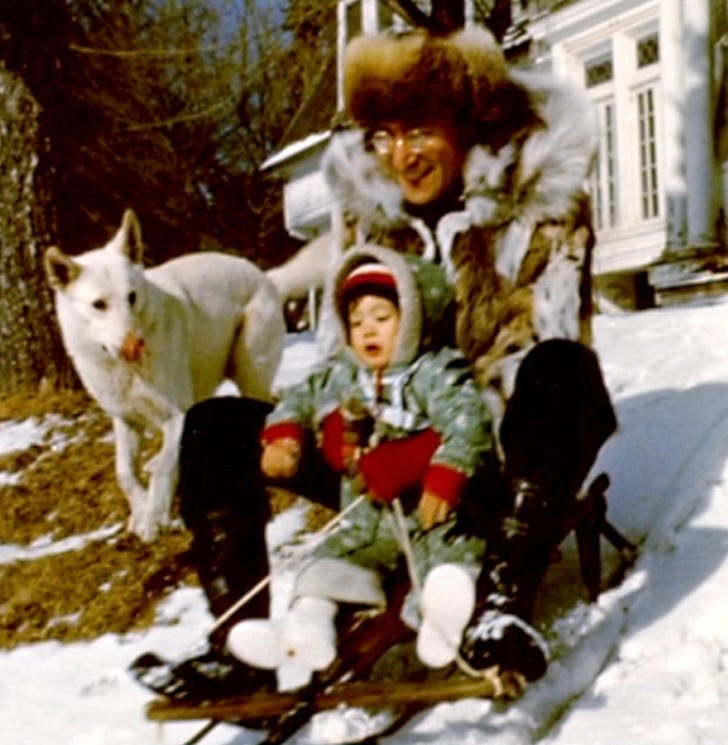
[John and Sean Ono Lennon, winter 1977]
Finally, I’ve recently read Wings by Paul McCartney and went to see the one-night-only showing of Man on the Run and have discovered that Sean Ono Lennon is a gentle, thoughtful, perceptive, and articulate contributor to Beatles history. I know virtually nothing about him, but admire the way he talks about the characters and legacy that could have completely overwhelmed him and his life in a negative way.
On that positive note, I’ll wish you a Happy Sunday!
Live the pink socks. So glad you have seen the Man in the Run documentary. I too was struck by Sean’s contribution and agree what a good man he seems. I loved seeing Paul and Linda’s life unfold. Learnt a few things too! What struck me most was watching youthful Paul throughout and then adjusting to see this totally beguiling man at 83 as enthusiastic about life as ever. Fab as we should say!
I so enjoy reading you every Sunday