put the kettle on!

This is The Pyramid* in Stockport.

It was built in 1992 and originally it was meant to be the first of a number of pyramids to create a Valley of the Kings in the North West. Not quite what you associate with a damp town famous for manufacturing felt hats. It sits right next to the M60 and, importantly for us, the junction where we used to turn off just before the viaduct to climb up the hill towards my Mum’s house.
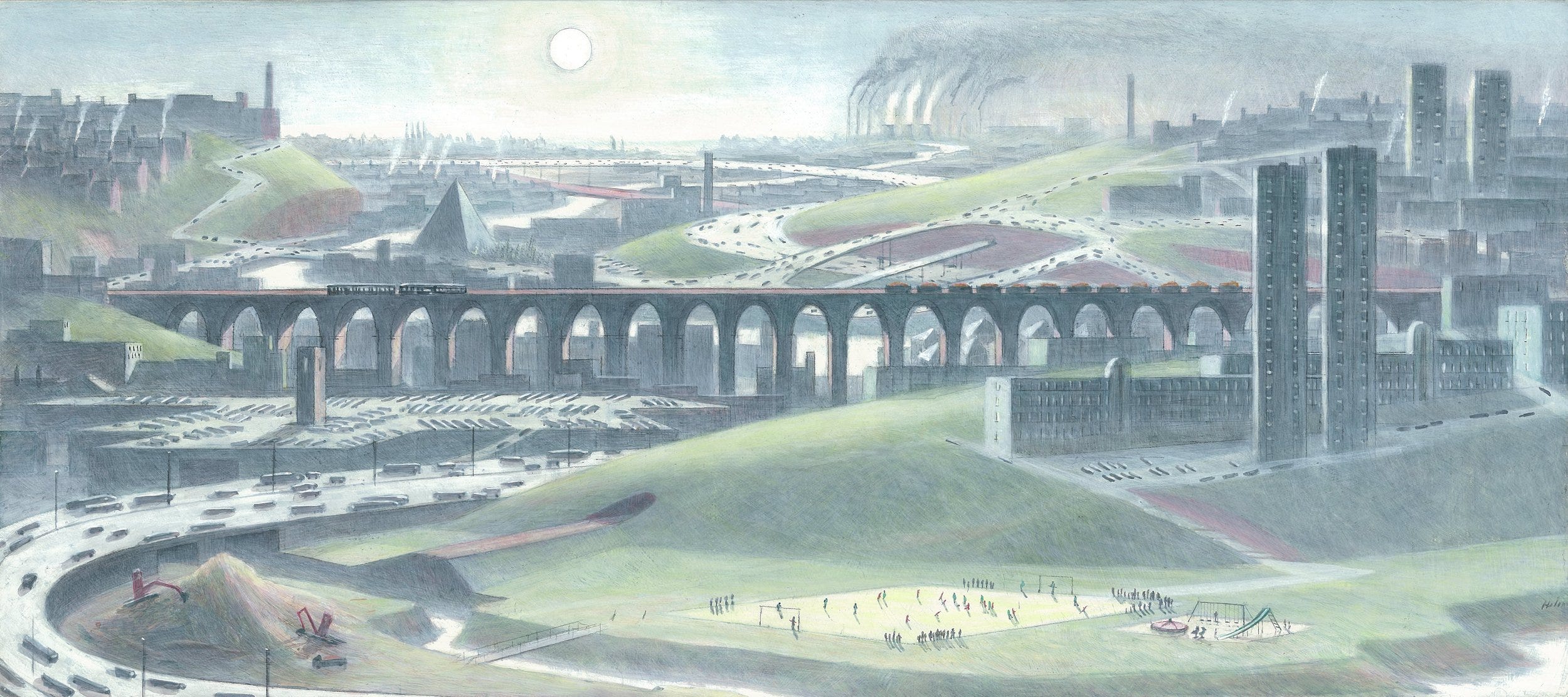
[‘Motorways and Arches’ (2011) by Helen Clapcott]
The moment the Pyramid was spotted, one of the children would phone Nana excitedly and give the code: “put the kettle on!”. When we arrived a few minutes later, the kettle would be boiling, mugs lined up, and tea imminent.
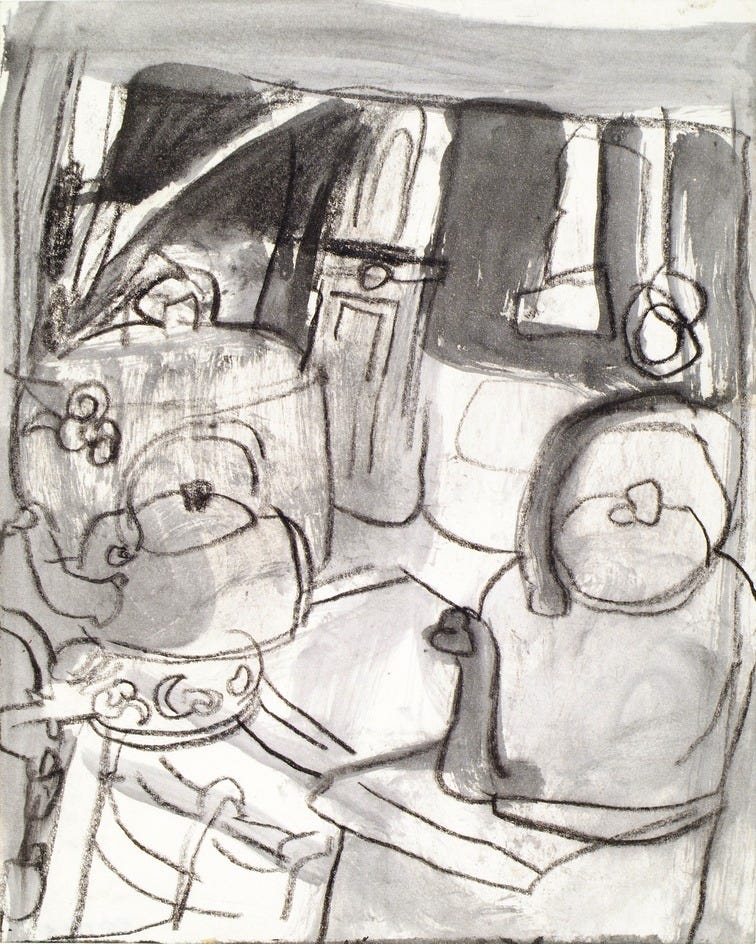
[‘Pots and Kettle’ by Joan Eardley]
I’m a tea drinker, but only since Tom and Alice were born. From my teenage years onwards, I was committed to coffee (instant) but when I was pregnant, just the smell of it would have me heaving. I couldn’t drink tea, either (or eat anything really - I lost two stone while expecting twins) but as soon as that was over, it was tea all the way.
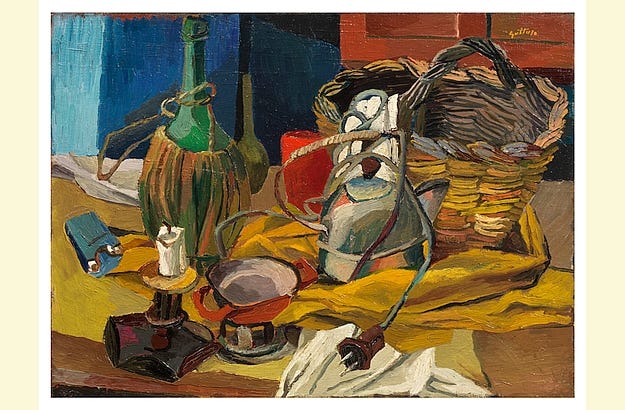
[‘Flask, candle and kettle’ (c1940) by Renato Guttuso]
So kettles have been integral to my life for decades. The one we have now is electric, although I’d like to have one which sits on the hob,
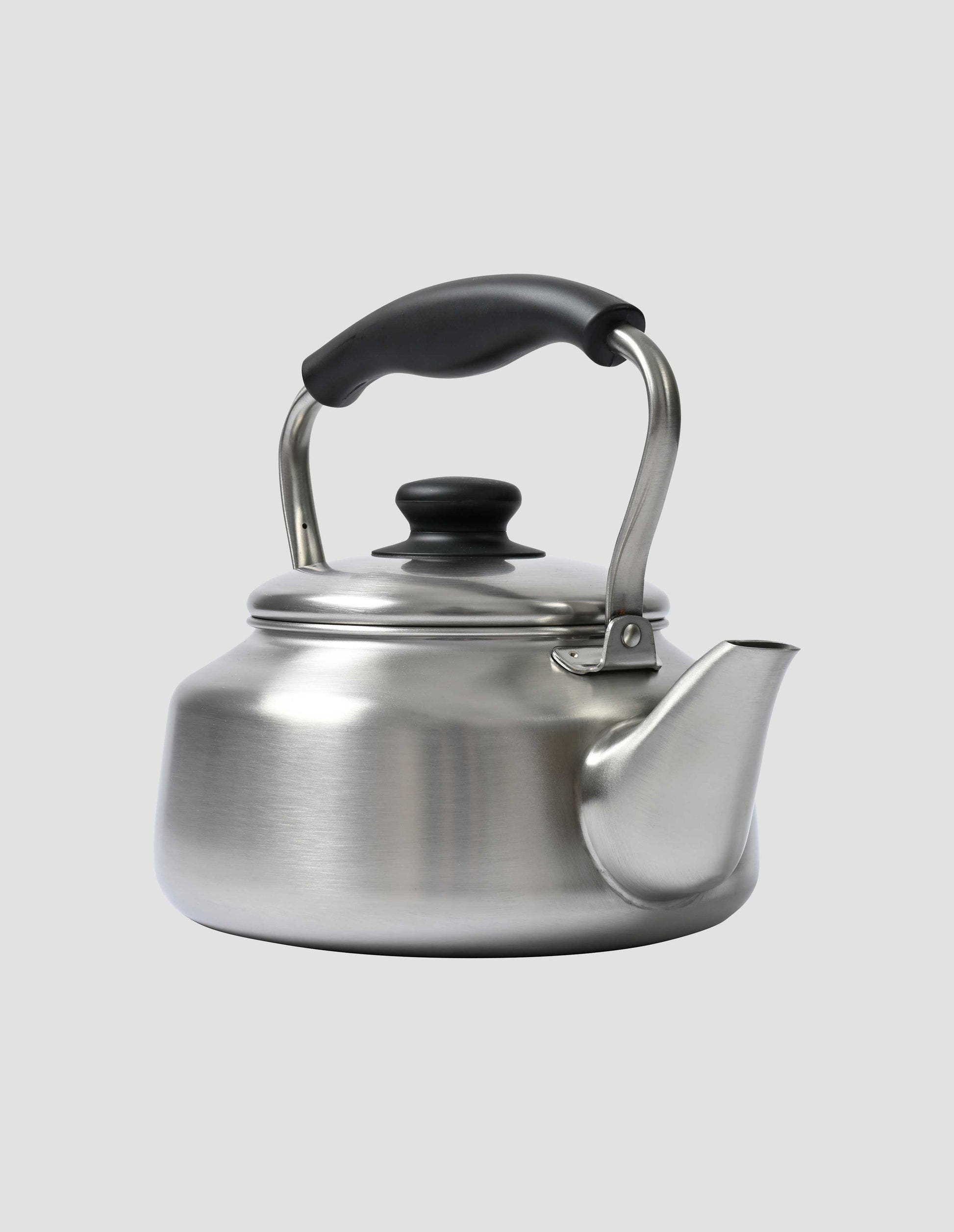
[designed by Sori Yanagi]
preferably this elegant Japanese kettle which heats up water very quickly and is a thing of smooth, gleaming beauty, but we have an induction hob and it wouldn’t work.
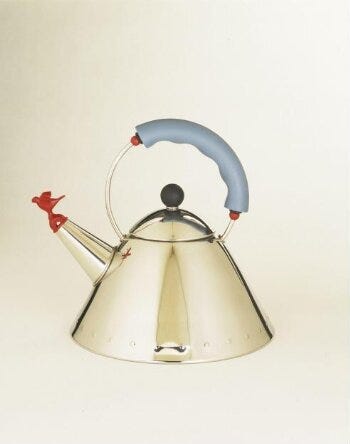
[Michael Graves (1985) for Alessi]
Plus, I might take my eye off a whistle-less kettle for too long. So a cheerfully noisy one, like the witty Alessi bird-whistle kettle, or a dull but practical one which switches itself off is required.
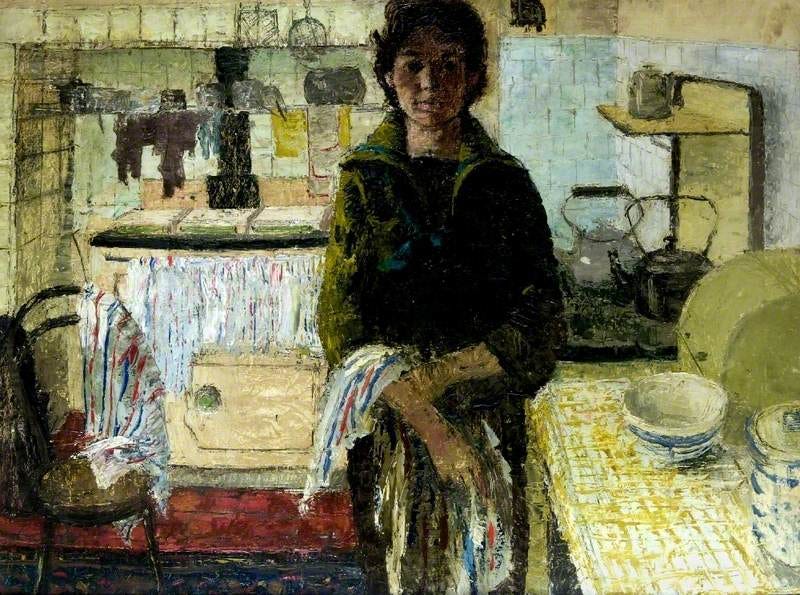
[‘Self Portrait’ (1958) by Jean Fleming]
But that doesn’t mean to say I don’t appreciate the style, status, and importance of the kettle elsewhere. I like this painting with Cornishware and Rayburn (?) and bentwood chair and washing and tea towels and bread bin all making the kettles an integral part of a ‘domestic symphony’ (see below).
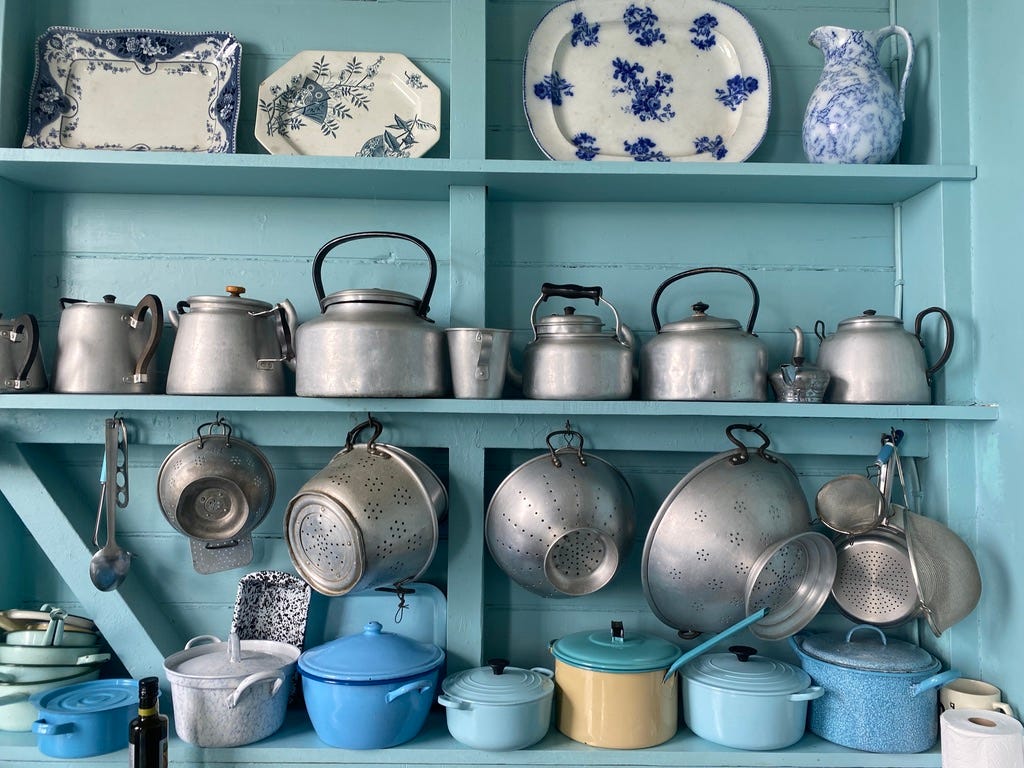
These are the huge catering kettles which are in a friend’s kitchen - the way they are displayed en masse completely alters the way we see them - and the colanders - not as workaday utensils but objects of beauty which are are battered, worn, and still doing their job.
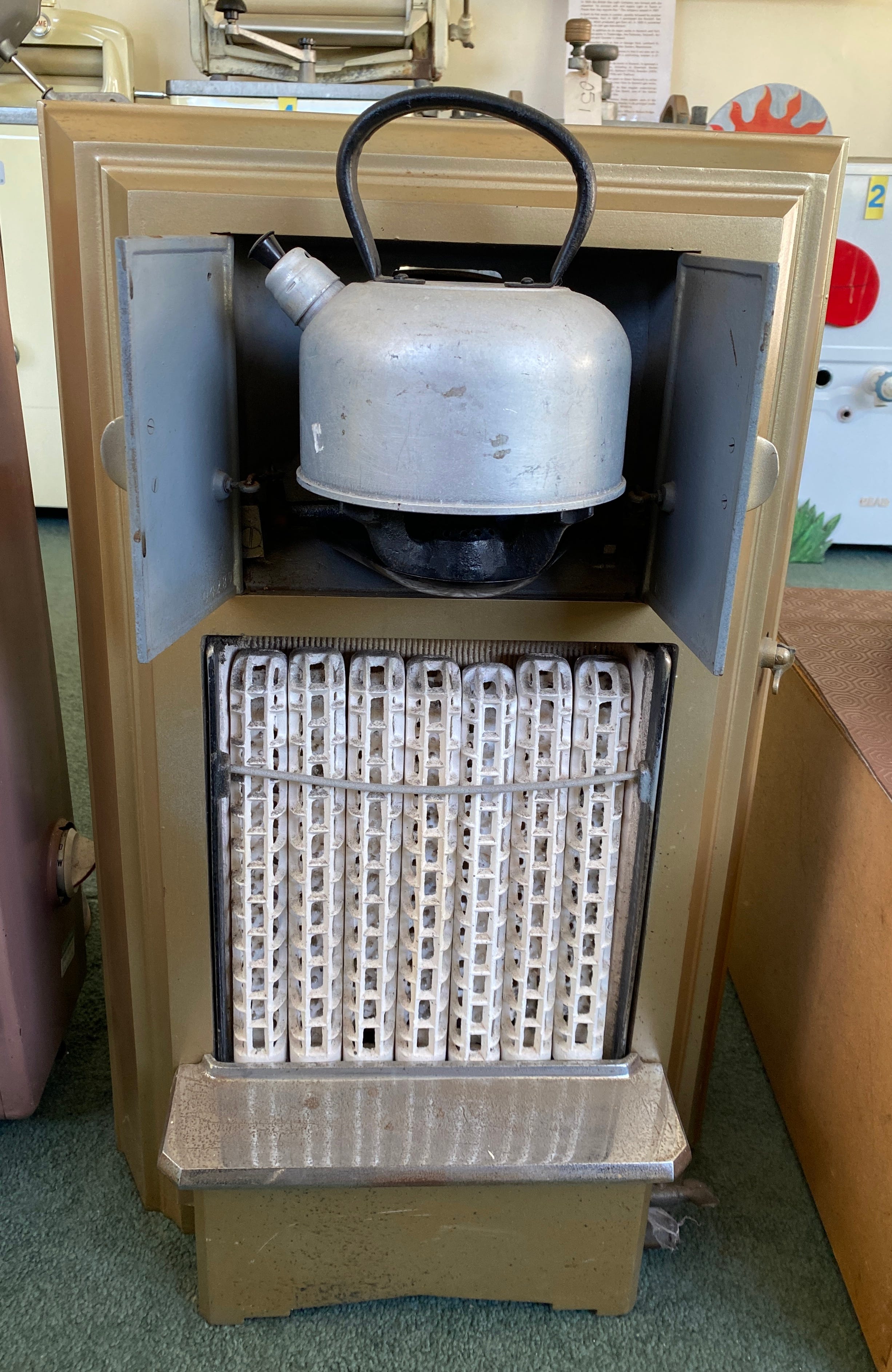
I feel a kitchen isn’t a kitchen without a kettle, which is probably why so many in museums’ domestic room recreations it’s as though someone has just popped to the corner shop for a packet of tea and a bottle of milk,
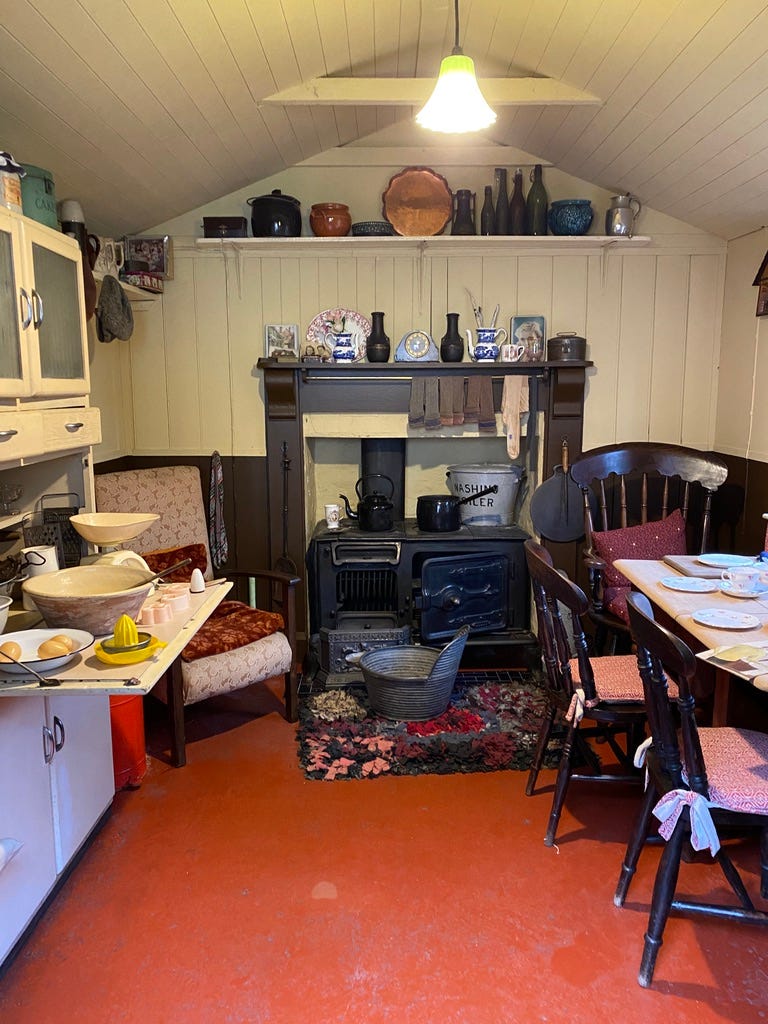
[St Fagan’s National Museum of History]
or bobbed next door to borrow a bowl of sugar.
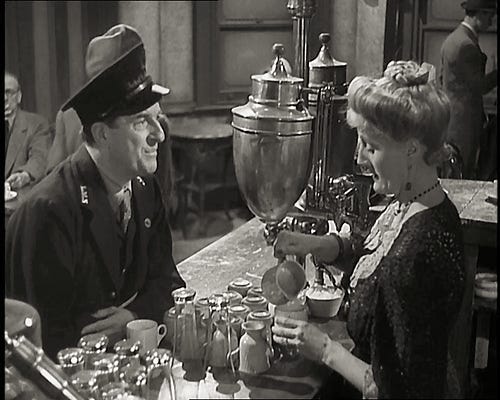
Although I do like a well-used, well-polished urn (or samovar) like the one in the station refreshment room in Brief Encounter.
Tea has been a primary way of keeping people away from alcohol, and in the Potteries novels of Arnold Bennett, Anna of the Five Towns for example, many kettles sing on the ranges in small, Methodist houses.
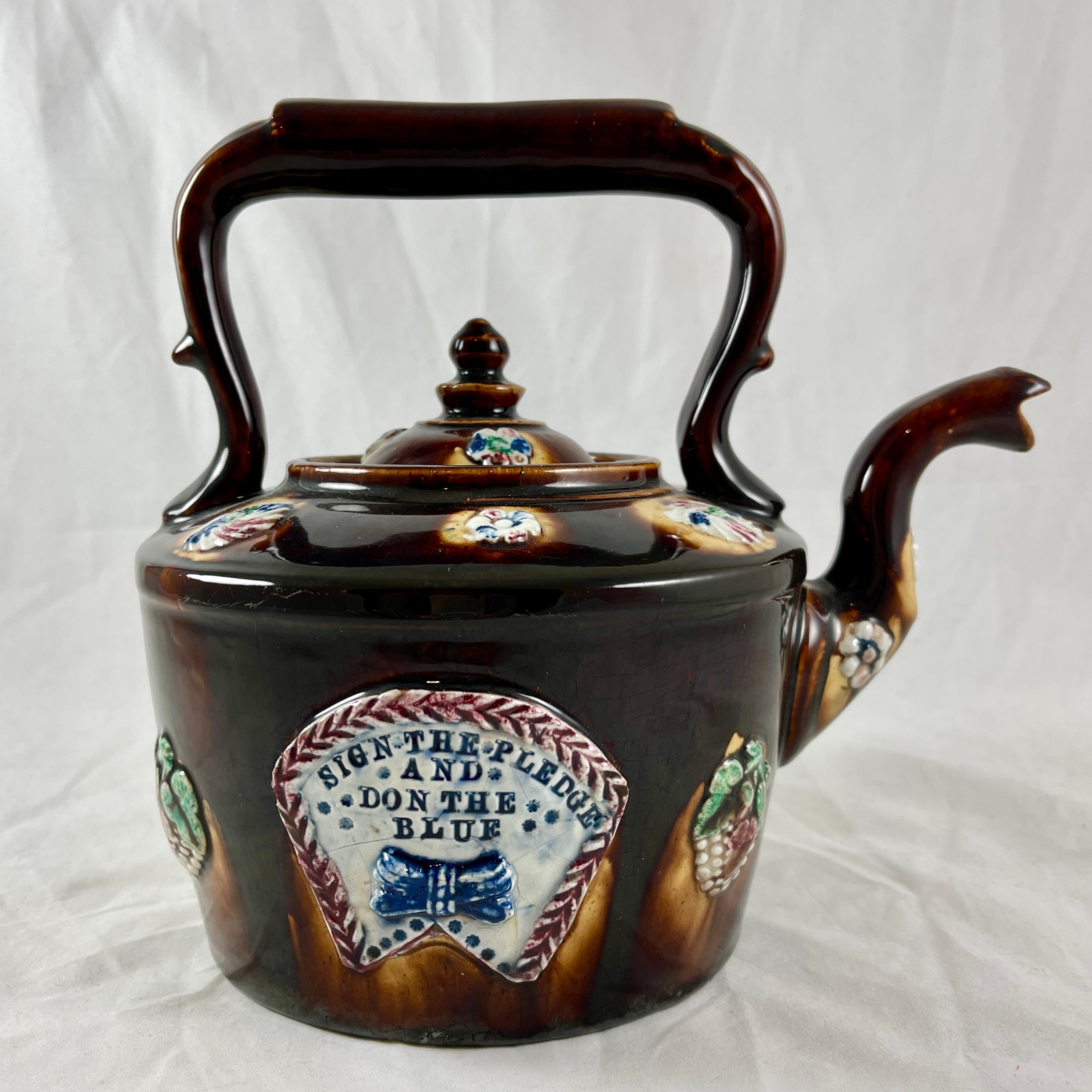
[Measham Bargeware Temperance Motto Kettle c1880]
They were often shaped like, but perhaps not as decorated as, this temperance kettle.
‘Kettle’ itself is a great, old word. In Cambridge we have Kettle’s Yard and the Copper Kettle cafe. Kettle is also an excellent surname, as exemplified by the brilliant textile artist, Alice Kettle (who, I feel, should be married to conductor Simon Rattle and then they could hyphenate their names to make them extra-onomatopoeic). Then there is Ma and Pa Kettle (names invoked regularly by my Mum to suggest untidy family life). I love the fact that Ma is Phoebe Kettle and they have a son called Tom Kettle. (All three of our children with the Kettle surname.)
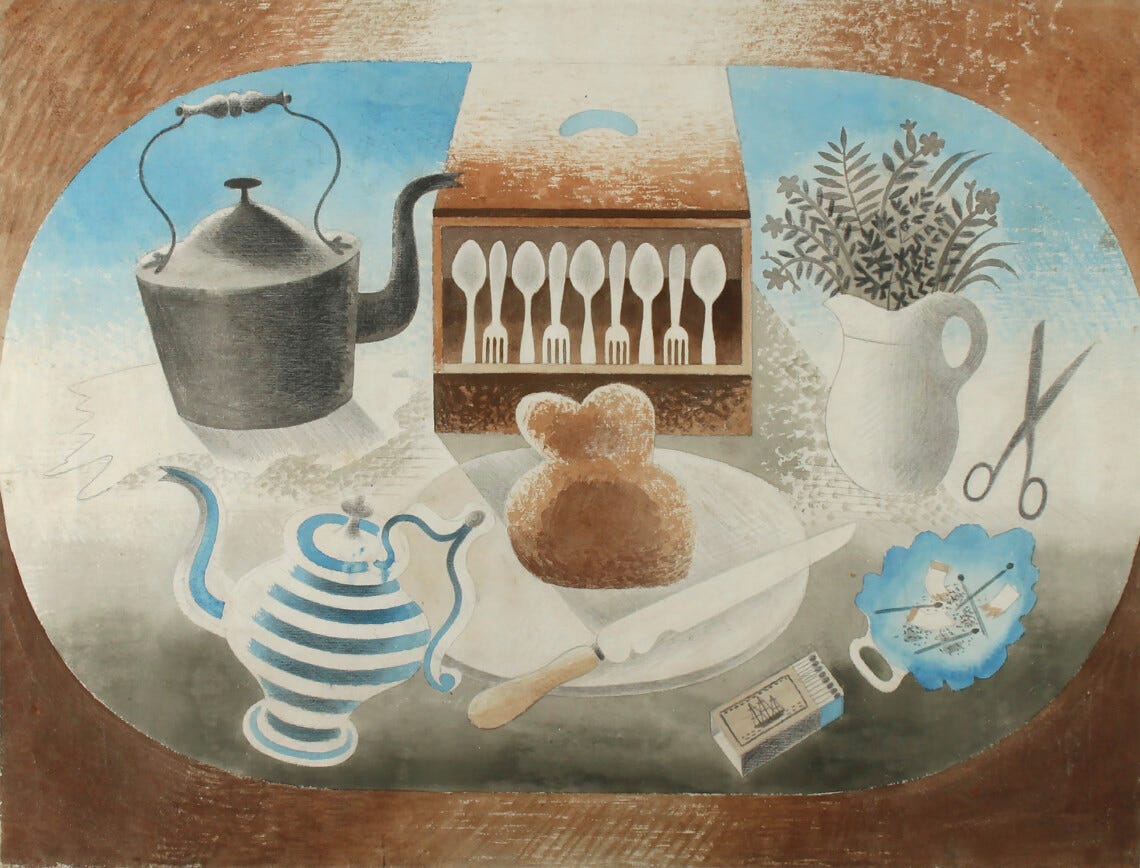
There aren’t many negative kettle connotations. Instead they suggest cheerfulness, elevenses, big mugs and pots of tea with biscuits and chat, respite, and sympathy, all of which are captured by Eric Ravilious in this old favourite, a 1939 design for embroidery for Dunbar Hay. Kettles appear in children’s books by Beatrix Potter, Janet and Allan Ahlberg and many more, symbols of a settled home life and secure, predictable domesticity (eg after Peter Rabbit’s near-death experience with Mr McGregor, so terrifying to me as a child that I couldn’t bear to listen to it).
Kettles are the epitome of ordinariness. As I’ve mentioned before, the Beatles were never far from a cup of tea and therefore a kettle which in the early days was the gas hob sort with a good strong whistle, like John Lennon’s own.
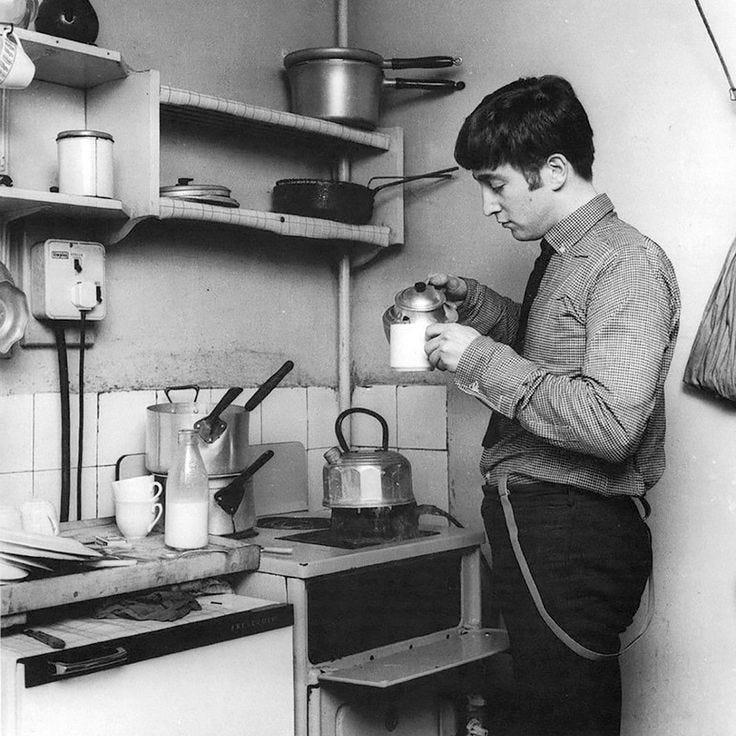
[photo by Dezo Hoffman, March 1963]
Here he is pouring a cup of tea in Paul McCartney’s home during a shoot to illustrate just what nice, clean-living boys they all were, neatly airbrushing out the wildness of Hamburg.
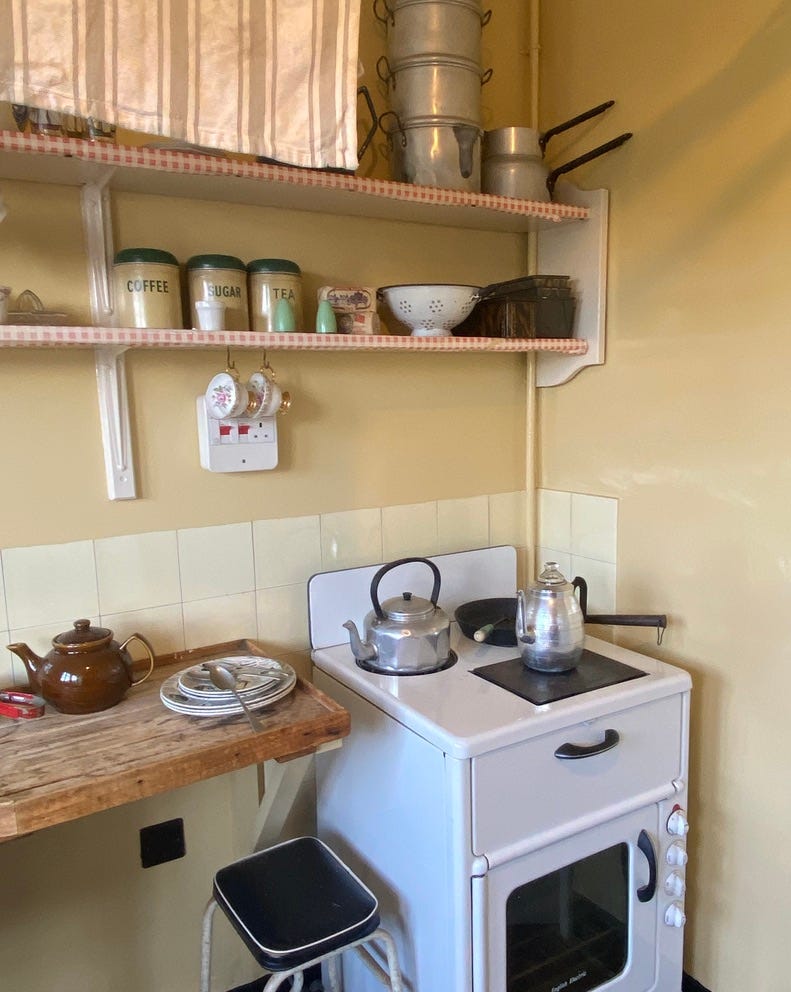
And this is how it looks today, complete with (slightly different) kettle

[‘Symphonie Domestique Américaine’ (c1923) by Preston Dickinson]
I think Preston Dickinson is right in his painting and the kettle is central to the domestic symphony - and harmony. Even his Precisionist style, usually applied to industrial subjects, works with the bulbous kettle overseeing all the other components. The kettle as queen of the kitchen.
Happy Sunday!
*The Pyramid has been in the news recently because, after years of being empty, it is now the Royal Nawaab Pyramid, a massive restaurant which can cater for hundreds of people. It was even reviewed - very favourably - by Jay Rayner in the Financial Times last year. Stockport is quite the destination now.
A whistling kettle was the sound of my childhood, too (although my mum was a coffee-drinker, made with hot milk). Now we have an all-singing, all-dancing Bosch electric kettle that does different boiling temperatures and keeps the water hot: the best kettle we’ve ever had.
(Incidentally, I read a biography of the sublime Betty MacDonald and learned that the family of the couple on whom she based Ma and Pa Kettle in ‘The Egg and I’ sued her over the portrayal - it was settled out of court. They then sued again for almost $1m - in 1951! - but this time it went to court and Betty McD won)
There is a great song about the Stockport Pyramid which I heard on 6 Music it’s by Antony Szmierek and it’s called The Great Pyramid of Stockport def worth a listen