coated

I have been making a coat this week using the September Coat pattern from Merchant and Mills. It’s not the first one I’ve made, yet I’ve still managed to incorporate some mistakes and now I’m doing my best to see the biggest one as a design feature. Once I’m buttoned up and swaddled in it, though, I think I’ll be more concerned about keeping warm.
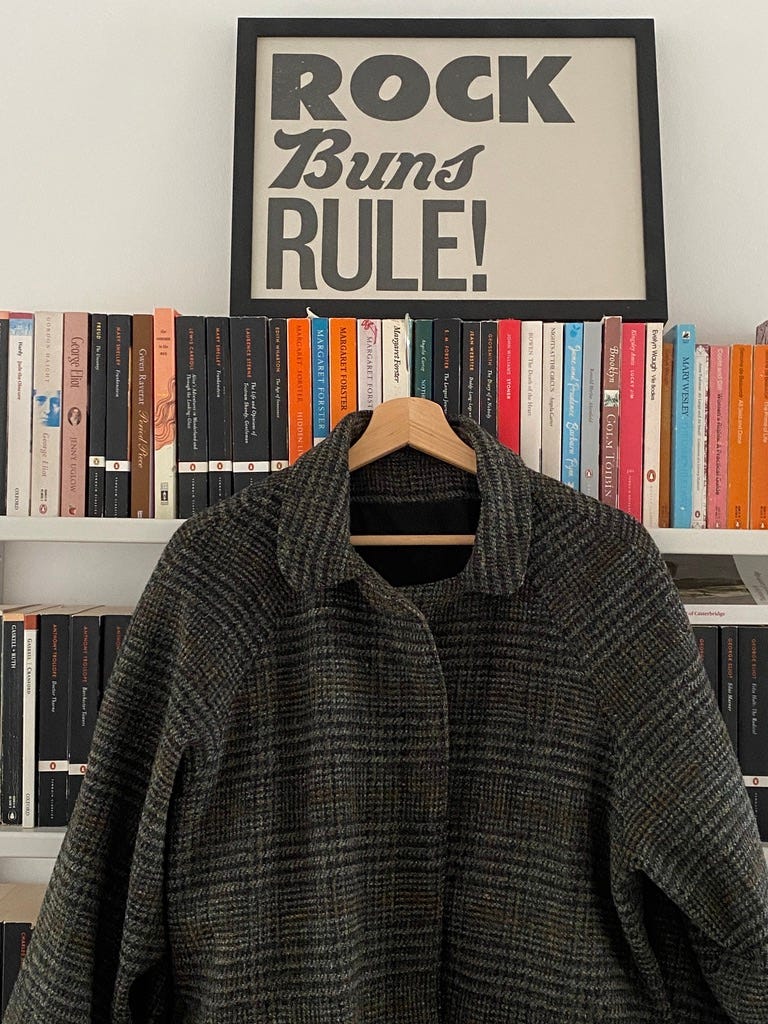
[unfinished coat + life mantra]
Sewing a lined coat is complex. It really does require concentration and the ability to think inside out and back to front. And I’m not helped by Simon announcing “you have fifteen minutes left” à la BBC Sewing Bee every time he comes into the rom. It has used up pretty much all my thinking capabilities this week but left just about enough for me to consider the style of coat I was making, and what it reminded me of.
It’s a design which has become popular in recent years and I love it. It’s everything I want in a coat. It’s long enough, loose, capacious, has big sleeves, big cuffs, four pockets, a sufficiency of buttons, and a modest collar. This one is made with a classic tweed and although I like wild linings, I have restrained myself and lined it with a lovely, tightly woven Japanese cotton in black.
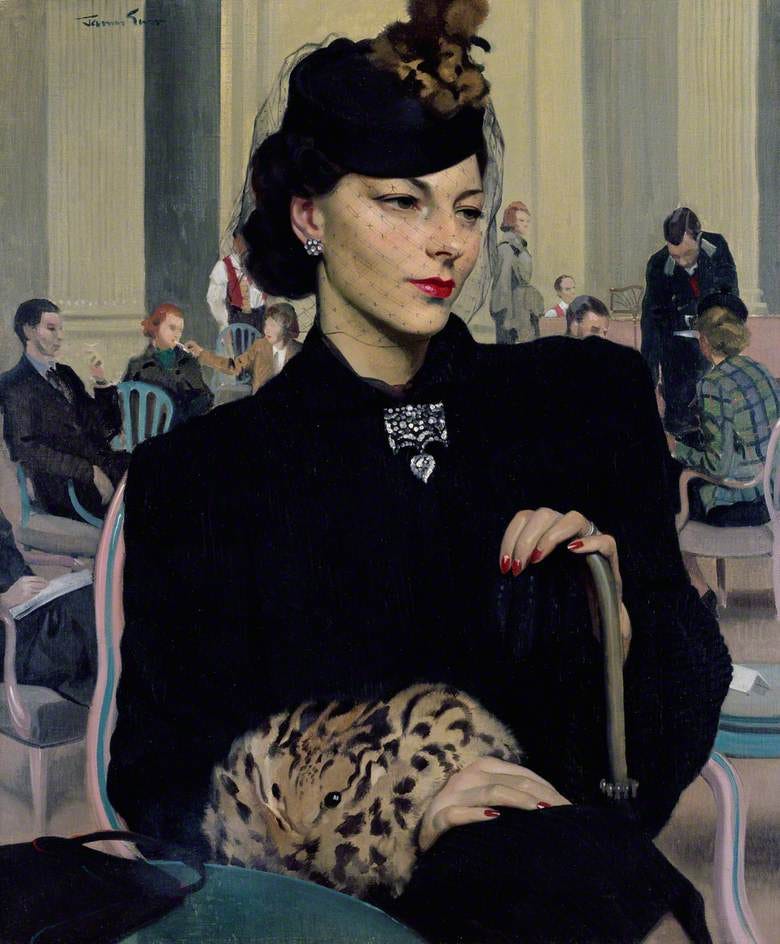
[‘Pauline Waiting’ (1939) by Herbert James Gunn - look her feline eyes and the eyes on muff}
What it’s not is fancy, tightly waisted, and tailored, because I like an everyday coat which is emphatically not a fashion statement.
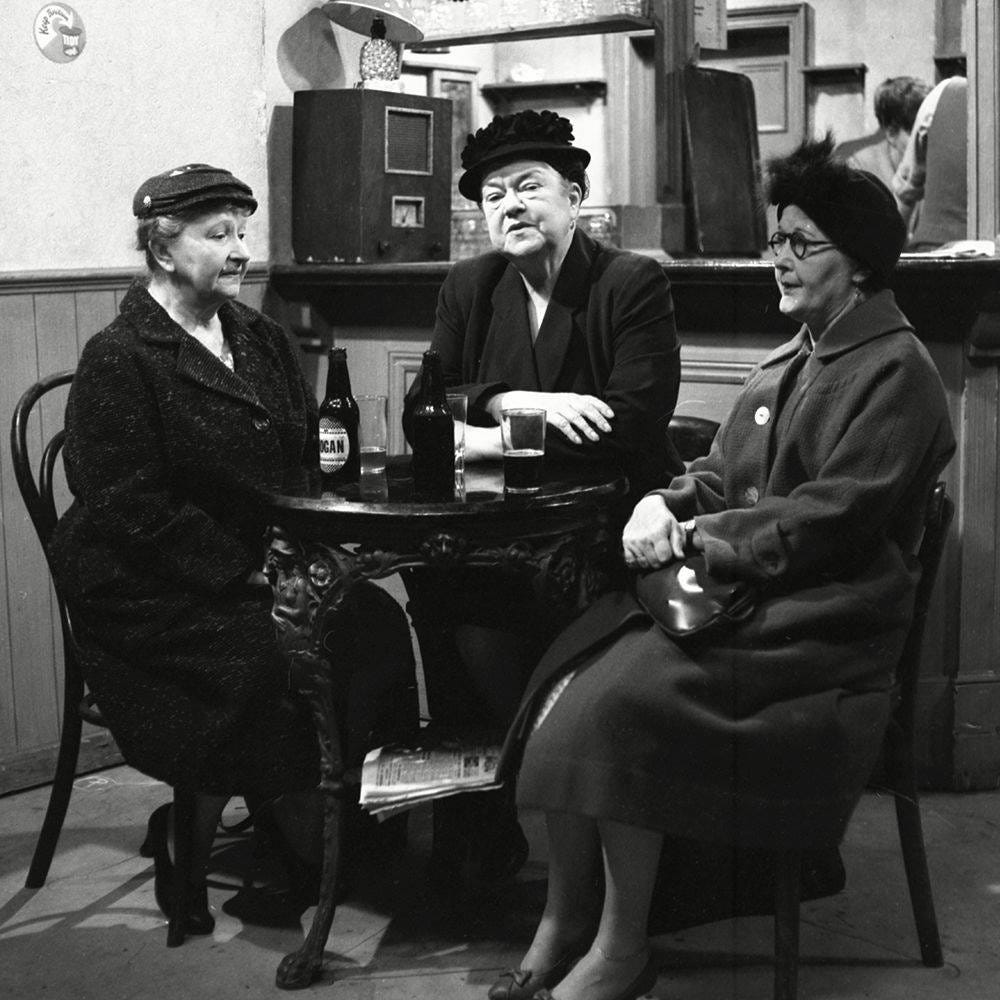
And this is why it’s amused me, because when I think about its heritage, it’s anything but fashionable or stylish. It reminds me of nothing more than my Nana in Manchester in her very sensible green and brown, flecked, scratchy tweed coat which was no doubt “an investment”. (Or, as my mother-in-law said when she bought a new winter coat: “it’ll see me out”. And, like her settee (ditto), it did.) It also reminds me of the coats worn by Ena Sharples, Minnie Caldwell and Martha Longhurst in Coronation Street in the 1960s.
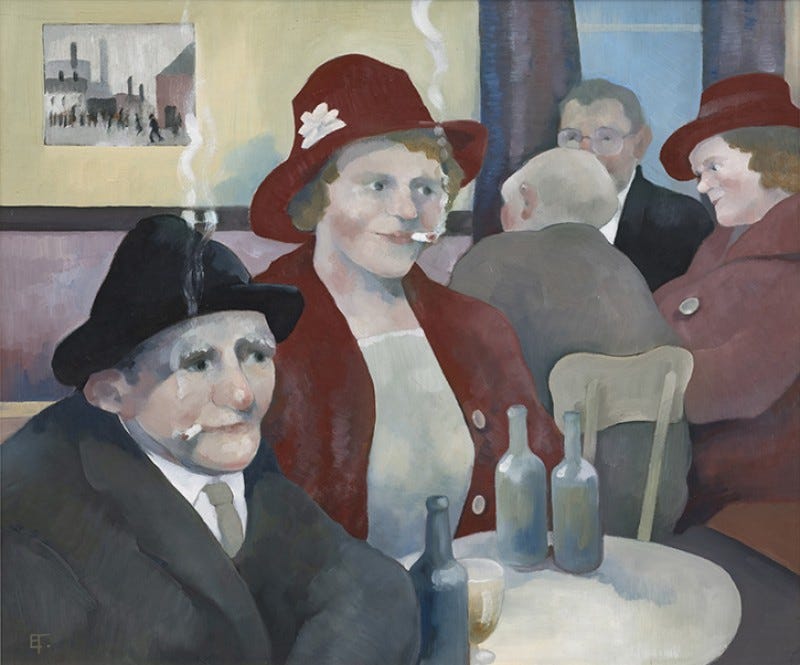
[‘Two Smokers’ by Eric Tucker]
Of course, like my Nana, they would have had only one coat to last a few winters (cheap on the TV wardrobe budget), and it would have been worn everywhere, and rarely taken off, even in the Rovers Return or at Eric Tucker’s local,
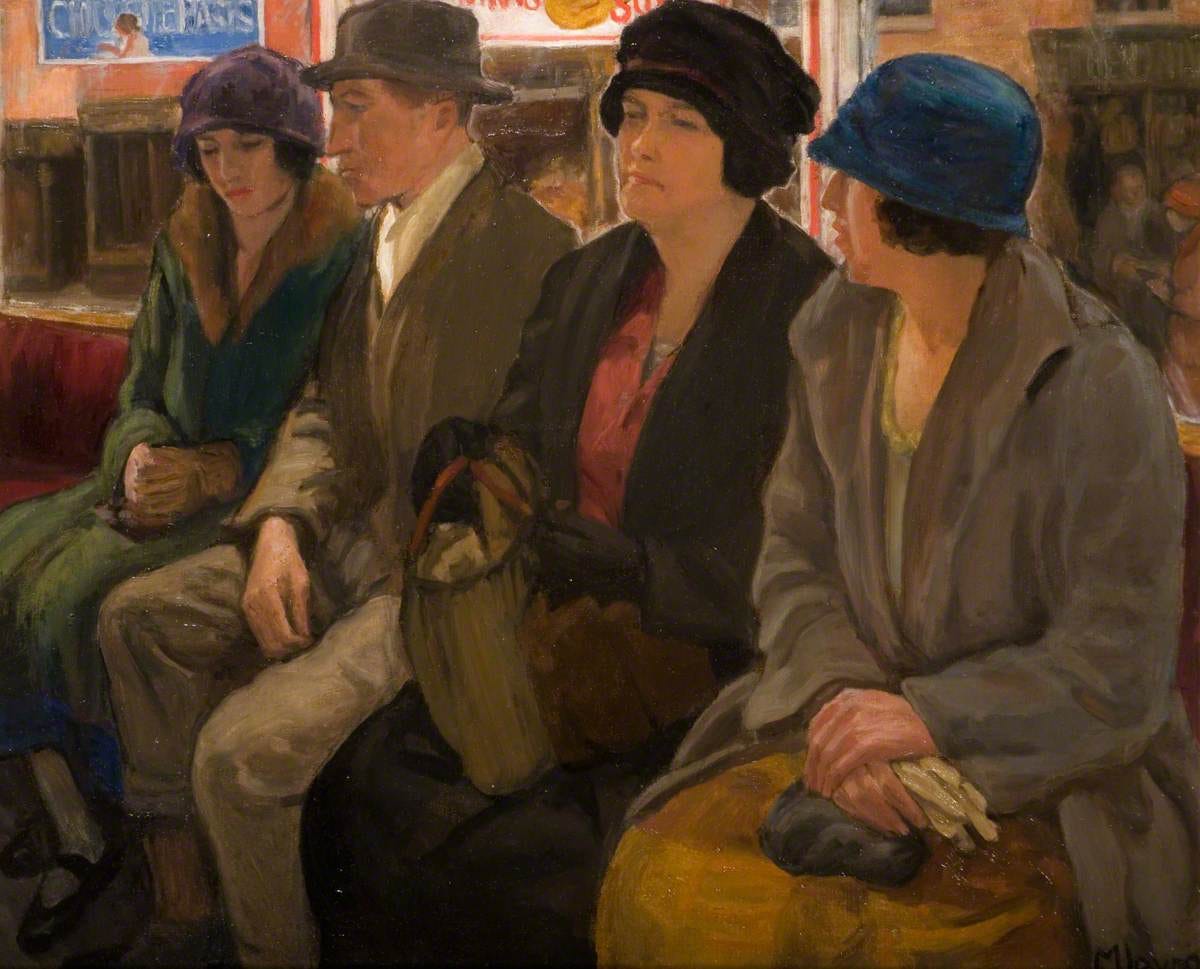
[‘The Omnibus’ (1920s) by Mabel Frances Layng]
and definitely not on the bus or train. Which brings me to another good reason for this coat’s usefulness: it barely matters what you have on underneath when out in public.
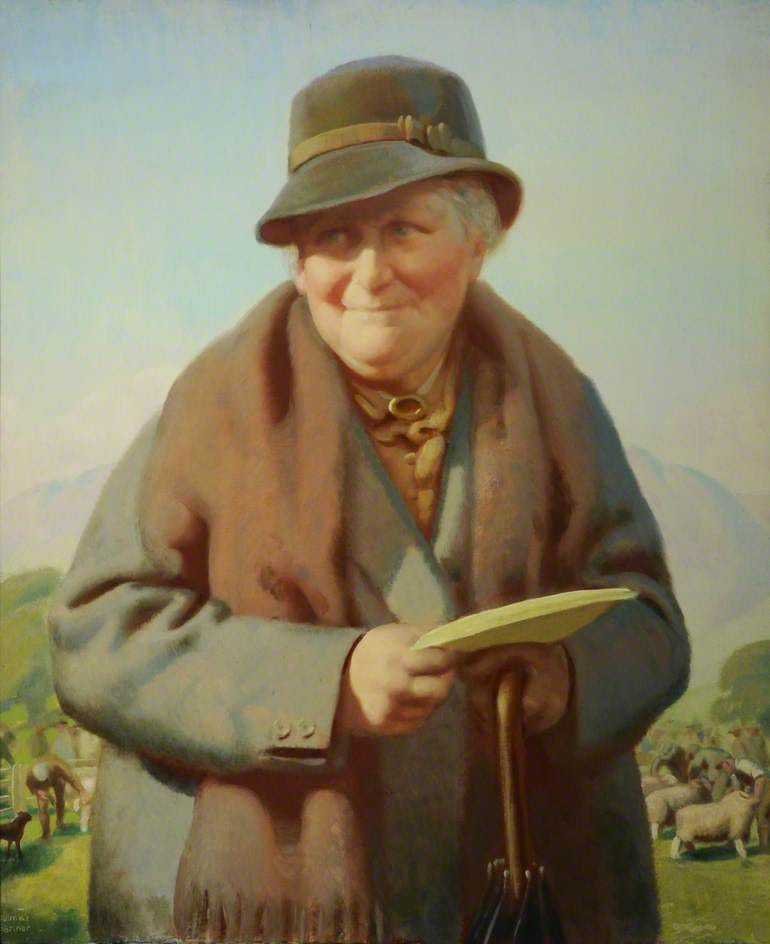
[‘Beatrix Potter in Old Age’ (c1938) by Delmar Banner]
It’s the kind of garment that looks great on people of all ages, and it’s the ultimate in an everyday winter coat (example, but at a price). It’s funny that it’s been adopted by younger women - Alice has one I made on permanent loan and gets lots of compliments - when this style’s earlier wearers were bracingly unfashionable. Like Beatrix Potter in a coat with a soft shawl neckline, possibly made with wool from the Lake District sheep behind her.
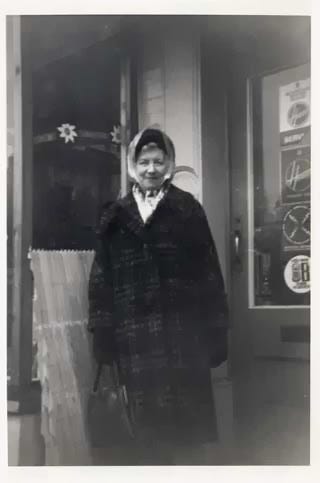
And Dorothy Whipple, who was very interested in good quality clothes, but felt she never quite got her outfits right; she could have been one of Jane’s anxious customers in High Wages. Here she is in a doorway in Blackburn, as far from '“famous lady novelist” as you can imagine - no-nonsense coat, headscarf and handbag - unaffected and unpretentious and the kind of person you could easily talk to. In fact, she could be wearing a “black moleskin coat” with the '“capacious sleeves” which serve a very useful purpose in her wonderful short story “The Handbag” (in this collection).
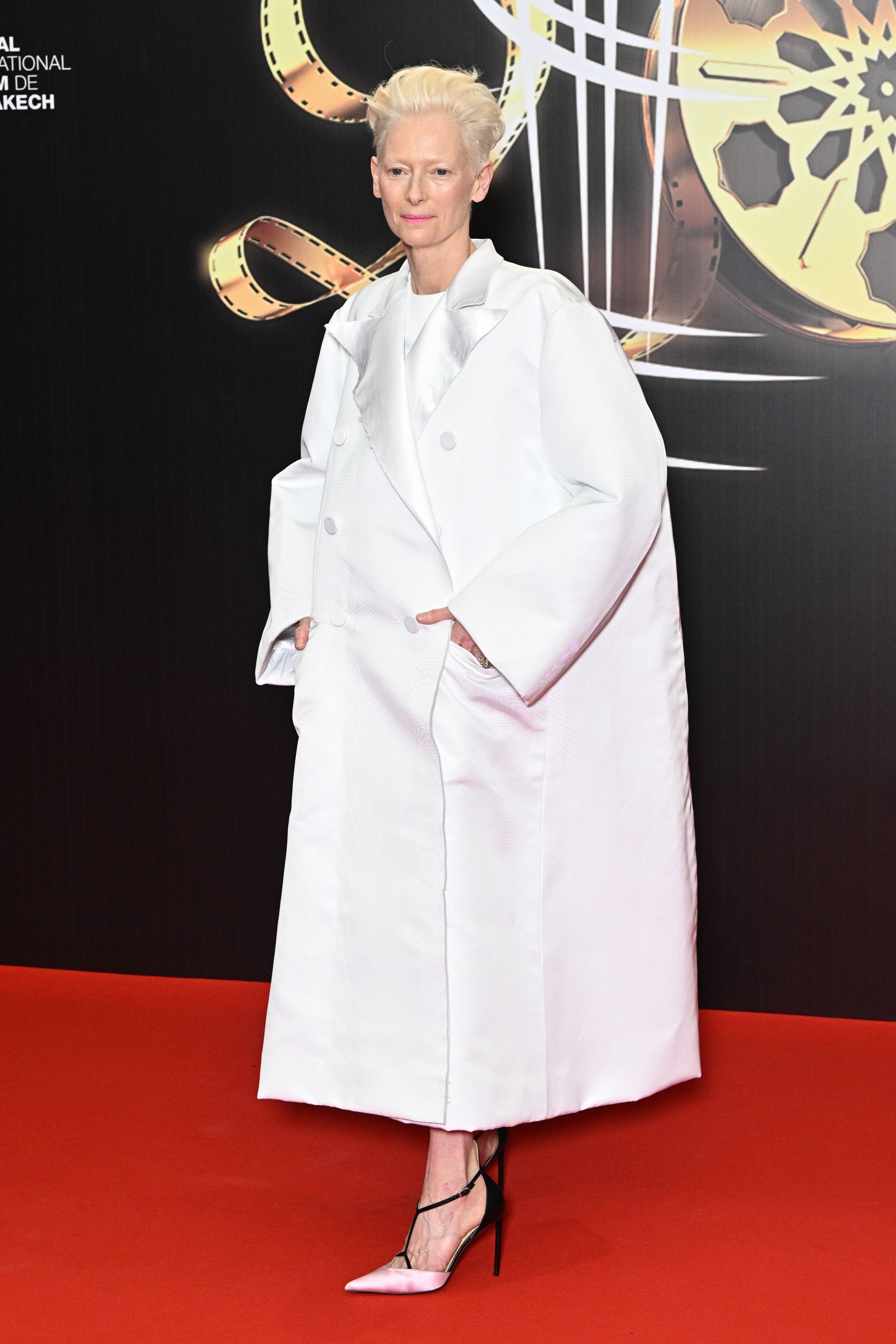
[2023]
But if we are looking for something today in which to hide things, then Tilda Swinton’s HUGE coat with gorgeous satin lapels could probably conceal a whole set of Louis Vuitton luggage. While sitting at my sewing machine and having seen this, I wondered if maybe I should go up about ten sizes to XXXXXXXXXXXXXL when I make my next coat.
I also fantasised about other coats I could make if I were a much better seamstress and bolder in my choices. I’d love a big, circular, swishy one in huge colourful checks but I’m not sure I actually want to turn heads. And then I came across the coats worn by Greta Garbo, and oh my goodness, she is now my style icon.
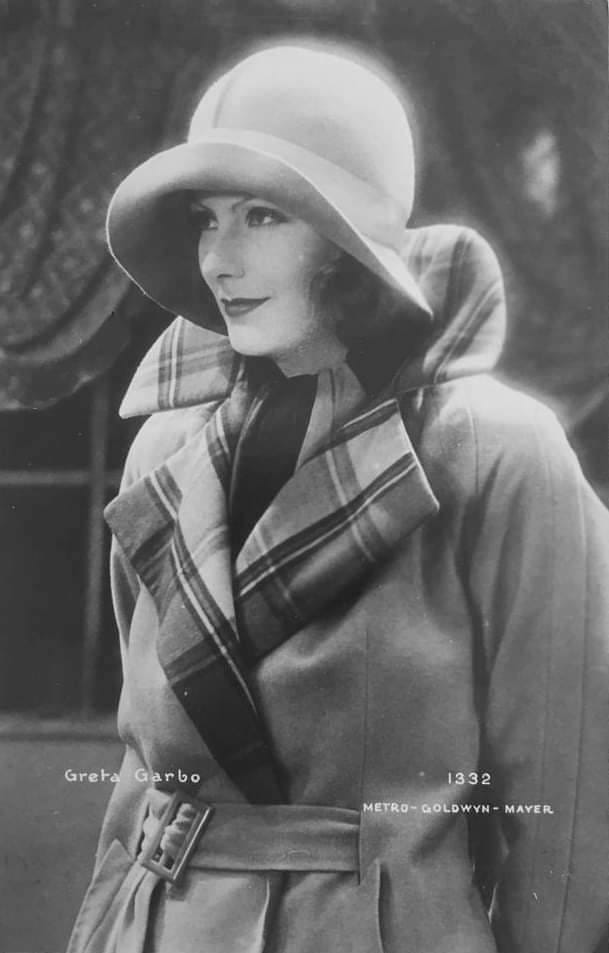
[‘A Woman of Affairs’ (1928)]
This is how you wear a “statement collar”, as the fashion editors might say. It was designed by Adrian, as in “Gowns by Adrian” (I love the costume credits like “Miss Davis’ Gowns by Orry-Kelly”) . Adrian dressed Greta Garbo for various films and gave her the best coats - fabulous fabrics, androgynous, ultra-comfortable, beautifully draped.
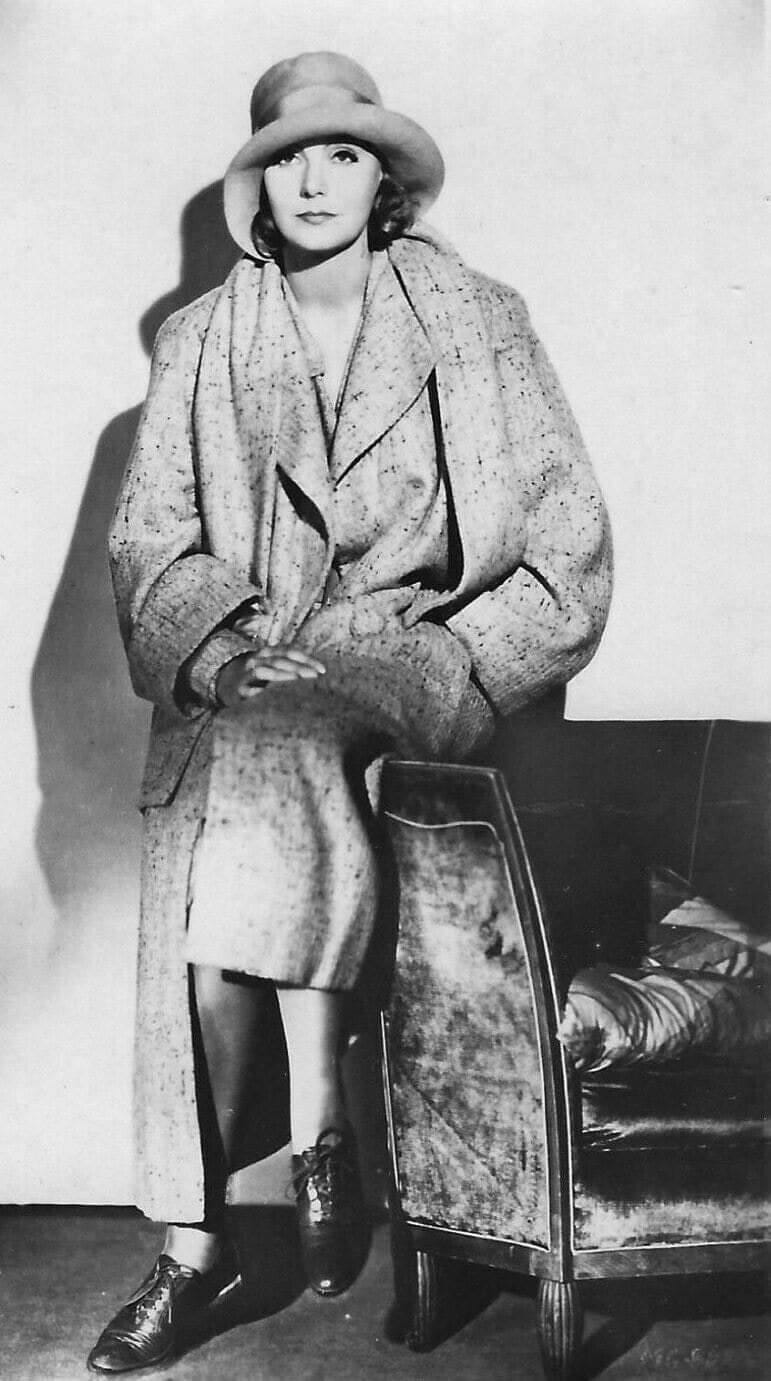
Like this. It’s all about scale - not quite the Tilda Swinton scale, though - with huge cuffs, sleeves, collars, and a tweed which looks wonderful in black and white. Greta Garbo was wearing this around time other film stars were wearing tightly tailored coats with frogging and big buttons and enormous shoulder pads whilst also teetering on very heels.
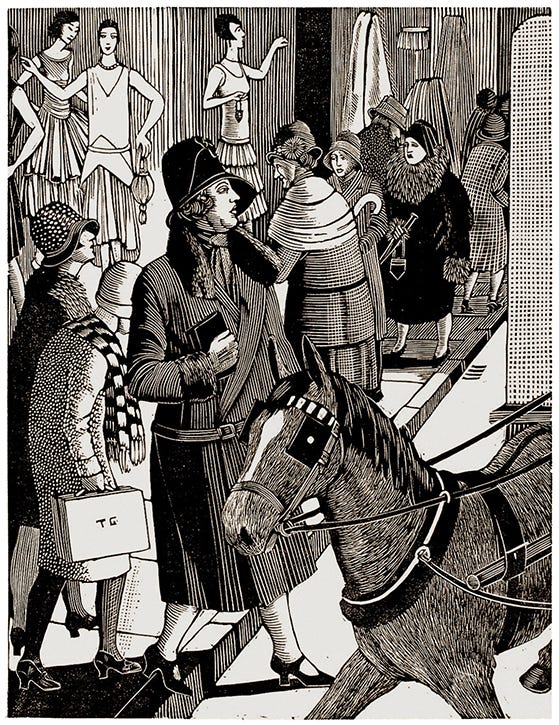
[‘Kensington High Street’ (1929) by Tirzah Garwood]
There is a fascinating coat culture in film, art and literature. Tirzah Garwood captures the variety of smart ladies’ coat fashions with just a touch of sardonic humour. She by contrast wears a rather nondescript coat, carries a briefcase marked T.G., and appears somewhat world-weary
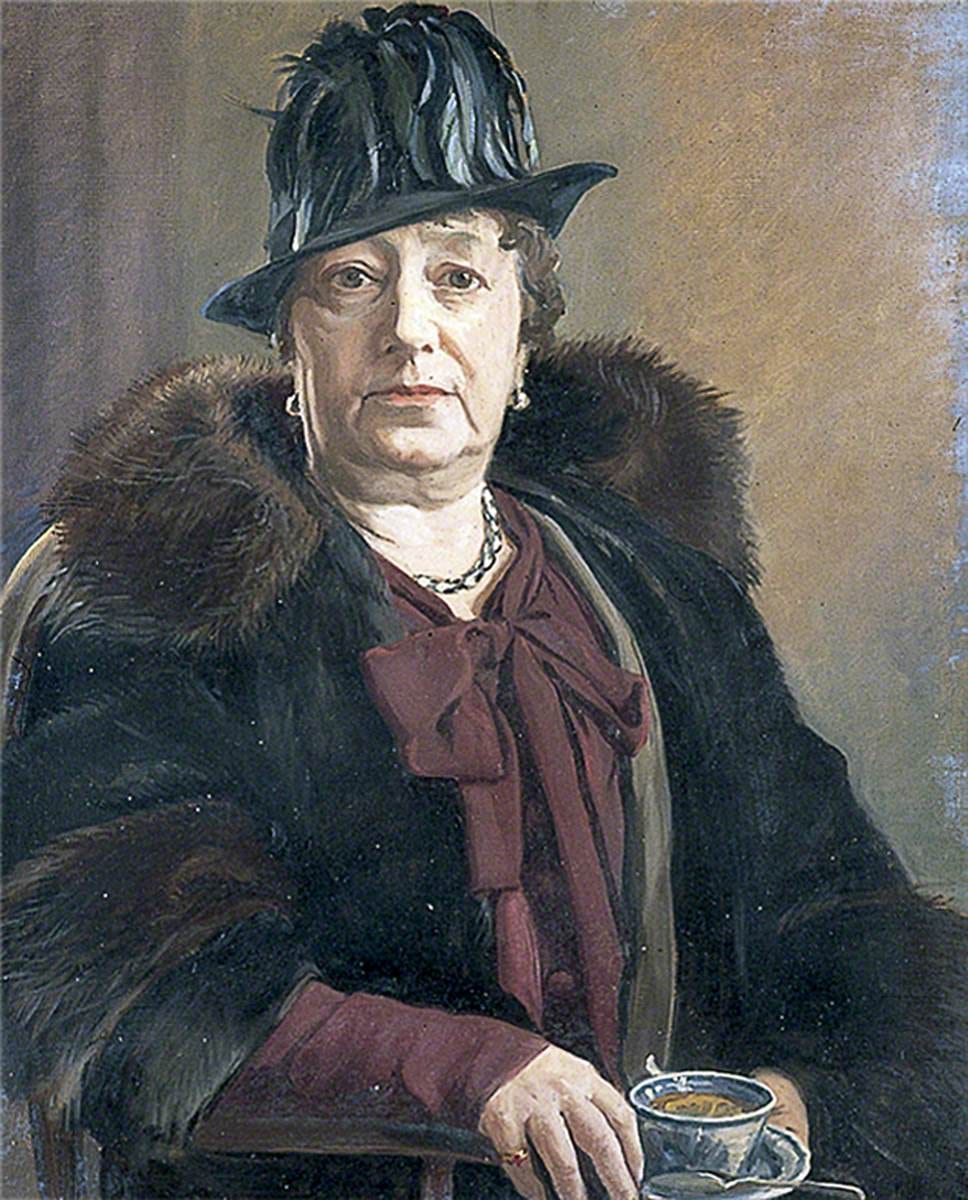
[‘The Visitor, Miss Hayes’ (1937) by Philip William Cole]
And Miss Hayes could be straight out of a Dorothy Whipple novel or story; her overbearing, formidable, bossy women always have seem to have coats with sable collars which take up space, tight corsets and shoes, and very erect posture.
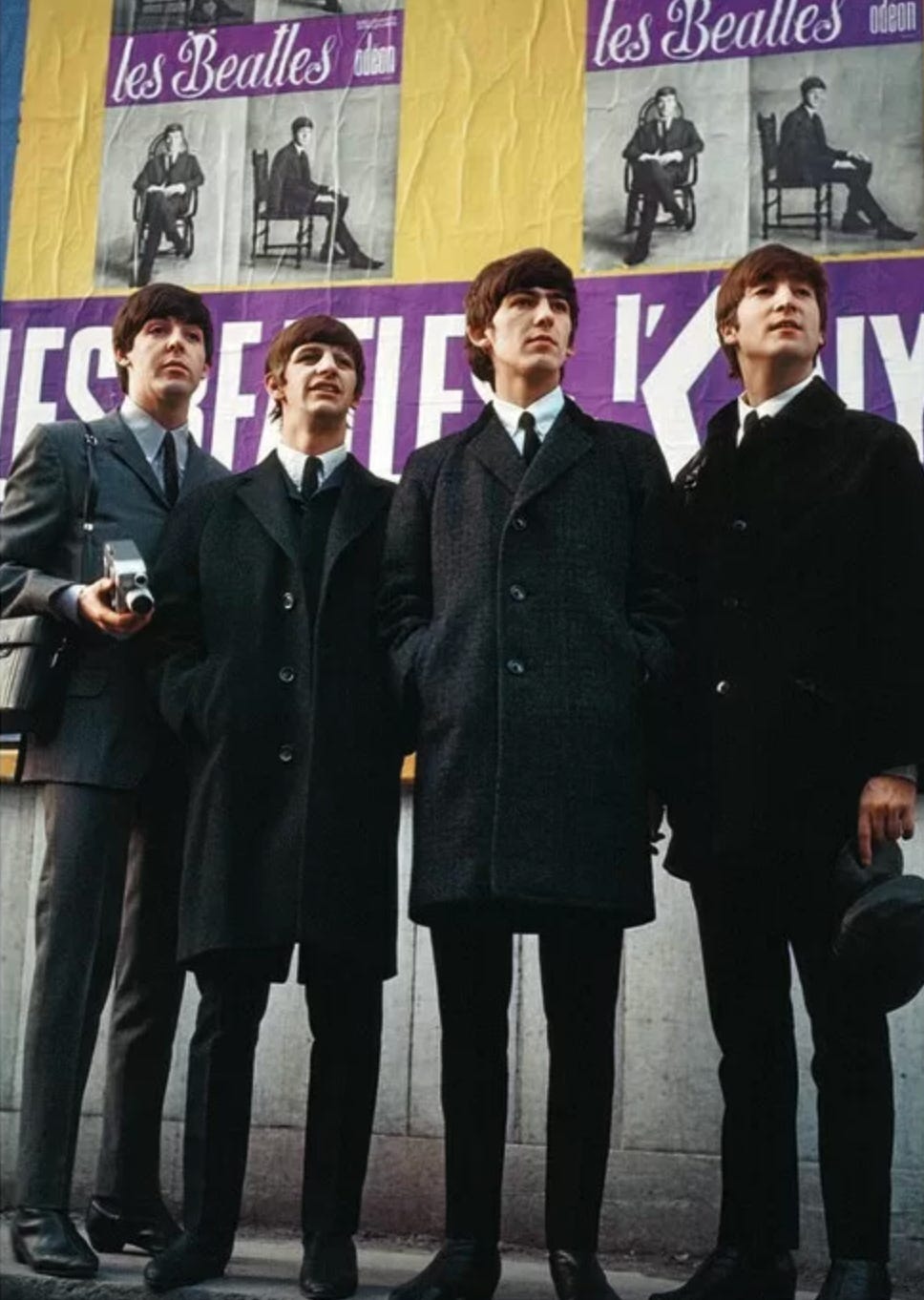
Finally, by contrast, here we have proof, if ever it was needed, that simplicity, good cloth and a good cut are all that’s needed for a coat to be a classic and last years or decades. The Beatles in Paris in 1964 wear genuine Crombie coats, and not the 1970s imitations worn with purple/green two-tone Tonik trousers and monkey boots by teenage boys, including our two neighbours, John and Peter, who swaggered off to the Friday disco to dance and impress in their fake Crombies which, nevertheless, did look good. Not quite Beatles or Cary Grant level, but stylish enough for Stockport.
Happy Sunday!
Last December when I was asked to deliver the family’s eulogy for my lovely uncle I realised I had no ‘good coat’. The one I ordered on line was a massive disappointment - it would definitely not have seen me out - so went straight back.
Slightly panicked I went into Hwlffwrdd Barnardo’s. And there it was. A beautiful, long, grey wool and cashmere Windsmoor coat with detachable fake fur collar. Seemingly unworn. And reduced to £10. I paid the originally asked for £20 and went home slightly shaking with my good fortune.
I’m hoping that it will be cold and dry in Switzerland and northern Italy this November to wear my good coat on a less somber occasion. I’ll put the collar on this time.
Brilliantly observed as ever. The September coat is at the top of my list ( for when I feel brave enough). And can I suggest this is just the right way to remember Diane Keaton who was my style icon from Annie Hall onwards