aide-mémoire

Two of the best book titles ever are Metaphysics as a Guide to Morals (1992) by Iris Murdoch and The Grammar of Ornament (1856) by Owen Jones.

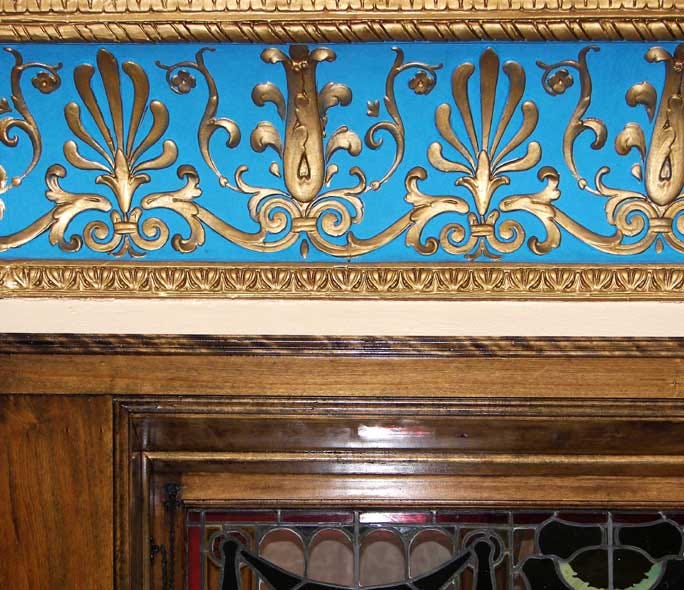
[Greek No 4 Plate XVIII, The Grammar of Ornament]
The first I bought purely because of the title but couldn’t understand a word.
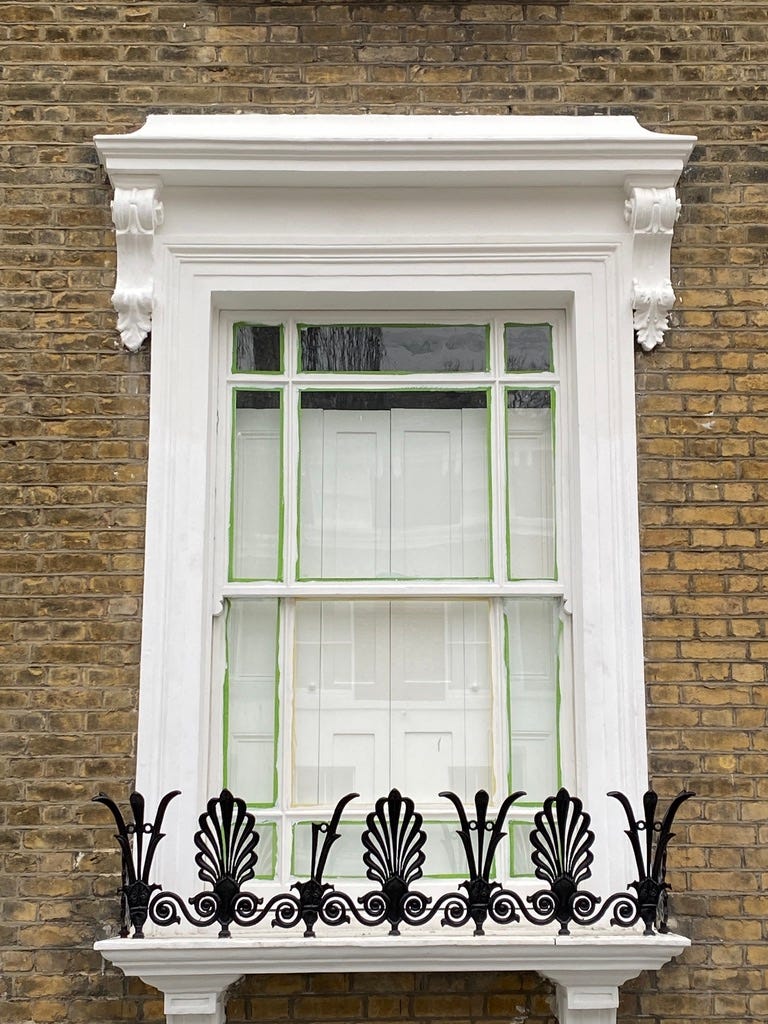
[Hackney]
The second is what I think of when I see an anthemion.
Not your average word, I know, but one which is important to me. As I get older, I worry about losing my memory, or bits of it. I’m not too concerned about losing memories plural, as they go and are replaced anyway and the weirdest ones stay and you have no idea what will remain and what will disappear. But from time to time I do get bothered about my memory itself. Particularly when a very specific word escapes me. In my mind I can see exactly what the thing is, but the word to go with it? Please wait and it’ll come to me eventually.
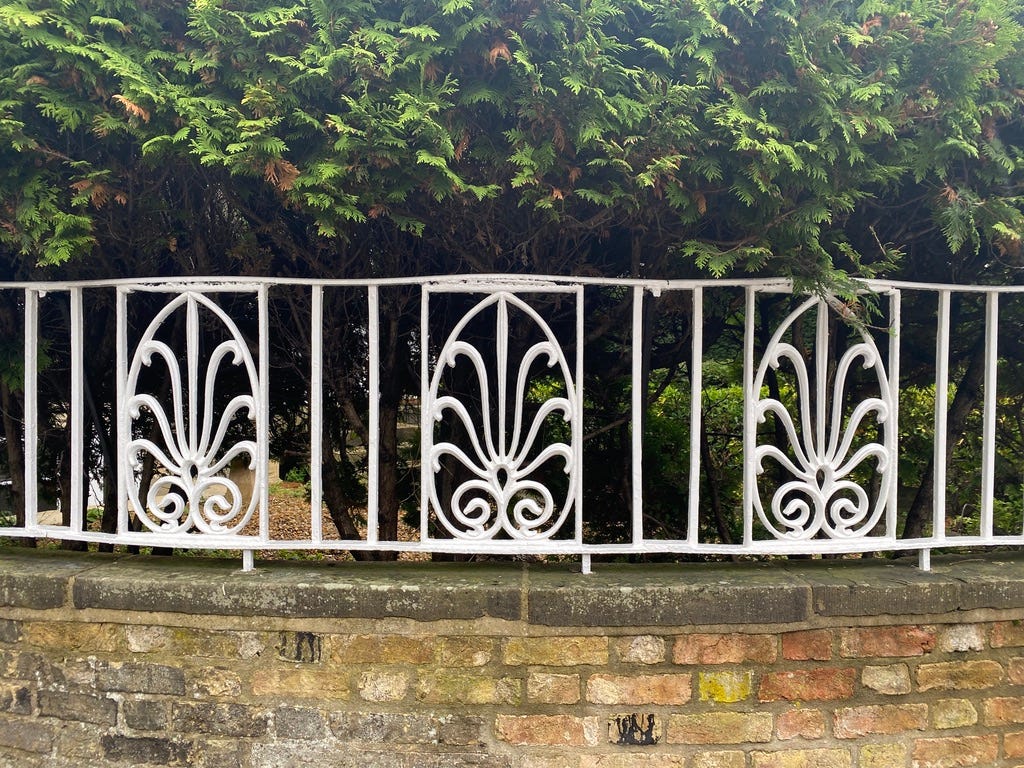
[palmette, Lensfield Road, Cambridge]
There is a good reason I hold onto ‘anthemion’, an ancient Egyptian and Greek motif. Sometimes is it used interchangeably with ‘palmette’ but there is a distinction between the two. They are both stylised, but the fronds of an anthemion, which is often taken to mean honeysuckle but actually means flower, tend to curl inward, while the frond of a palmette, inspired by a palm, are flat or curl outward.
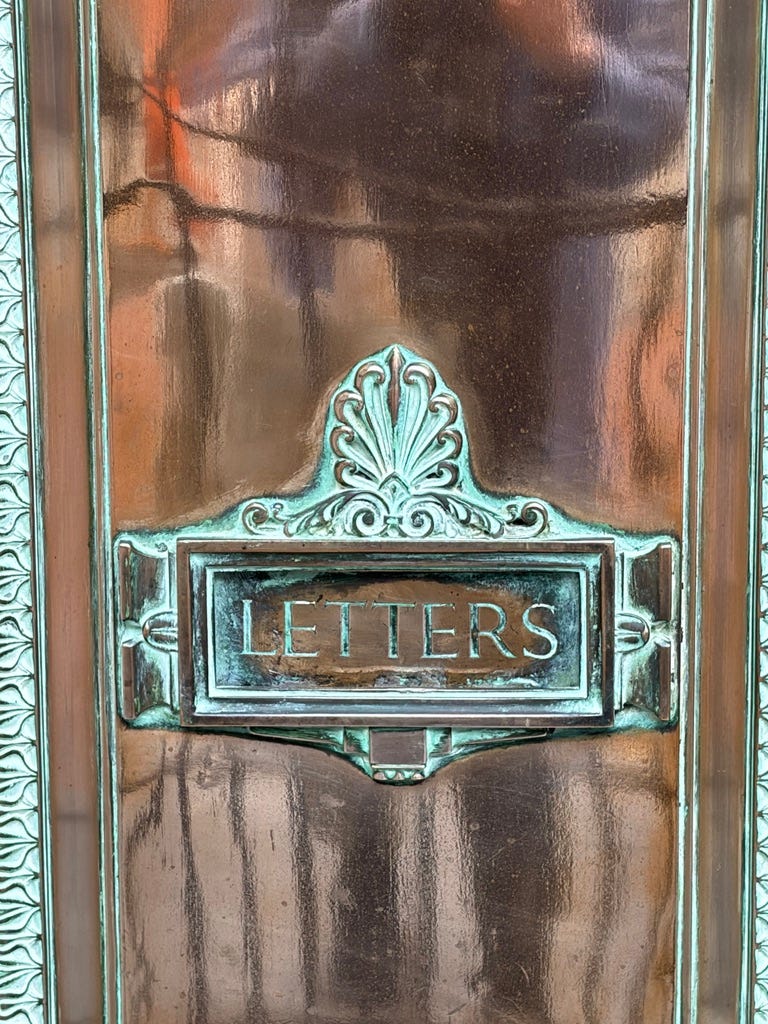
[former Birmingham Provincial Bank (1903), 90-92 High Street, Leicester]
A few years ago, I started properly noticing anthemions on buildings and railings and decorative schemes, and was intrigued enough to look them up and thus to acquire a good new word. I like them because they are a touch of creative but restrained flamboyance, like stencils or paper cutouts, on otherwise often sober buildings such as late C18 and early C19 terraced housing where their playful, organic shapes on repeat enliven façades.
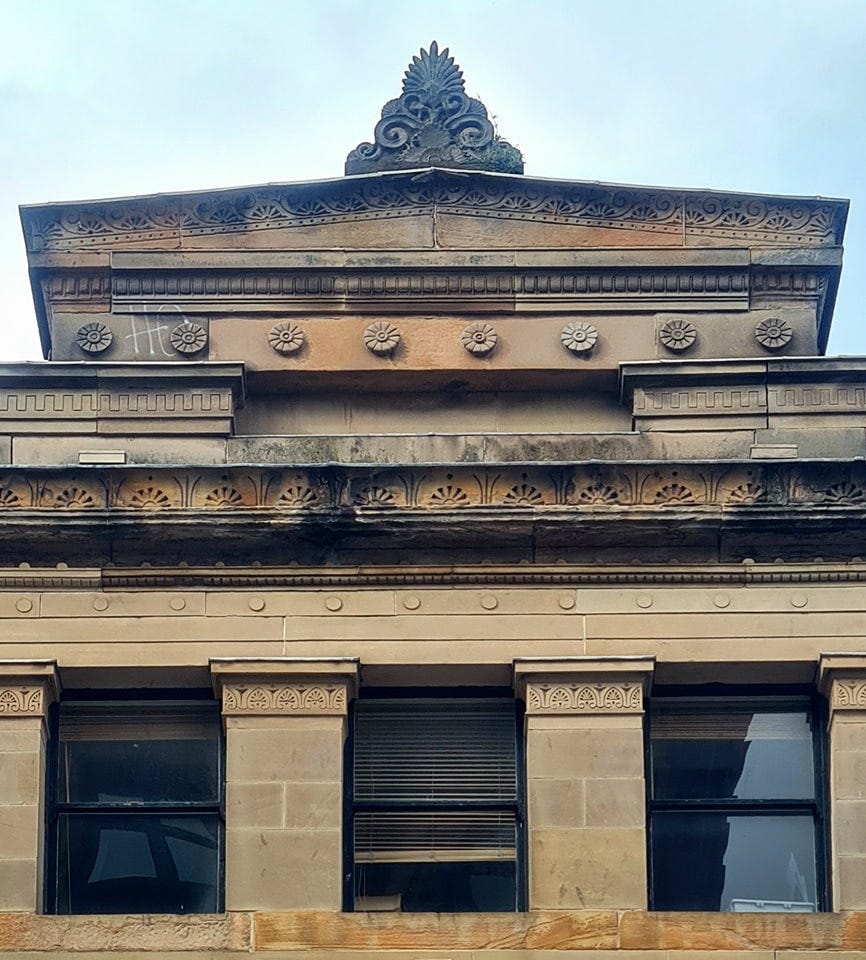
[Grecian Chambers (1865-68), Sauchiehall St, by Alexander ‘Greek’ Thomson, Glasgow]
Elsewhere they bring a touch of early C20 cinematic exoticism with whiffs of Greek and Egyptian Revival architecture.
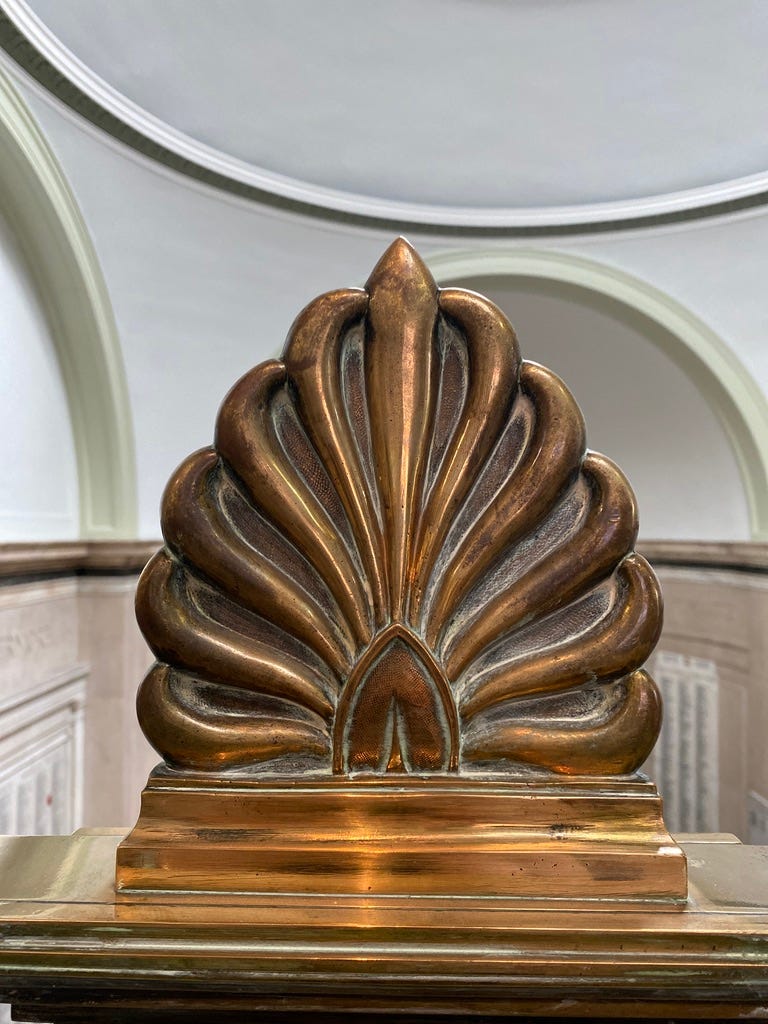
[Stockport War Memorial and Art Gallery (1925)]
But one day when I was visiting Phoebe in Zaragoza where she was worked for a while, I went to the art museum and saw several examples from old buildings. But could I remember what they were called? Even though I’d rolled the word around my tongue and brain for so long? Not a chance. I sat down and almost cried. I then resorted to searching for it on my phone (of course I now can’t remember which search terms I used in order to find it), and vowed not to forget it.
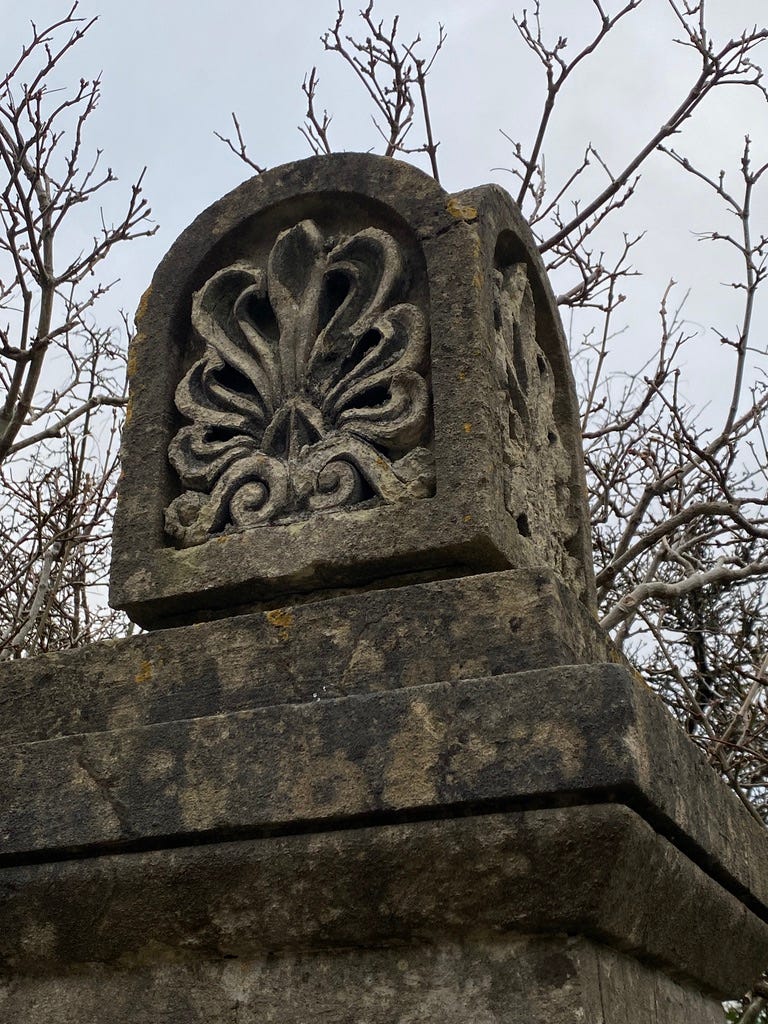
[listed piers with “tall semicircular headed Soanian anthemion panel to each facet” and nice railings, too, all 1820, Raby Gardens, Bath]
And sure enough, I may forget ‘shallot’ or ‘flint’ or the name of the child in front of me (jk, kids), but anthemion now comes back every time. The power of brain-training or something, I don’t know.
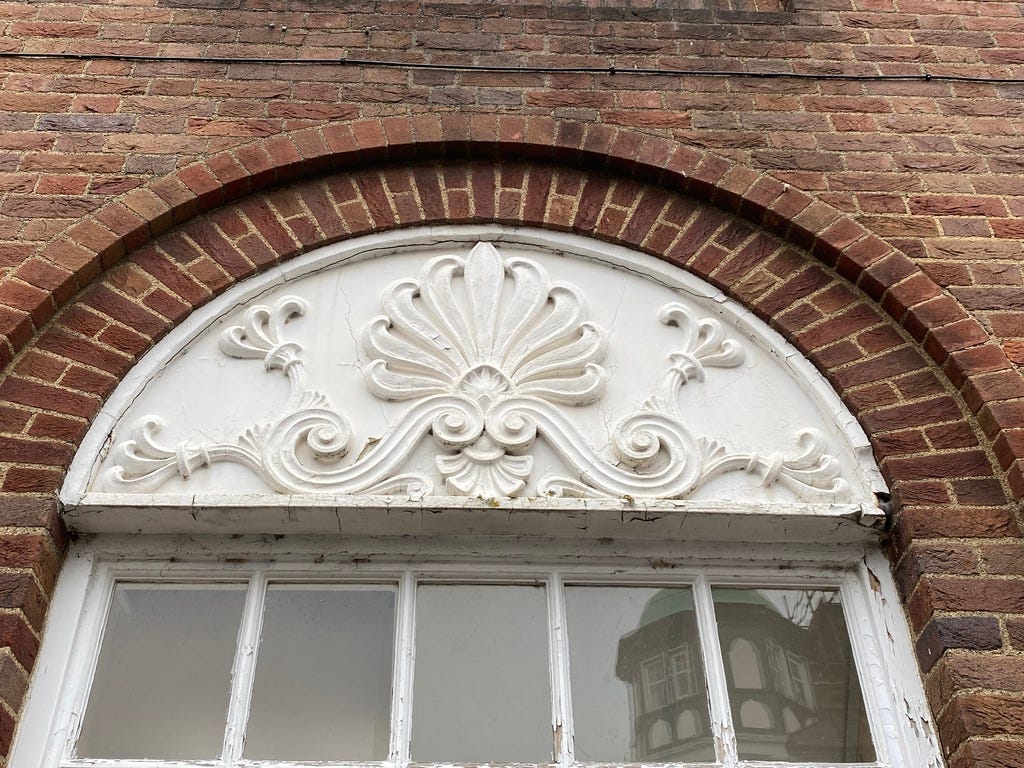
[Pot Office (1937), Llandrindod Wells]
And each time I see a new one, I enjoy the variation on the theme and the fact that I can identify it.
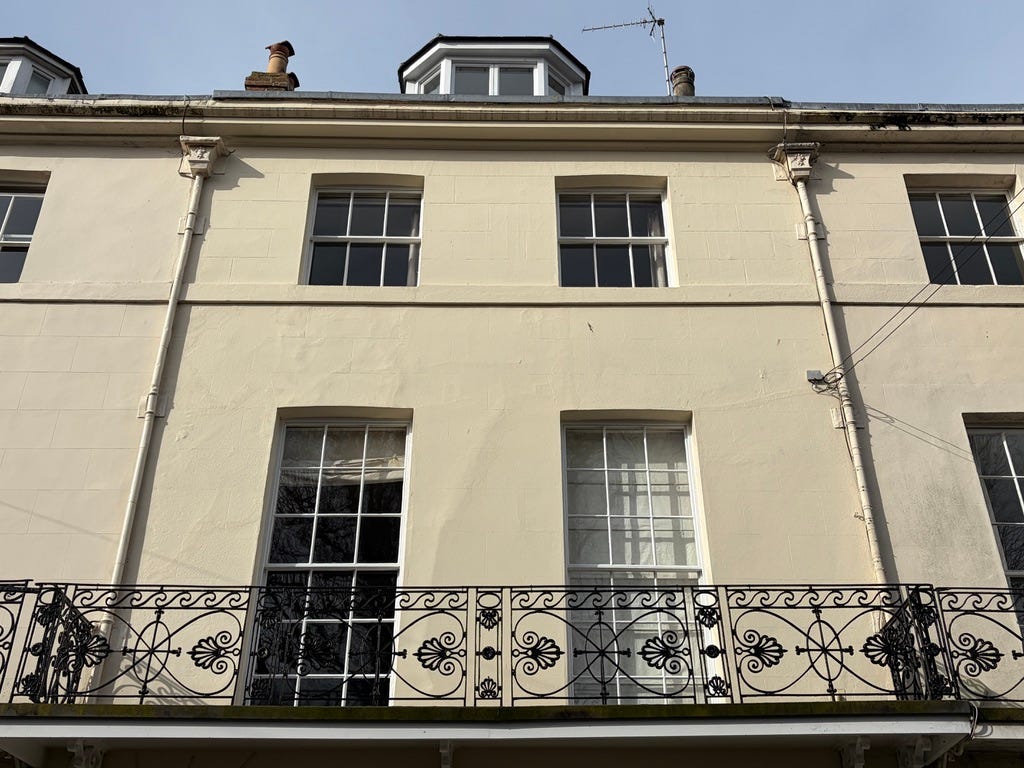
[Lewes]
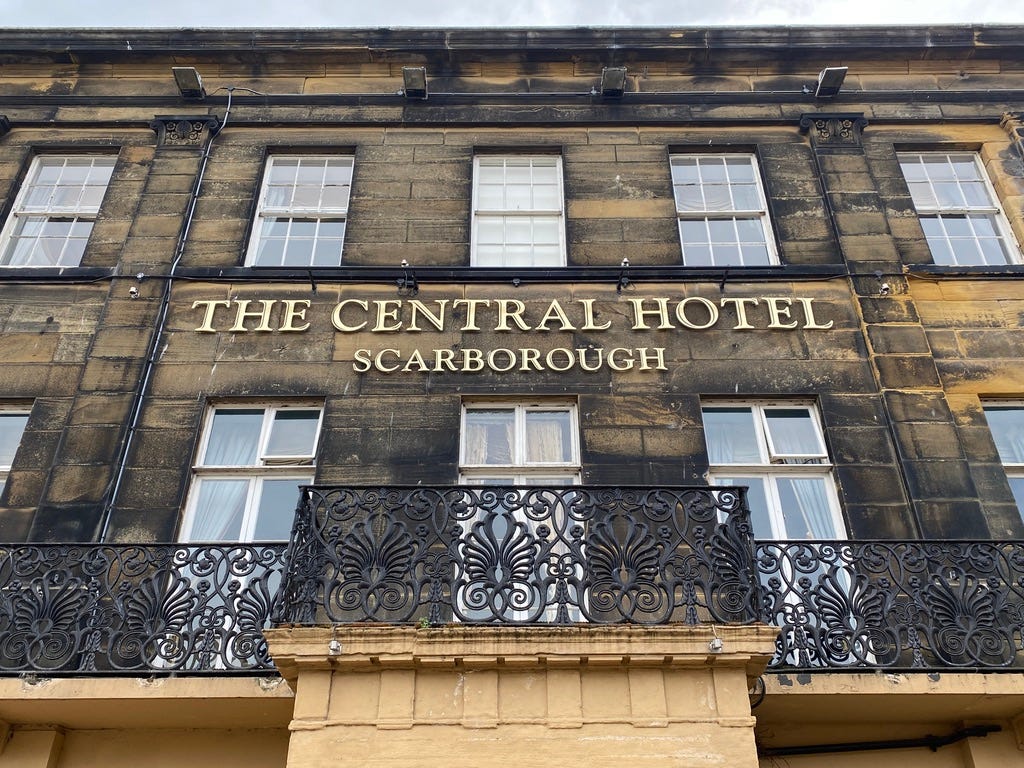
Sometimes, though, there’s a whole collection to be seen, like patterns on a a piece of lace or ribbon. It was when we were in Lewes recently that I began noticing the same anthemions on various cast-iron balconies and thinking that someone must have done a good local trade in these at one time.
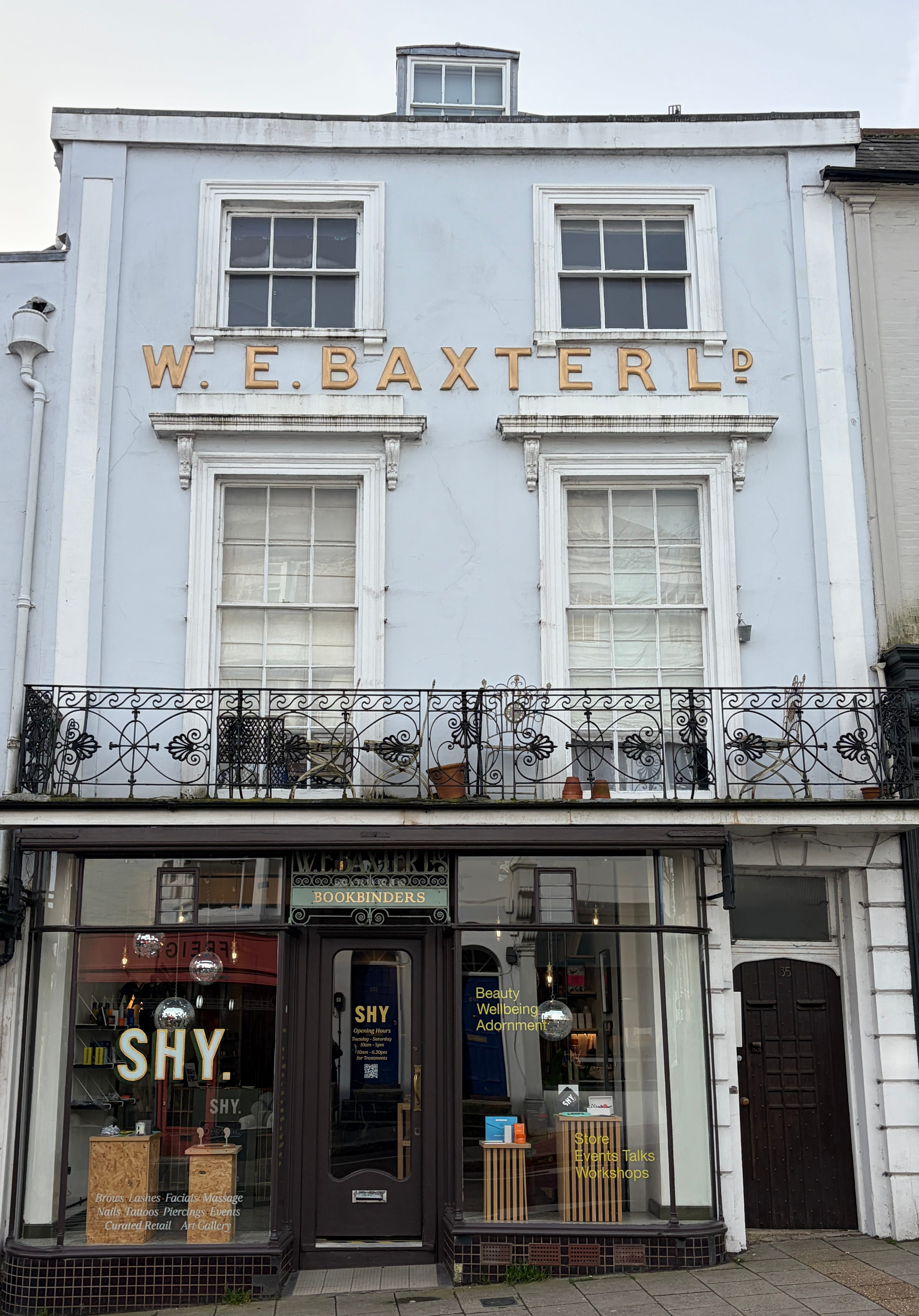
[Lewes]
I did a little digging, and found this enlightening article which explained that, indeed, “huge quantities of them were made and distributed from around the mid-18th century until well into the 19th century. In fact, over this period, it was one of the most popular balcony designs used on Neoclassical style buildings”.
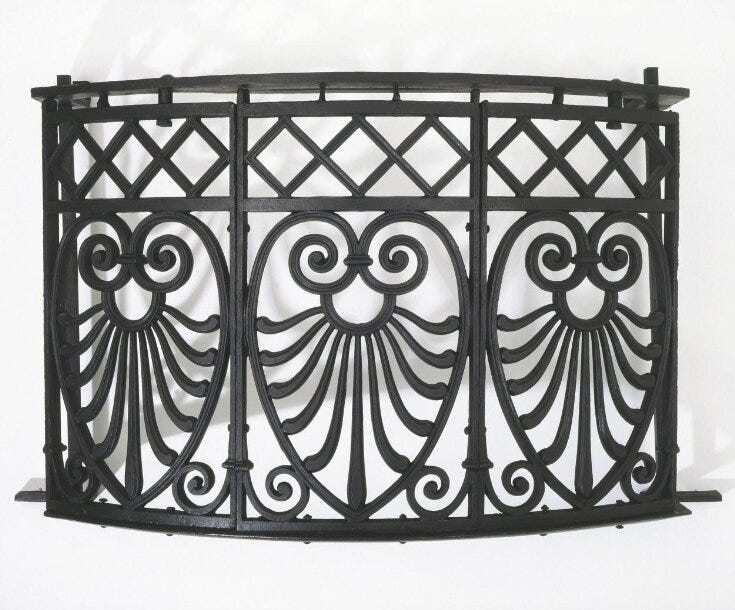
[Adelphi balcony panel by Robert Adam (c1775), V&A]
The anthemion balcony railing was first made for the Adelphi development of fashionable terraced houses (1768-82) on The Strand in London designed by the Adam brothers and they were made by the Carron Company. “The…development was highly praised and…the patterns of the balconies themselves were also widely copied. The anthemion motif became one of the most popular motifs for ironwork well into the 19th century”.
[Riviera Theatre (1926), Buffalo]
There are also many more C19 anthemions outside the UK; Buffalo is chock-full of them because many buildings are either in, or influenced by, the Greek Revival Style (1820-60).
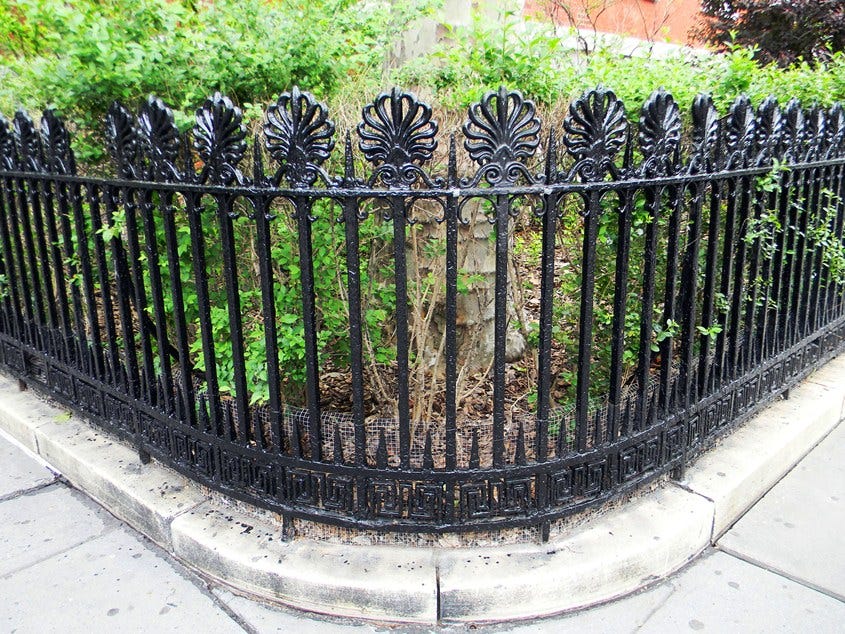
[Washington Square North]
Greenwich Village, too has some fine anthemions looking like fancy fans or tiaras or feather-filled headpieces.
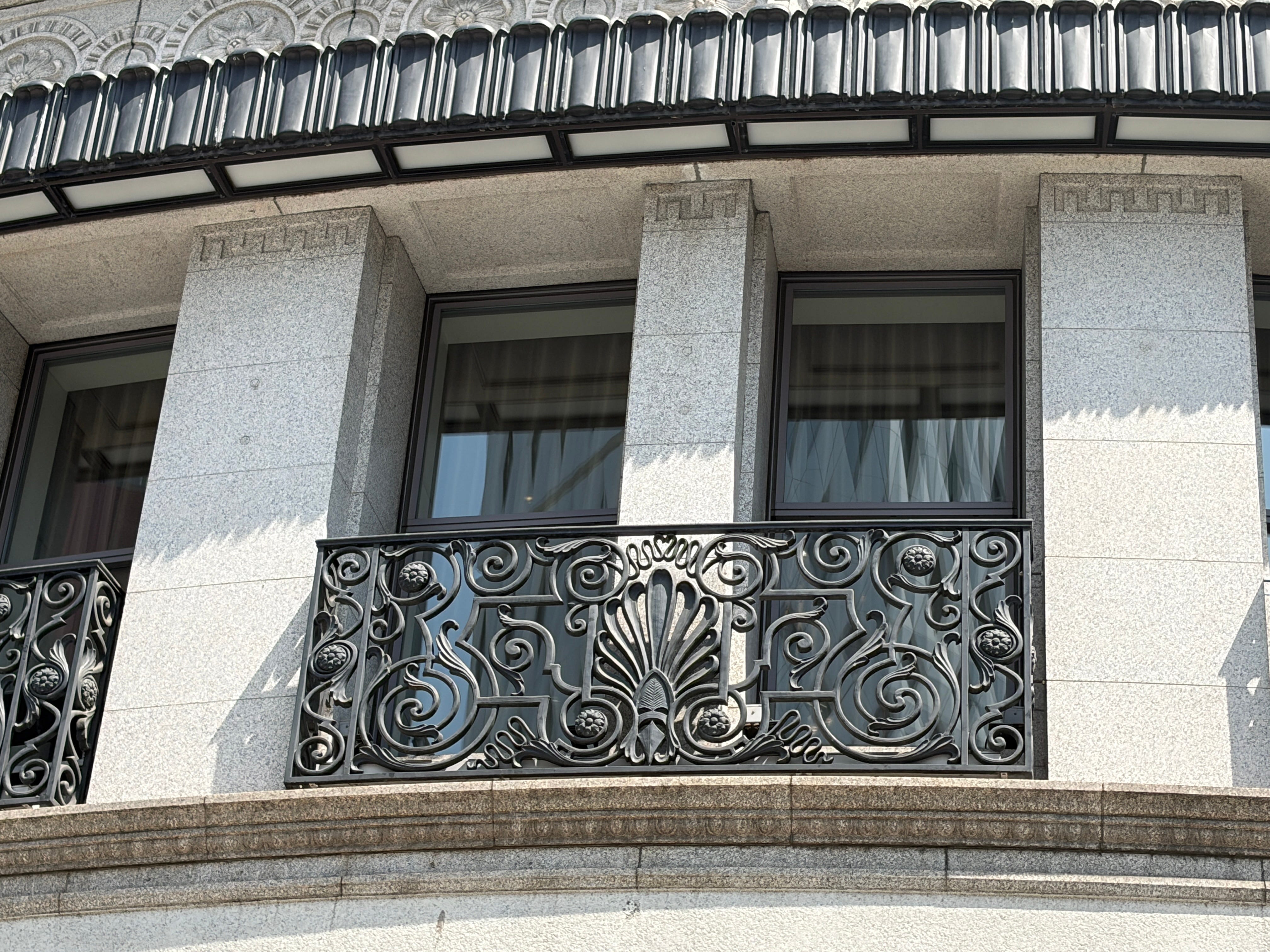
[Seiko House (Ginza Wako), (1932), Tokyo]
In Japan I spotted these more complex balconies on this famous landmark building by Jin Watanabe, a leading inter-war architect. In some ways, the anthemions are lost in all the curlicues which is a shame - I prefer stand-out, focal point anthemions.
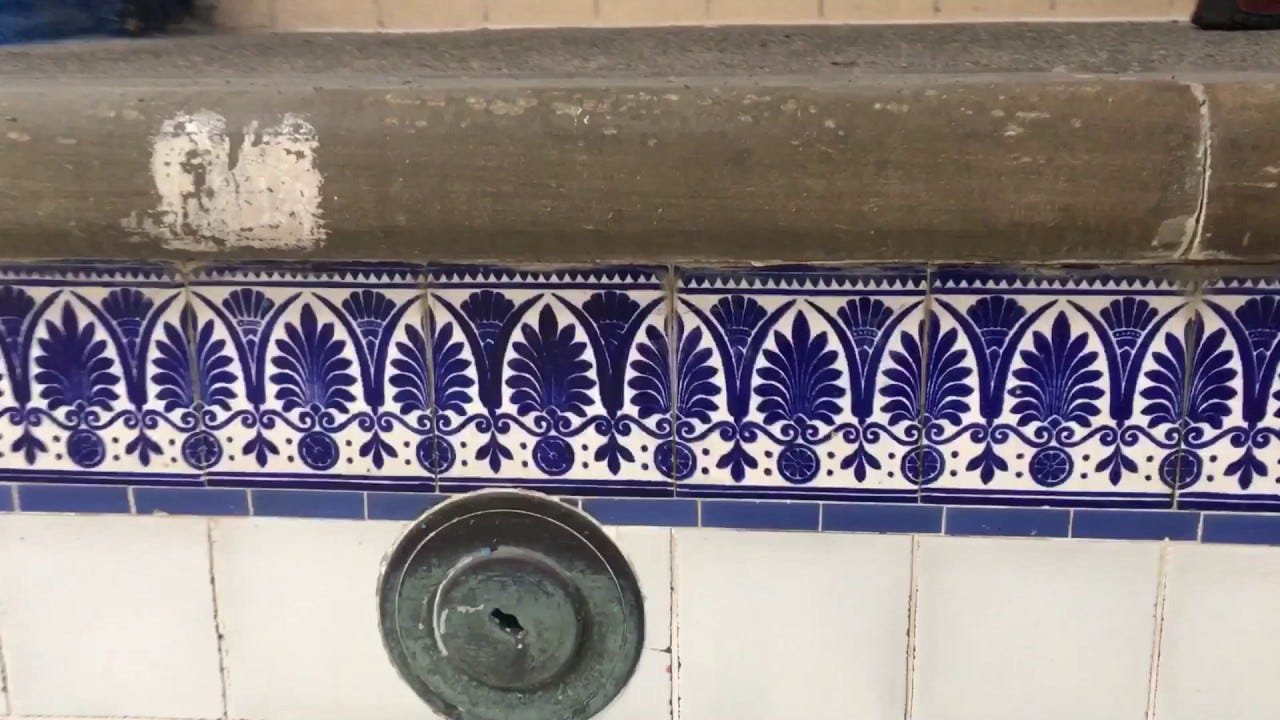
And here are some lovely anthemions and palmettes (I’m quoting Historic England) on tiles in Woolton Baths (opened 1893, closed 2010) where John Lennon and friends swam in school lessons, and where he and Paul McCartney learned to swim.
It’s not so much my marbles I’m worried about losing, as my anthemions.
Happy Sunday!
PS another lovely recondite word I have stored in a safe place in my memory is obbligato thanks to reading about Alan Civil who plays the French horn on The Beatles’ For No One
I have the same fear Jane (I think we are the same age). I trained in Librarianship, and decided that retrieval is the problem. We do have the information all there but at our age and with multiple similar interests, the 'library' is so vast sometimes finding it takes longer. It is fine.
Lovely! I'll be looking out for anthemions from now on.