a cotton thread

By coincidence, I was in Stockport and Manchester, Andy Burnham’s stomping grounds until recently, while he was down south becoming PM.
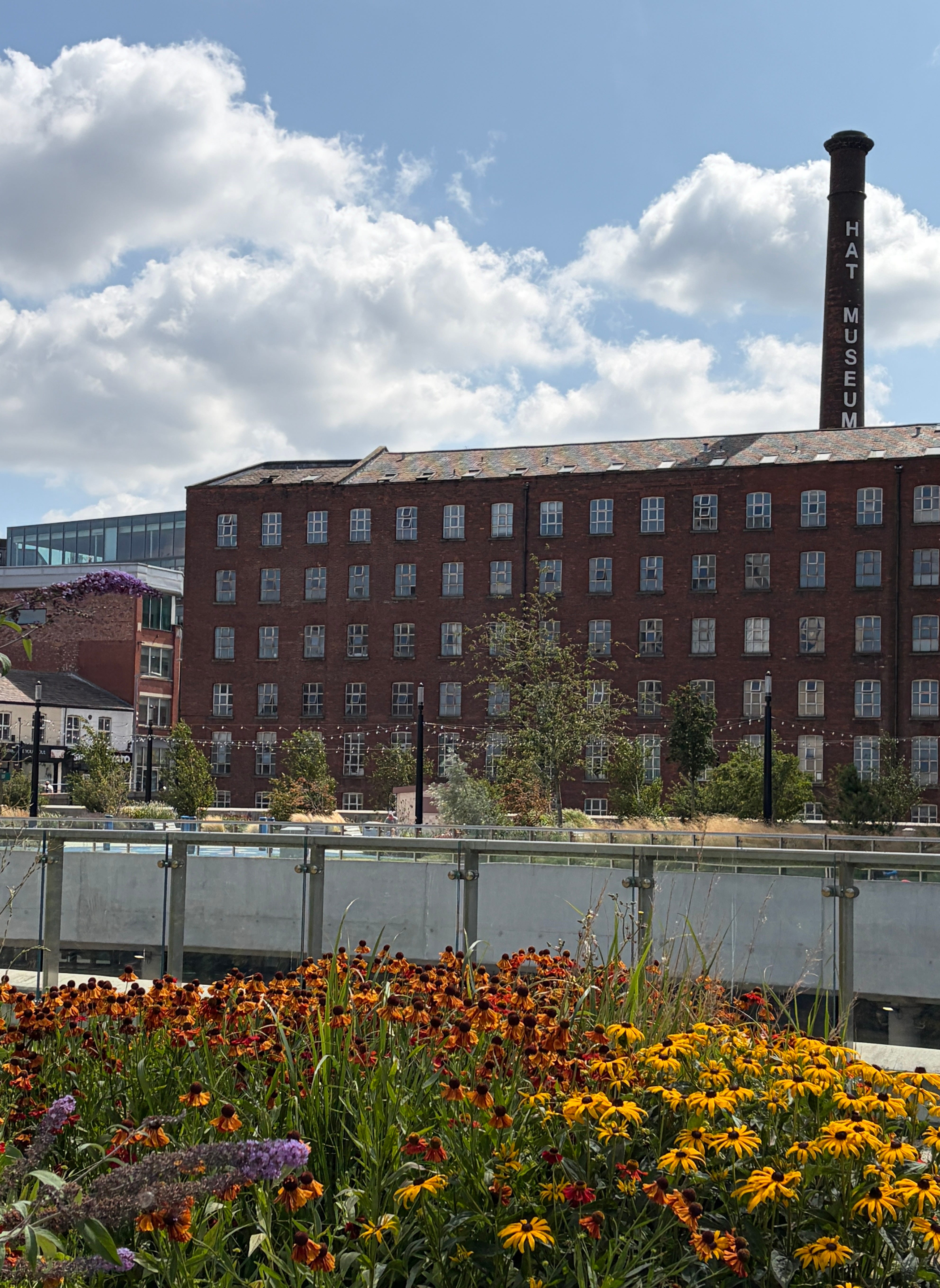
Maybe it was the sunshine, the warmth, the upcoming school holidays, the people sitting outside with their coffees and cakes, the lovely planting which is maturing beautifully at the new Interchange, but Stockport felt refreshed and colourful. A far cry from the permanently grey skies (In My Little Town could have been written about it, if you substitute ‘grey’ for ‘black’), the never-ending rainy Sundays, and the teenage ennui which was only relieved by going on the 92 bus to the bright lights of Manchester.
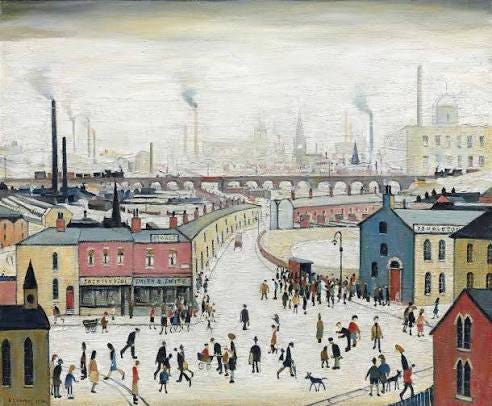
[Stockport Viaduct as painted by LS Lowry]
I know our primary school did their best to educate us about our town, but all I can remember is that the population was then 144,000 and that people who come from Stockport are Stopfordians. So it’s perhaps not surprising that I never paid attention to the unusual multi-level topography of a town built on a red sandstone cliff, the enormous and beautiful cotton and hatting mills,
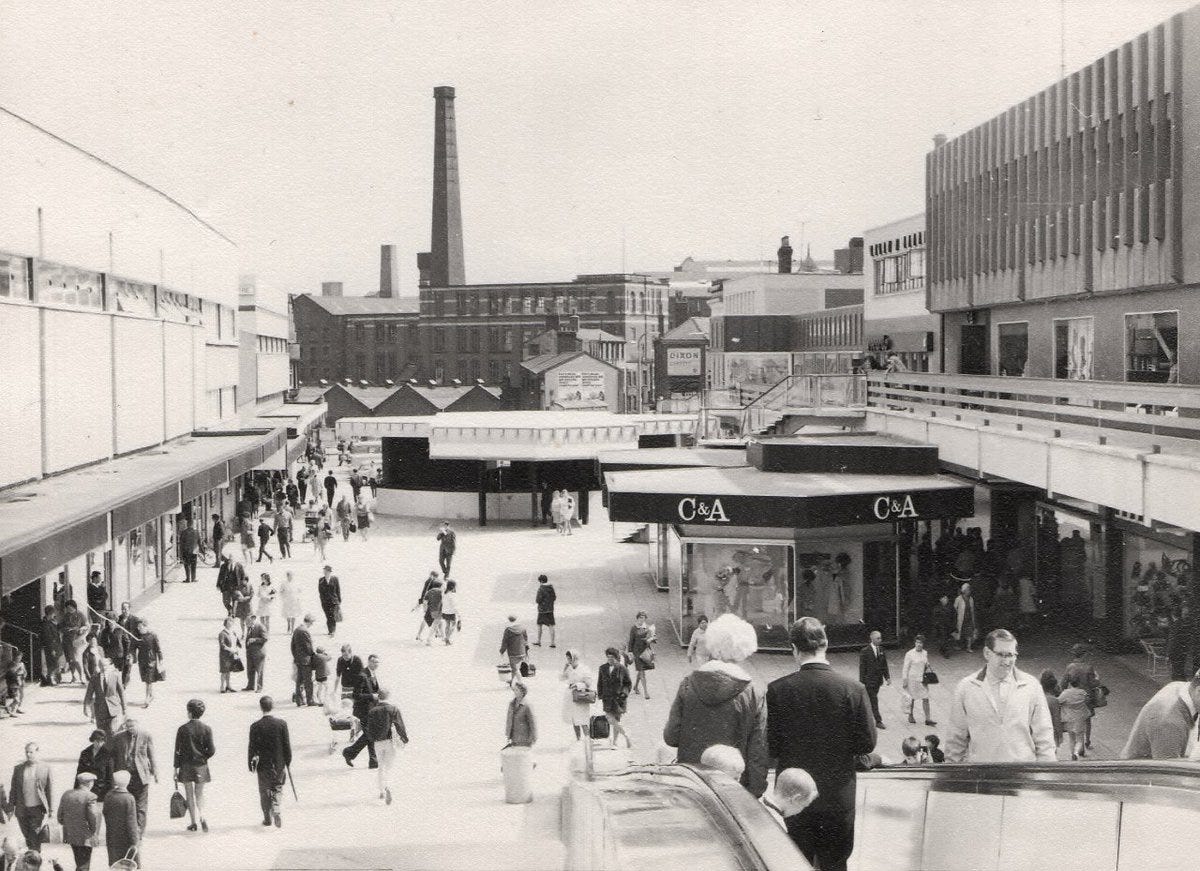
[Merseyway aka “the precinct’“, 1970s. I see a strong resemblance to the Lowry above]
the giant concrete culvert which allowed the precinct to be built over the River Mersey, and the variety of hills and vales and brows and cobbles. All this was simply the backdrop to what I wanted to escape from.
I’ve had an ambivalent relationship with the place ever since; literal and metaphorical clouds have often descended around Stafford when driving north up the M6. But I’m ready for a reset. It’s not you, it’s me, sort of thing. So now I can go back and be fascinated by all the things I disliked and felt hemmed in by, and enjoy the wonderfully varied buildings, the positive results of recent investment and regeneration, the energy, the openness and friendliness and daft humour of the locals.
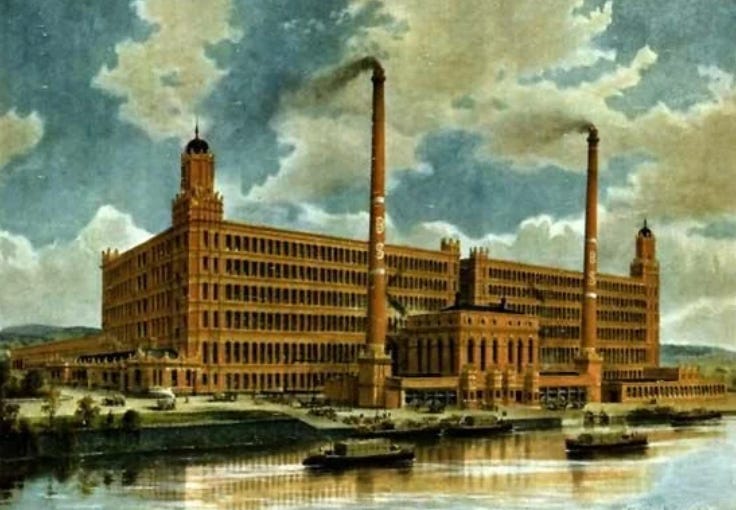
I can even appreciate the phenomenal Broadstone Mill (1903-07) where, after the spinning of fine Egyptian cotton had ended, I once had a horribly dreary holiday job packing anoraks for mail-order catalogue enlivened only by ‘Come On Eileen’ on the radio. It’s very close to Reddish South Station, famous for being one of the least-used stations in the UK with a ‘parliamentary service’ of just one train in each direction on Saturdays only. Not exactly the stuff of tourist guidebooks, but still.
Stockport was a cotton town, but I don’t think my love of textiles stemmed from this at all. I was oblivious to its cotton history and to the fact that, because of the available water power, by the beginning of the nineteenth century, it had become the great centre for power loom weaving. Instead, I just got on with my French and Russian - both useless in the context of my home town but sellable elsewhere - so that I could make a run for it at the age of eighteen.
Ironically, one of the places I liked that wasn’t in Stockport was Manchester’s Royal Exchange Theatre, the futuristic theatre (1976) in the round inside the old Cotton Exchange (1874, remodelled 1921), at one time the “largest [cotton trading] room in the world”. The last cotton trading figures on the board are still there and date from 31 December 1968, before it closed forever.
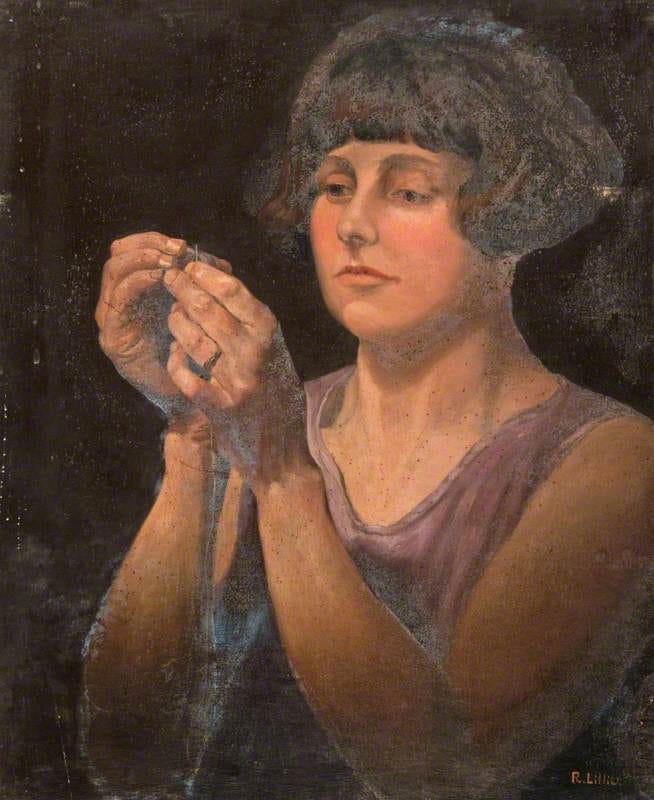
[‘Threading the Needle’ (n.d.) by Robert Lillie (1867-1949)]
And yet, it turns out that a love of cotton must somehow have been transmitted to me from the very start, maybe in the soft water. Cotton is my textile background and the thread which runs through my post-USSR sales, post-drinks marketing, post-wine trade work life, as well as my creative life. In retrospect, it’s amusing that I was a graduate trainee at Courtaulds which had made its name with black mourning crape (crimped silk gauze) but then in the early C20 pioneered the production of “artificial silk” ie viscose/rayon which transformed the company into the world’s leading producer of man-made fibres.
I’d already decided as a teenager that I disliked synthetic fibres for all sorts of reasons, mostly based on empirical and uncomfortable research. Acrylic knitting wool came in great colours but almost sliced your fingers off if you tried to break it with your hand, it melted in the university tumble-driers, and it had no wicking properties so wearing a chunky acrylic knit was like being a human hot dog. Viscose creased like mad, seized when washed, and had no thermal properties. Acetate was slippery and shiny and clung because of static, melted when ironed, and frayed easily. Yet there I was, selling 40-foot containers of these three fibres to the Soviet Union, going to Moscow once a month, visiting mills in Lithuania and Belarus, touring the Courtauld factories in Spondon and Coventry, and generally wondering where my life was heading. (Slough, as it happens. No cotton there, only Mars Bars.)
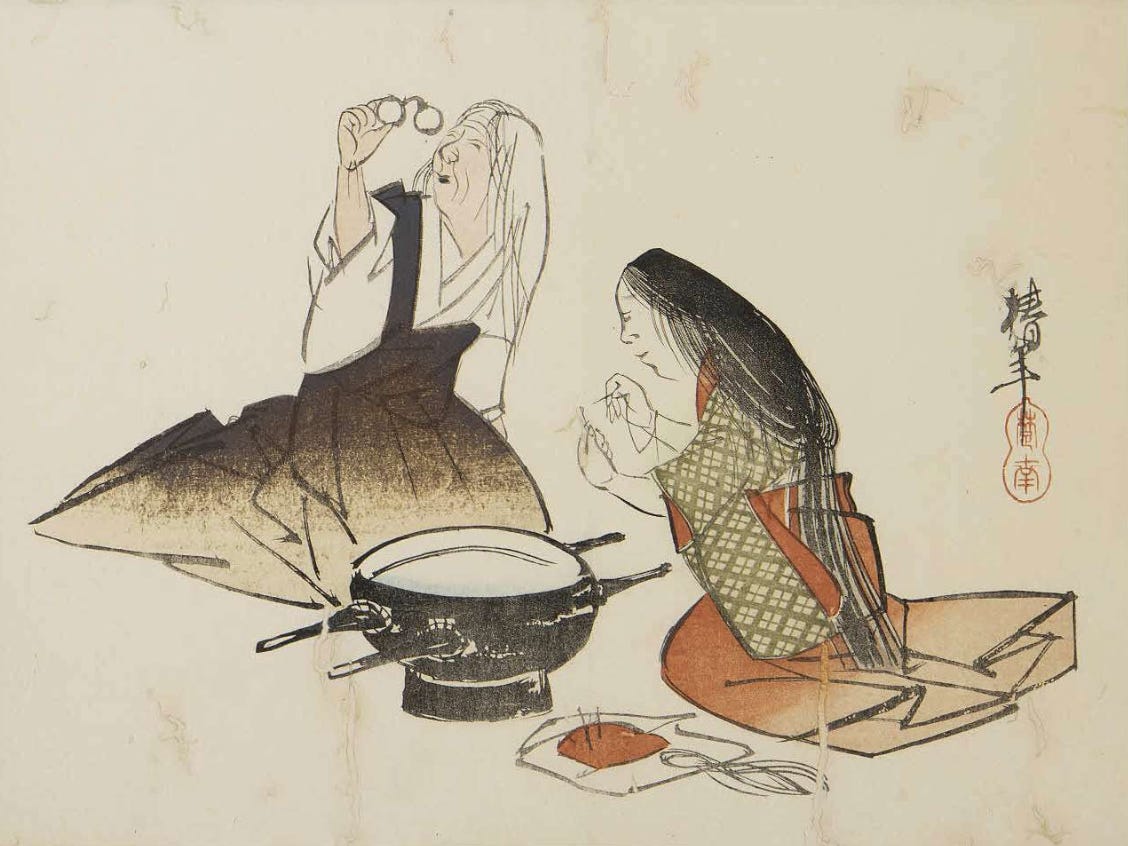
[‘Mother and daughter, threading a needle’ (1834), surinomo woodblock print illustrated by Onishi Chinnen]
Even now, after so much exposure to synthetics, basic, natural, lovely cotton still feels like a treat to wear and to quilt and sew with. The day after I was in Stockport with my sister, I got the bus to Manchester with my best friend from junior school who lives close to where we grew up. We went to the Whitworth, which I’ve mentioned before but will say again, is the most beautiful gallery - bright red terracotta Edwardian neo-Jacobean meets 1960s Scandinavian cool meets C21 glass and steel and brick - with a fantastic collection of textiles (and art).
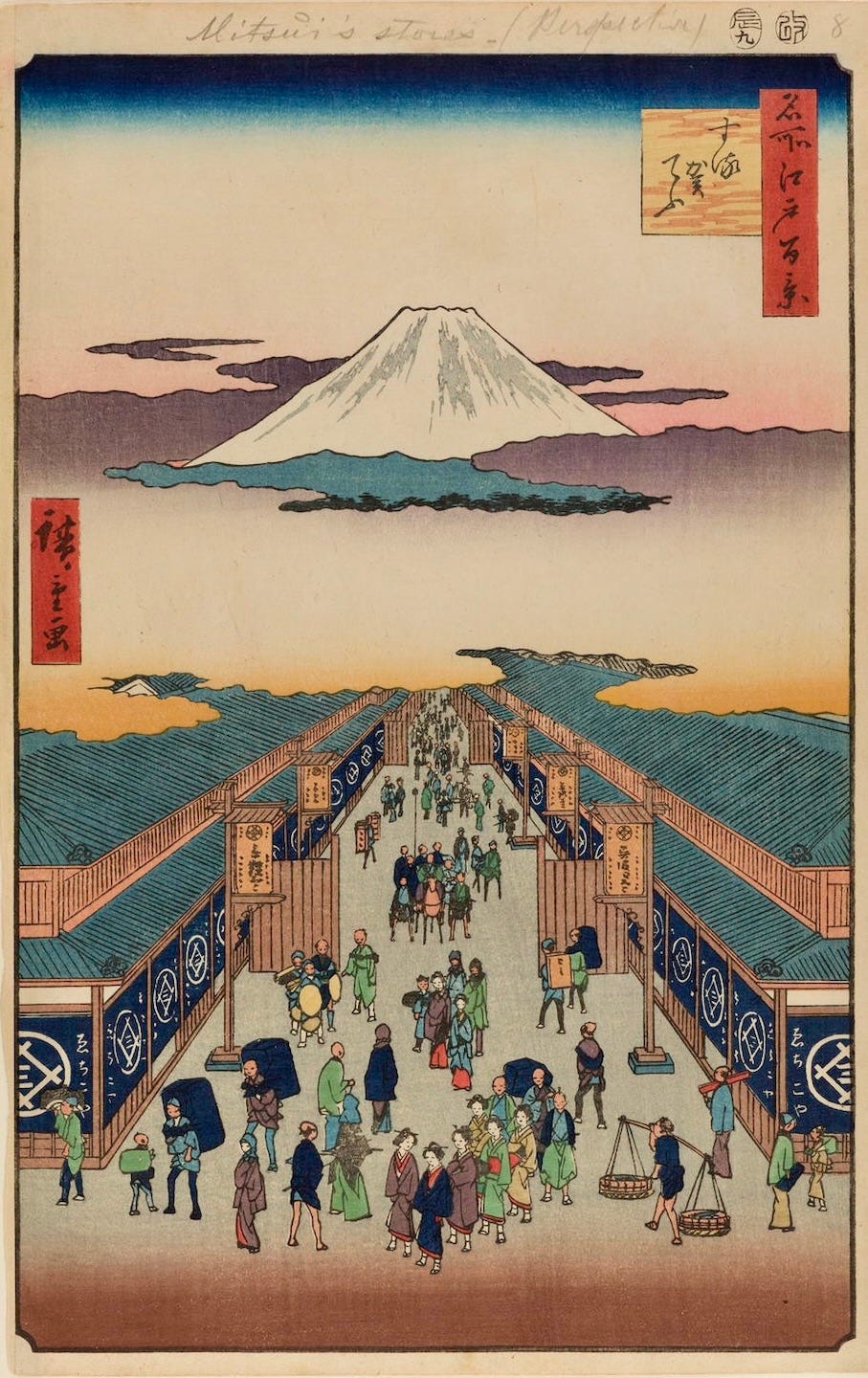
[‘Suruga-chō’ (1856) by Hiroshige]
We actually went to see the wonderful exhibition of Japanese woodblock prints - Hiroshige once again proving he is the master and that his peopled scenes are often not a million miles away from LS Lowry - so didn’t know about the Entangled and Woven exhibition which had just opened.
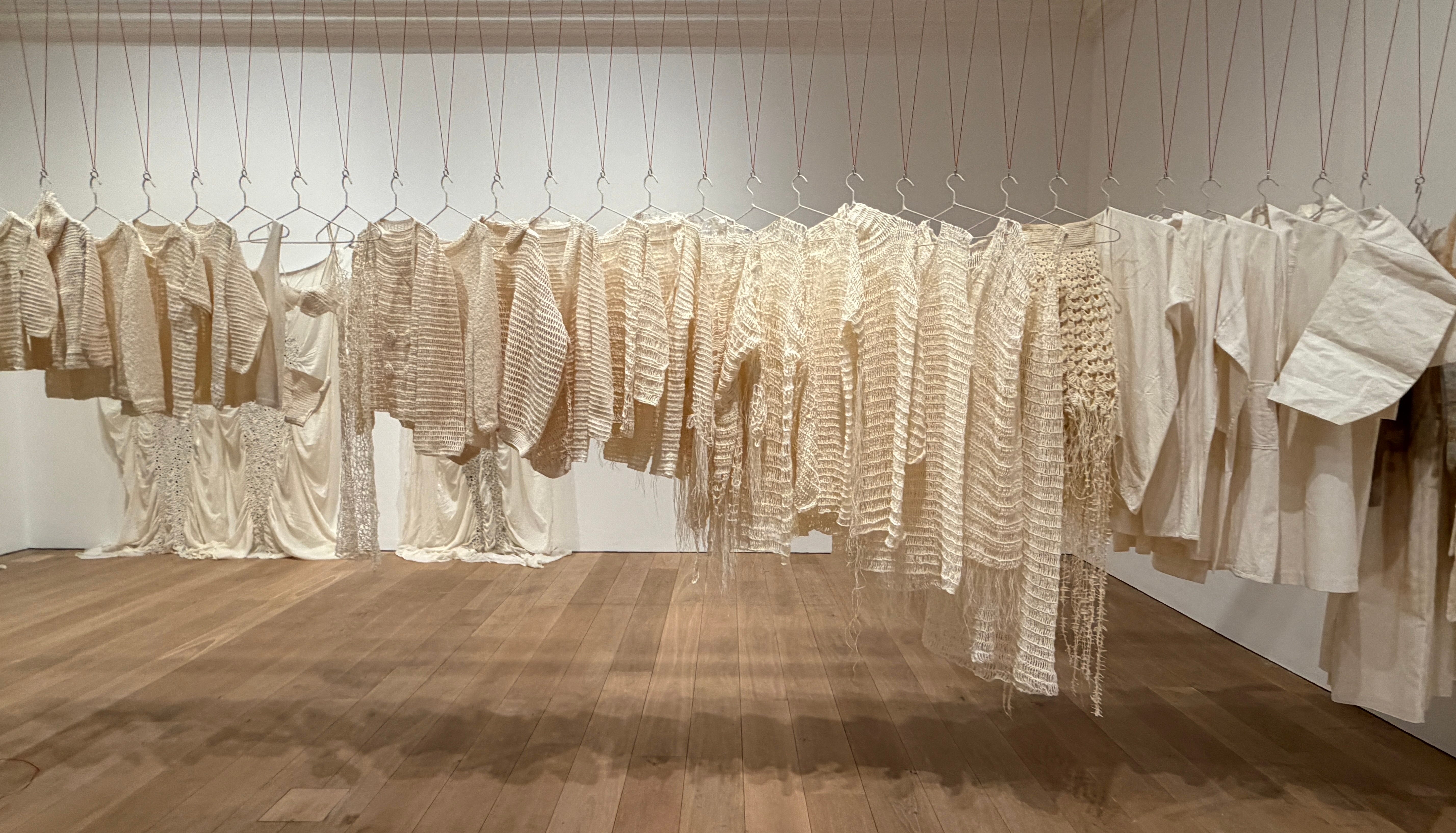
It’s excellent, with many pieces made with cotton, but we were completely bowled over the work of Komi So whose chosen thread is hand-spun somisa made from hanji (Korean mulberry paper). It has the most beautiful natural colour, similar to undyed, unbleached cotton, as seen in People of One, Continuum, thirty-five garments which ‘trace the trajectory of a person’s life cycle, from birth to death’. It is so simple - a rack of clothes - yet breathtakingly lovely.
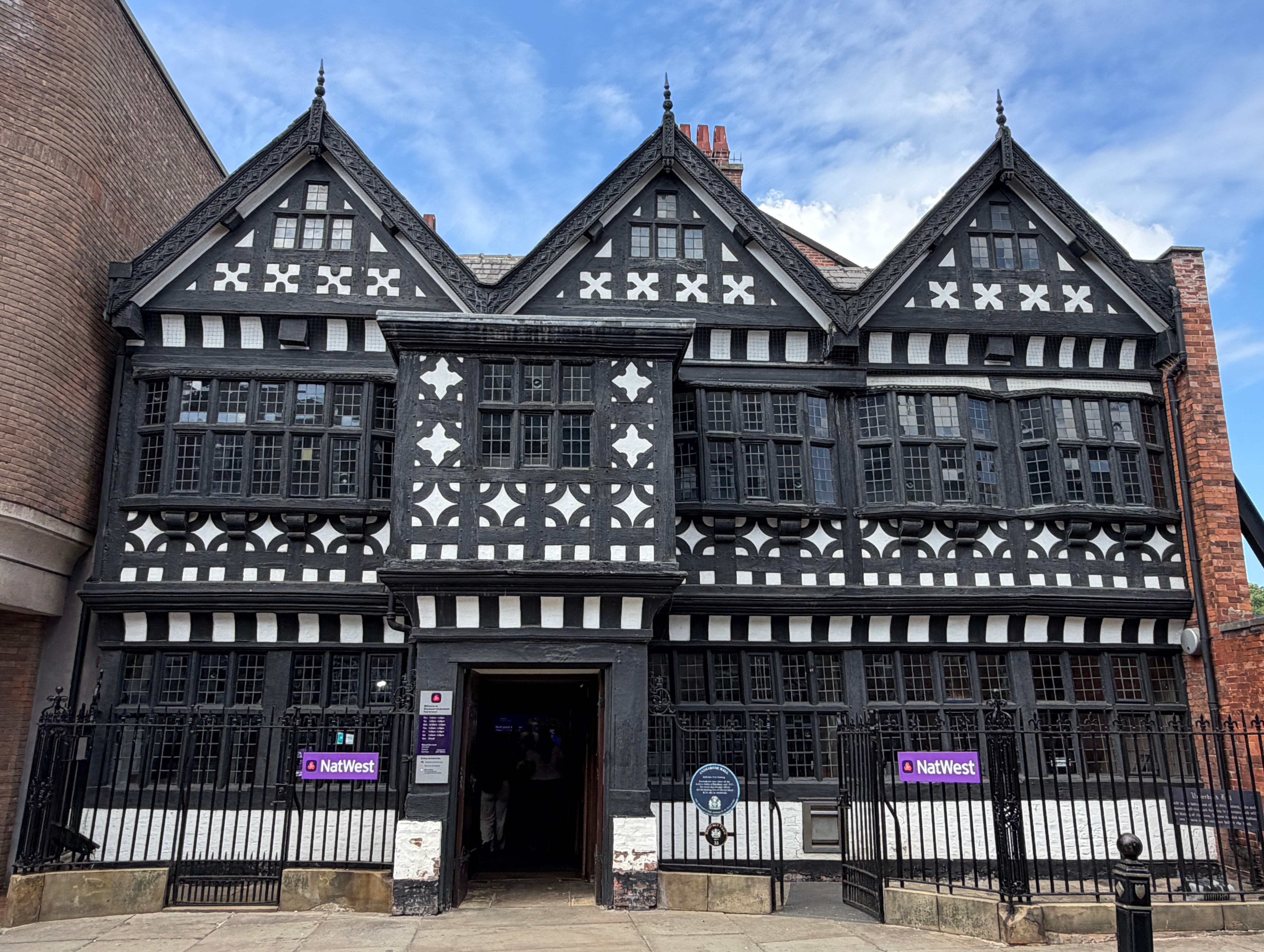
[where my bank account still is, the C15/C16 Underbank Hall]
It made me see that the threads that bind us to textile origins for life are strong and varied. Despite everything, I’ve never not been proud to say that I’m from Stockport, and to explain yet again that no, it’s not the place where the tide never comes in, that’s Southport. I also realised that the cotton thread running though my life has high tensile strength: it’s not been cut, it’s not snapped, or even frayed badly, although it has been tested many times.
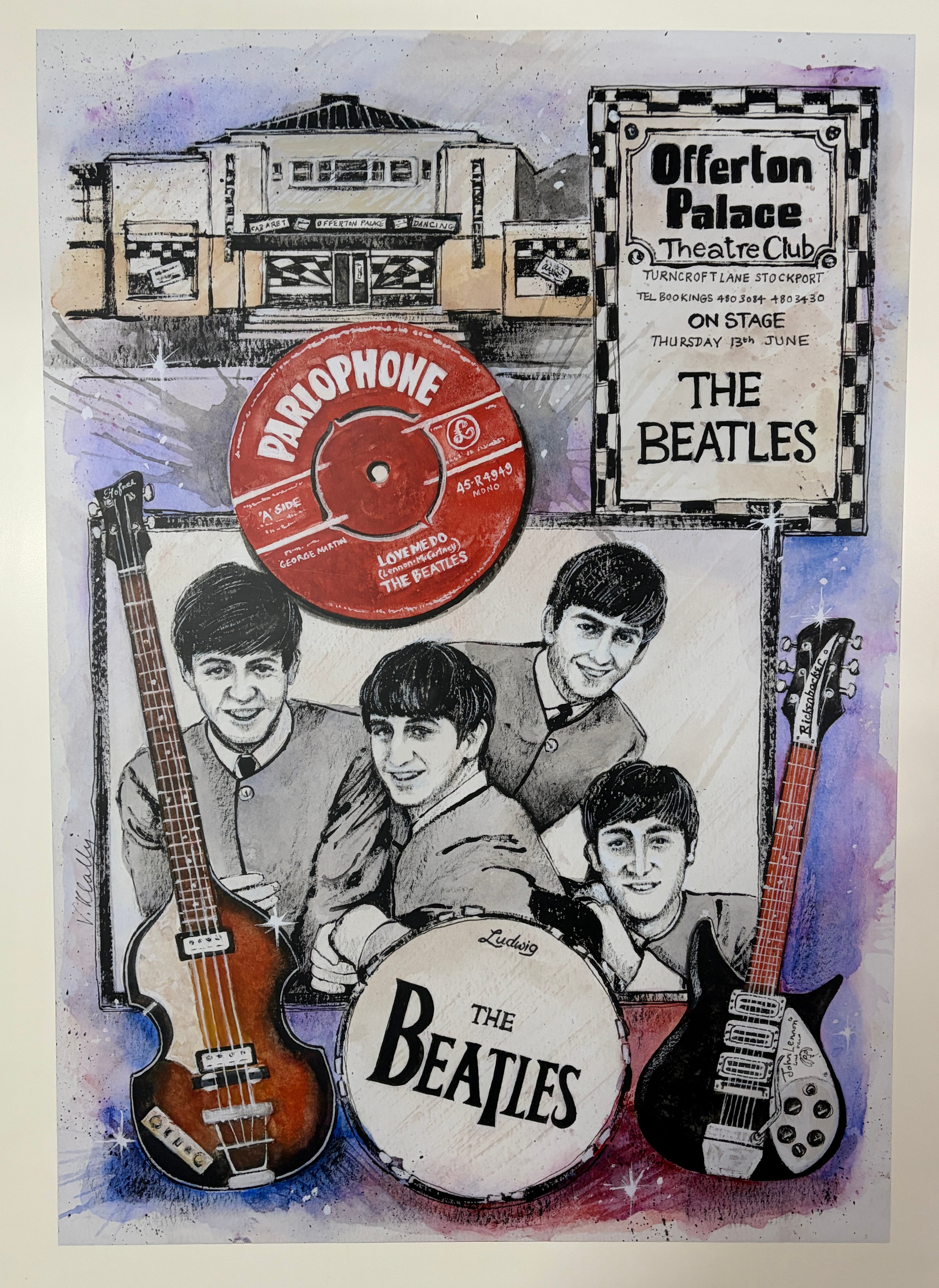
As I arrived at Stockport, I saw the Stockport Music Story artworks in the railway station underpass. For ages, I’d thought The Beatles never played in Stockport, but this is because on their 1963 ‘engagement list’ for 13th June, Offerton appears to be in Manchester. As a result, it’s always the latter which is repeated. To make matters worse, there are no photos of the concert. Classic. My home town has been erased from Beatles history - until now.
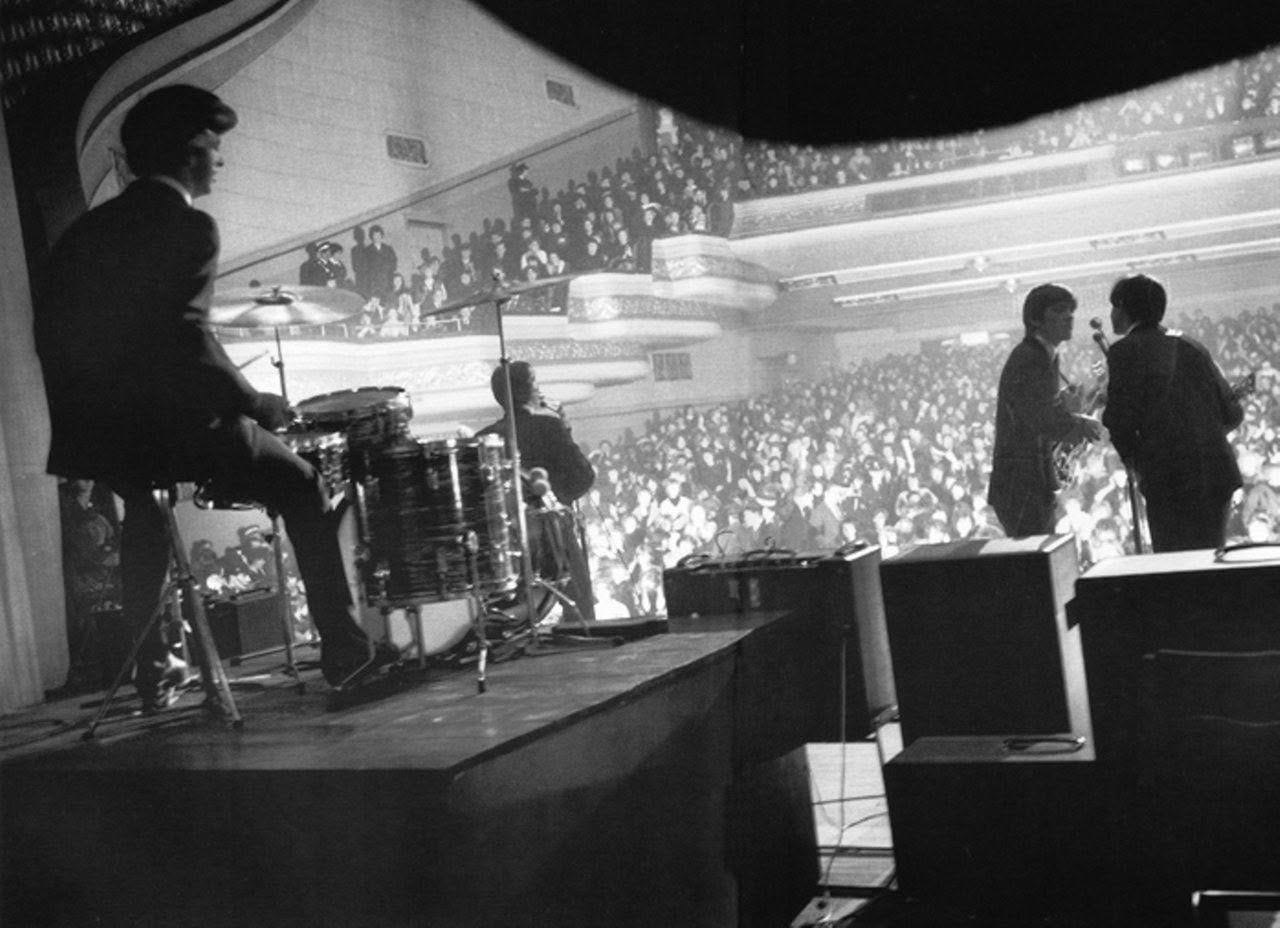
[ABC in Ardwick, Manchester, November 1963]
This new knowledge happily establishes a new thread which further ties me to the Beatles who also came from a cotton city - Paul McCartney’s father Jim was a cotton salesman - and played many cotton towns including Manchester, Preston, Blackburn, Oldham, and Nelson.
AND STOCKPORT.
Happy Sunday!
I love your books and these shorter pieces. I always come away with an appreciation of things I do not know much about and now need to explore.
This post brought back some memories for me! I was a student in Manchester in 1966-7 and my first job on leaving college was with Cheshire County Library, based in Bredbury. I was in charge of a trailer library, a mobile container sized van, hauled by a landrover on a weekly schedule. It visited places like Hyde, then a new housing estate with no facilities, and Broadbottom, a village on the edge of the Pennines. The van was freezing in winter, although could be plugged into an electric point outside. I enjoyed my time living in the north of England, as my mother was partly brought up in Liverpool and I had(and still have) relatives there, although I was brought up on the Isle of Wight. I loved the bustle of Manchester and its surroundings, the variety of shops, the art galleries, concerts at the Free Trade Hall, the Halle and so on.